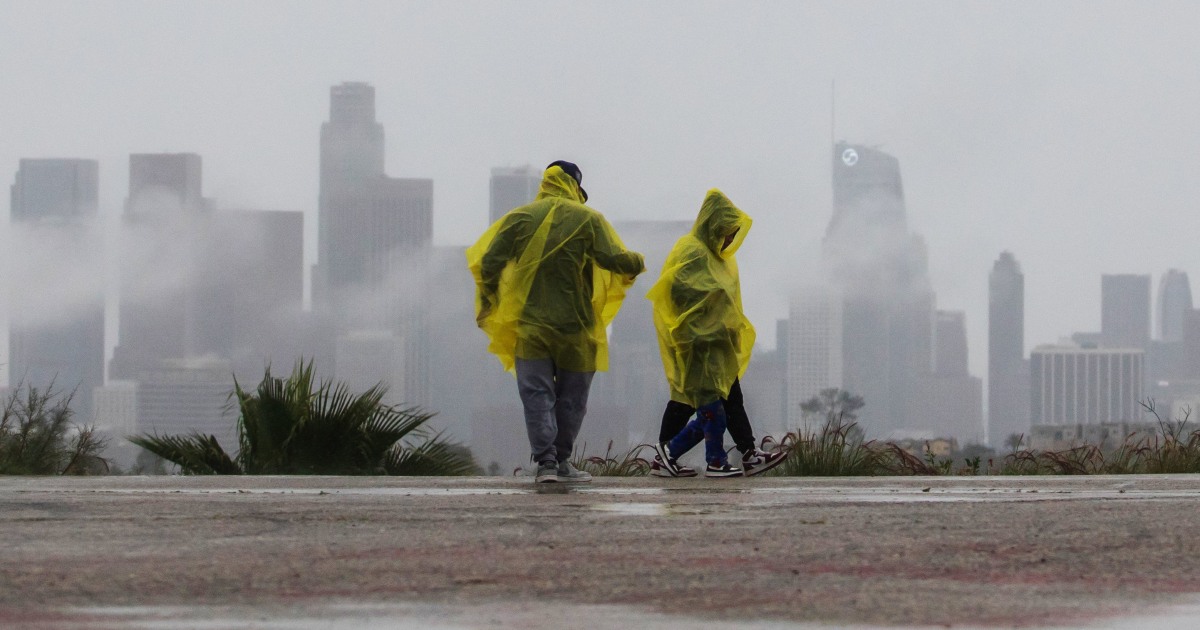
California has emerged from the shadow of drought for the first time in more than two decades, marking a significant milestone in the state's long battle with water scarcity. According to the U.S. Drought Monitor, the entire state is now free of drought conditions, a status not seen since December 2000. This welcome development comes on the heels of a series of powerful winter storms that battered the region with heavy rain and snow in late December and early January, replenishing reservoirs and easing the strain on water resources that had persisted for years.
The transformation was swift and dramatic. Beginning around December 20, atmospheric river storms unleashed torrents of precipitation across the state. Northern California saw up to 7 inches of rain in just a week, while southern areas received up to 4 inches. As the new year dawned, additional rounds of intense rain triggered widespread flooding, particularly in low-lying regions. These events not only saturated the soil but also filled the state's 17 major reservoirs to 129% of their historical average levels, according to records from the California Department of Water Resources.
Water managers and residents alike are breathing a sigh of relief, though the scars of recent years remain. California has endured a prolonged dry spell since the early 2000s, with severe droughts in the mid-2010s leading to emergency water restrictions, agricultural losses, and wildfires exacerbated by parched landscapes. The state's last completely drought-free period ended abruptly after December 2000, giving way to a cycle of wet and dry years that culminated in the punishing drought of 2012 to 2016, which officials described as the worst in 1,200 years.
Despite the positive outlook, challenges linger in the aftermath of the storms. In coastal and urban areas like the San Francisco Bay region and Los Angeles, flooding forced evacuations and closed roads, with some communities still cleaning up debris and assessing damage. Higher elevations in the Sierra Nevada mountains, meanwhile, grappled with deep snow accumulations that raised concerns about avalanches. The California Office of Emergency Services reported multiple incidents of flash flooding in rivers and creeks, particularly along the Russian River in Sonoma County and the Salinas River in Monterey County.
One of the most critical aspects of this wet winter has been the boost to California's snowpack, which serves as a natural reservoir supplying about 30% of the state's annual water needs. Measurements from 130 monitoring stations across the Sierra Nevada at the end of December showed a statewide snow-water equivalent of 6.5 inches, representing 71% of the average for that time of year, according to the California Department of Water Resources. While this is below normal, experts note that the peak snow accumulation typically occurs in January, February, and March, leaving room for further gains.
"It is still early in the season and our state’s water supply for this year will ultimately depend on a continued cadence of storms throughout winter and early spring," said Angelique Fabbiani-Leon, state hydrologist for the Department of Water Resources, in a statement released on December 30. Her words underscore the cautious optimism among officials, who emphasize that a single wet spell does not erase the vulnerabilities exposed by years of climate variability.
The storms' impact extended beyond immediate water relief. Farmers in the Central Valley, a powerhouse of U.S. agriculture, reported early signs of improved groundwater recharge, which could alleviate the overpumping that has caused land subsidence in places like the San Joaquin Valley. Urban water districts, such as the Metropolitan Water District of Southern California, have already adjusted forecasts upward, potentially reducing the need for conservation mandates that were in place during drier times.
However, the drought-free declaration does not mean all regions are uniformly recovered. Some pockets of the state, particularly in the arid interior, were still listed as "abnormally dry" in earlier Drought Monitor updates before the latest storms washed away those designations. The U.S. Drought Monitor, a collaborative effort by the National Oceanic and Atmospheric Administration, the U.S. Department of Agriculture, and other agencies, updates weekly based on precipitation data, soil moisture, and streamflow measurements.
While California celebrates this rare reprieve, the broader Western United States tells a starkly different story. Neighboring states continue to suffer from entrenched dry conditions. In Nevada, Utah, and Colorado, drought covers vast swaths of land, with snowpack levels lagging far behind normal. Utah's snowpack, for instance, is at record lows, and 93% of the state remains in drought, according to the Utah Division of Water Resources.
Further afield, Washington, Oregon, Arizona, and New Mexico are experiencing what experts call a "snow drought." More than 80% of monitoring stations in these states are recording snow-water equivalent readings below the 20th percentile, as reported by NOAA's National Integrated Drought Information System. This disparity highlights the uneven effects of weather patterns across the region, where California's position along the Pacific storm track has funneled moisture its way while leaving inland areas parched.
Climate scientists point to shifting weather patterns as a key factor. The atmospheric rivers that fueled California's deluge are intense moisture plumes from the Pacific, but their paths can vary year to year. Researchers from the Scripps Institution of Oceanography in La Jolla have noted that while short-term relief is encouraging, long-term trends suggest more extreme swings between flood and drought due to climate change. A 2023 study published in the journal Nature Climate Change projected that California could see wetter winters interspersed with deeper droughts by mid-century.
For residents, the shift from drought to flood has been jarring. In Montecito, near Santa Barbara, where deadly mudslides in 2018 followed a similar wet spell after years of fire and drought, locals are on high alert for debris flows. "We've gone from rationing every drop to watching the rivers overflow—it's a reminder that water is never simple here," said Maria Gonzalez, a homeowner in the affected area, in an interview with local media.
State officials are now focusing on infrastructure resilience. Governor Gavin Newsom's administration has allocated funds from the 2022 water bond to upgrade levees and expand stormwater capture systems, lessons learned from past events. The Department of Water Resources is also monitoring for potential La Niña conditions later in the year, which could bring drier weather and test the robustness of current gains.
Looking ahead, the drought-free status offers a buffer against immediate crises, but experts warn that complacency could be risky. With California's population exceeding 39 million and demands from tech hubs, agriculture, and ecosystems, sustainable management remains paramount. Hydrologists like Fabbiani-Leon stress the importance of diversified water sources, including desalination and recycling, to weather future uncertainties.
In the end, this winter's bounty serves as both a triumph and a cautionary tale for the Golden State. As storms continue to shape the landscape, California stands at a crossroads, hopeful for a sustained recovery while bracing for the unpredictable forces of nature that define its water future.