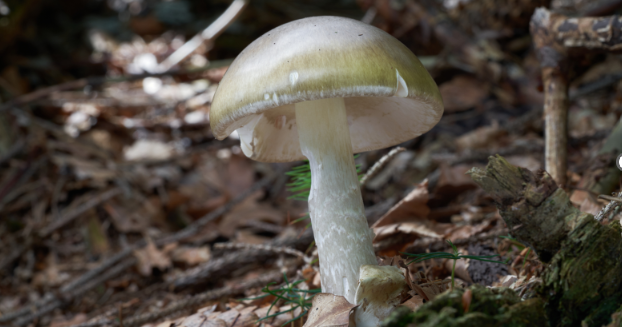
SAN FRANCISCO — The California Department of Public Health issued an urgent advisory on Friday, warning residents against foraging for wild mushrooms amid a cluster of poisonings that has left one person dead and others battling severe liver damage.
According to the department, 21 cases of amatoxin poisoning have been confirmed by the California Poison Control System as of Friday, all linked to the consumption of wild, foraged mushrooms, including the deadly death cap variety. The poisonings have been reported in clusters around the Monterey area and the Bay Area, though officials emphasize that the risk extends statewide due to favorable growing conditions from recent fall and winter rains.
One victim succumbed to the poisoning, while several others, including children and adults, have experienced life-threatening liver damage. At least one patient may require a liver transplant, the department said in its advisory. The death cap mushroom, known scientifically as Amanita phalloides, is notorious for its toxicity and is often mistaken for edible species like the paddy straw mushroom or even some wild edibles that foragers seek out.
The advisory comes at a time when mushroom foraging has surged in popularity in California, particularly after wet weather that promotes fungal growth. Death caps typically emerge near oak trees, other hardwoods, and even pines, blending seamlessly with safer varieties in forests and parks. Officials stressed that no amount of preparation—whether cooking, boiling, drying, or freezing—can neutralize the amatoxins, which are heat-stable and highly potent.
Symptoms of death cap poisoning often begin subtly, between six and 24 hours after ingestion, with watery diarrhea, nausea, vomiting, abdominal pain, and dehydration. What makes the toxin particularly insidious, according to the California Department of Public Health, is a deceptive period of recovery. "Patients may still develop serious to fatal liver damage within 48 to 96 hours after eating the mushrooms," the department warned in its statement.
Dr. Erica Pan, the CDPH Director and State Public Health Officer, underscored the dangers in a direct appeal to the public. "Because the death cap can easily be mistaken for edible safe mushrooms, we advise the public not to forage for wild mushrooms at all during this high-risk season," she said.
The recent cases highlight a broader trend in mushroom-related incidents across the state. Foraging enthusiasts, drawn to the culinary appeal of wild varieties, have increasingly ventured into wooded areas following the state's rainy season, which began in earnest last month. However, experts note that misidentification is a common pitfall, even among experienced foragers. The death cap's olive-green cap and white gills can resemble the innocent-looking Caesar's mushroom or other edibles, leading to tragic errors.
In the Monterey Peninsula, where several poisonings occurred, local health officials reported a spike in calls to poison control hotlines over the past two weeks. One cluster involved a family outing that turned disastrous when foraged mushrooms were prepared for dinner, resulting in multiple hospitalizations. Details on the victims remain limited to protect privacy, but the department confirmed that children were among those affected, amplifying the urgency of the warning.
The Bay Area has seen similar reports, with incidents tied to urban parks and nearby coastal forests. San Francisco's Golden Gate Park and Oakland's wooded trails have long been hotspots for amateur mycologists, but this season's wet conditions have led to an explosion of growth. "We've had to turn away foragers asking for identification help because the risks are just too high right now," said a spokesperson for the San Francisco Department of Public Health, echoing the statewide advisory.
Historically, mushroom poisonings in California peak during wet winters, with death caps responsible for the majority of severe cases. The California Poison Control System, which tracks these incidents, reported 15 similar poisonings last year, but none as clustered as this year's outbreak. Amatoxin, the key toxin in death caps, inhibits RNA polymerase II in cells, effectively shutting down protein synthesis and causing organ failure if untreated.
Treatment for amatoxin poisoning is aggressive and often involves activated charcoal to bind toxins, intravenous fluids, and in severe cases, experimental antidotes like silibinin derived from milk thistle. Liver transplants become a last resort, as seen potentially in one of this year's cases. The department advised anyone suspecting exposure to seek immediate medical attention, even if symptoms subside, as the delayed liver assault can be fatal without intervention.
While the advisory targets foragers, it also serves as a reminder of the perils of unregulated wild harvesting. Commercial mushroom cultivation, by contrast, ensures safety through controlled environments and expert oversight. "The CDPH advises people to buy mushrooms from reputable stores or known commercial sources," the statement concluded, promoting safer alternatives amid the foraging boom fueled by social media and farm-to-table trends.
Environmental factors play a role in the proliferation of death caps, which thrive in California's Mediterranean climate. Introduced from Europe likely via imported trees in the 19th century, the fungus has become naturalized, posing ongoing risks. Climate change, with its erratic rainfall patterns, may exacerbate future outbreaks, according to mycologists at the University of California, Berkeley, though they stress education as the best defense.
As the rainy season continues, public health officials are ramping up outreach, including partnerships with hiking groups and social media campaigns to deter foraging. The California Department of Fish and Wildlife has also posted warnings at popular trailheads. For those undeterred, experts recommend consulting field guides or apps only as supplements to professional identification, but the CDPH's message is clear: abstinence from wild foraging is the safest path.
The tragedy of this year's poisonings underscores the fine line between nature's bounty and its dangers. With one life lost and families forever altered, California's health authorities hope their advisory will prevent further harm in the months ahead. As Dr. Pan put it, the stakes are too high for guesswork in the wild.