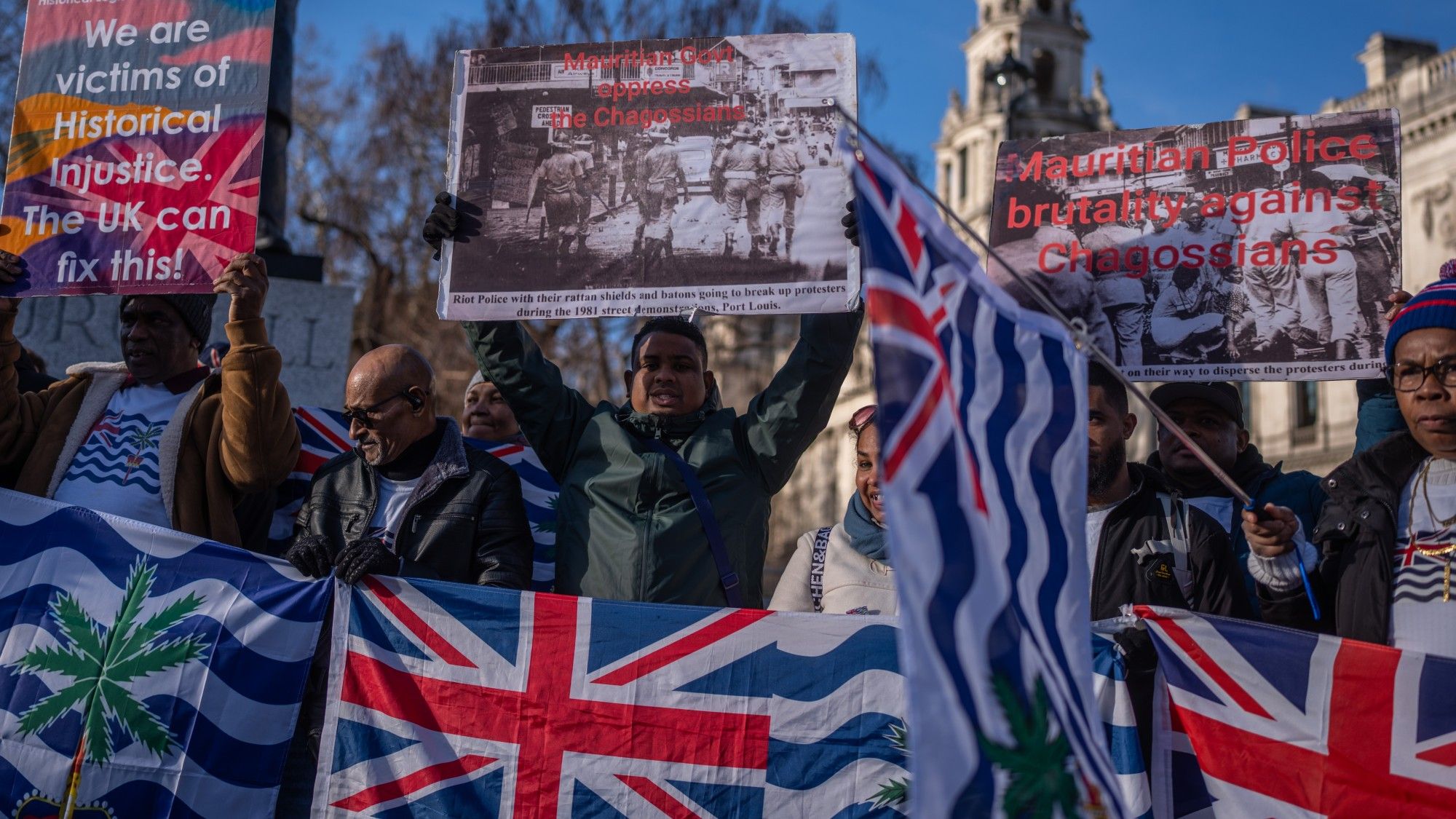
London, UK – Prime Minister Keir Starmer's agreement to transfer sovereignty of the Chagos Islands to Mauritius is under mounting pressure, with U.S. President-elect Donald Trump signaling opposition that could derail the deal. The pact, which includes a 99-year lease for the strategic Diego Garcia military base jointly used by the UK and U.S., was initially supported by Trump but has faced intense lobbying from politicians on both sides of the Atlantic. As opponents in the UK Parliament grow confident in blocking ratification, Starmer faces a tight deadline to secure approval before May.
The Chagos Archipelago, located in the Indian Ocean, has long been a flashpoint in international relations. In 2019, the International Court of Justice issued an advisory opinion declaring the UK's continued control over the islands unlawful, urging the return of sovereignty to Mauritius. This ruling stemmed from the forced displacement of the Chagossian people in the 1960s and 1970s to make way for the military base on Diego Garcia, which serves as a key hub for U.S. and British operations in the region. According to former Foreign Office special adviser Ben Judah, writing in The Sunday Times, the deal was not driven by "human rights waffle or some misguided fantasy about pleasing the global south," but by hard-nosed geopolitics to prevent the base from falling into adversarial hands, such as those of China.
Under the agreement announced earlier this year, the UK would relinquish sovereignty while securing long-term access to Diego Garcia, ensuring the base's operational continuity. The deal was painstakingly negotiated over months, reflecting Labour's emphasis on international law and strategic partnerships. However, Trump's recent comments on Truth Social, where he called the arrangement "a big mistake," have injected fresh uncertainty. This shift appears linked to the UK's refusal to allow use of the base for potential strikes on Iran, alongside lobbying efforts from high-profile figures including former UK Prime Minister Boris Johnson, ex-Prime Minister Liz Truss, Reform UK leader Nigel Farage, and Conservative leadership contender Kemi Badenoch.
Trump's wavering stance has emboldened UK critics of the deal. Arj Singh, deputy political editor at The i Paper, reported that opponents are "increasingly optimistic they can block" Parliament from voting the treaty into law, potentially forcing Starmer into a U-turn. In the U.S., figures like former Tory leader Iain Duncan Smith have argued that the agreement will fail without American backing, a point echoed in discussions about whether Trump even has the authority to veto it. The UK government is reportedly investigating this legal question, as noted by Bloomberg reporters Kamlesh Bhuckory and Ellen Milligan, who observed that Trump "hasn’t explicitly stated whether he will veto the Chagos agreement."
Judah highlighted the challenges in communicating the deal's rationale, describing a "three-step logic" rooted in geopolitical trade-offs that doesn't lend itself to simple soundbites. He wrote that without clear explanation, the agreement is vulnerable to attacks portraying it as "woke lawyer activism," a "misguided soft power exercise drawn up by brain-dead diplomats," or even "treason." This framing has fueled conservative opposition in Westminster, where the treaty must navigate both the House of Commons and the House of Lords.
The parliamentary timeline adds urgency. The government recently pulled plans for a vote in the House of Lords scheduled for Tuesday, delaying proceedings amid the backlash. David Maddox, writing in The Independent, noted that Starmer "has to get the treaty ratified before May or it fails." There remains "some small hope" that Liberal Democrat peers may abstain when the vote resumes in early March, potentially easing passage through the upper chamber before it returns to the Commons for final approval.
On the international front, Mauritius has pushed back against efforts to undermine the deal. The island nation accused a group of Chagossians, who have reportedly "settled" on a remote island in the archipelago, of staging a publicity stunt aimed at scuttling the agreement. According to The Telegraph's editorial board, Mauritius "may launch legal action for compensation" if the treaty is canceled, underscoring that the financial incentives in the deal hold greater appeal for Port Louis than the sovereignty claim under international law.
Chagossian exiles, displaced decades ago, have long advocated for the right of return, viewing the military base as a symbol of injustice. Their presence on the remote island highlights ongoing tensions, with some activists framing the deal as a betrayal that prioritizes military interests over human rights. Mauritius, which separated from the UK in 1968 but claims the Chagos Islands were wrongly detached, sees the agreement as vindication of its legal position.
Trump's "new-found antipathy," as described by commentators, provides Starmer with a potential exit strategy from what some call a self-dug hole. Yet, the prime minister has received praise for his diplomatic efforts. Observers have lauded his "international statesmanship," though the Chagos saga now risks tarnishing that reputation for the Labour leader, who has faced a turbulent start to his tenure.
The strategic stakes are high. Diego Garcia has been pivotal in U.S.-led operations, from the Gulf Wars to more recent counterterrorism efforts. Losing secure access could disrupt alliances and invite competition from powers like China, which has expanded its influence in the Indian Ocean. The 2019 ICJ opinion, supported by the UN General Assembly, amplified calls for decolonization, pressuring the UK to act despite domestic resistance.
Opponents argue the deal compromises British sovereignty unnecessarily, especially with Trump's America First policies signaling a retreat from multilateral commitments. Supporters, including Labour officials, counter that it safeguards the base's future while aligning with global norms. As one analyst put it, the agreement represents "Realpolitik firmly grounded in geopolitical trade-offs," a pragmatic response to legal and strategic realities.
Looking ahead, the coming weeks will be crucial. If the Lords vote proceeds in early March without major defections, the treaty could advance to the Commons. Failure to ratify by May would collapse the deal, potentially straining UK-Mauritius relations and inviting legal challenges. Mauritius has already signaled readiness to pursue compensation, estimated in the hundreds of millions, tied to the financial package offered in the original agreement.
Beyond the immediate politics, the Chagos controversy underscores broader debates on empire, military basing, and climate-vulnerable territories. The archipelago's atolls face rising sea levels, complicating any resettlement plans. For Starmer, navigating this minefield tests his government's foreign policy mettle amid domestic economic pressures and transatlantic shifts under Trump.
As the UK weighs its options, the world watches a pivotal moment in decolonization efforts. Whether Starmer can salvage the deal remains uncertain, but the lobbying frenzy and parliamentary drama have already reshaped the narrative around this distant outpost.