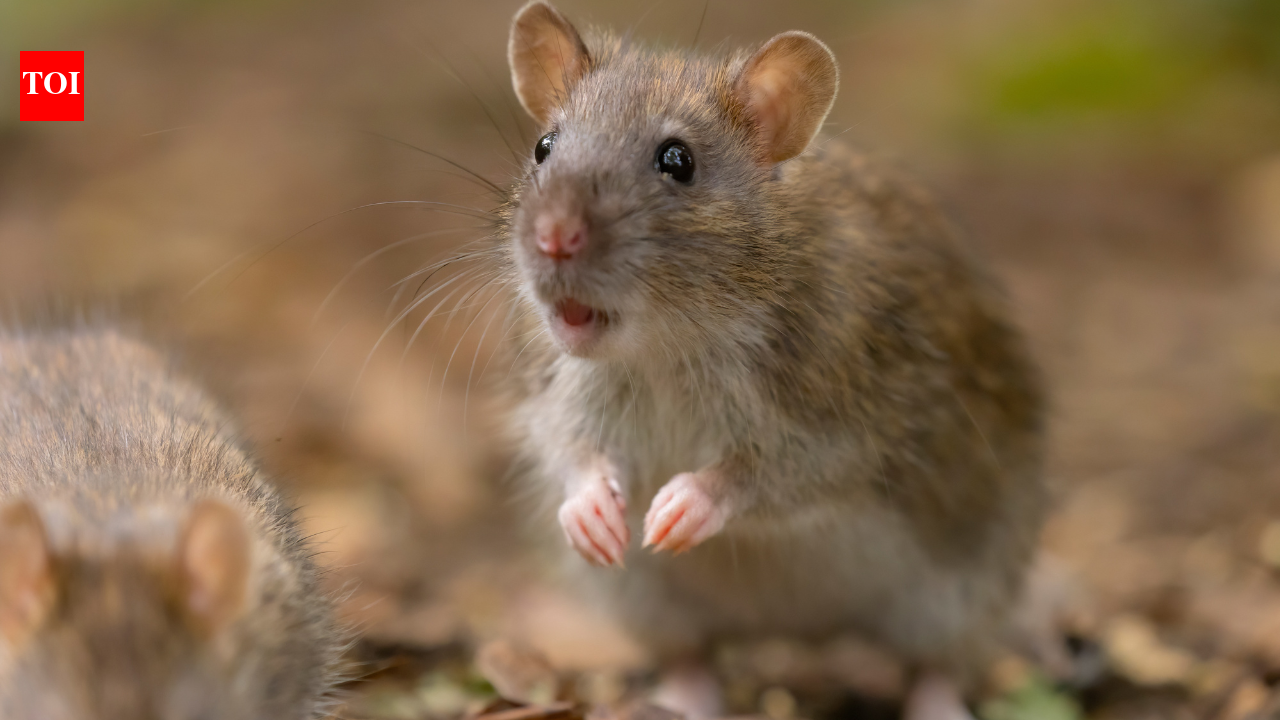
APPLETON, Wis. — In a breakthrough that could redefine how astronauts stay fit during long-duration space missions, scientists have turned to an unlikely ally: mice. Researchers at NASA's Ames Research Center in California have discovered that studying muscle responses in rodents exposed to simulated Martian gravity offers promising solutions to the debilitating effects of space travel on the human body. The findings, published last week in the journal Space Medicine, suggest that targeted exercise regimens inspired by mouse physiology could help prevent muscle atrophy for crews headed to Mars as early as the 2030s.
The challenge of maintaining physical fitness in space has long plagued space agencies. Without Earth's gravity, astronauts experience rapid muscle loss — up to 20 percent in the legs and back within just a few weeks, according to NASA data. This microgravity environment weakens bones, reduces cardiovascular efficiency, and complicates return trips to Earth. For a Mars mission, which could last two to three years round-trip, such deterioration poses serious health risks, including increased chances of injury and impaired performance during critical tasks like landing or exploration.
Enter the mice. In a series of experiments conducted aboard the International Space Station (ISS) between 2022 and 2023, a team led by Dr. Emily Chen, a biophysicist at Ames, exposed 48 mice to varying levels of artificial gravity mimicking Mars' pull — about 38 percent of Earth's. The rodents were divided into groups: some exercised on a centrifuge designed to simulate resistance training, others followed dietary protocols rich in protein analogs, and a control group remained sedentary. "What we found was astonishing," Dr. Chen said in an interview. "The mice that underwent short, high-intensity interval training retained nearly 90 percent of their muscle mass, even in low gravity. This isn't just about rodents; it's a blueprint for human countermeasures."
The study builds on decades of animal research in space. Since the 1980s, NASA has sent thousands of mice, rats, and other small mammals to orbit to understand physiological adaptations. Previous missions, like the Rodent Research-19 in 2019, focused on bone density, but this latest effort zeroed in on muscular endurance under partial gravity — a closer analog to Mars than the weightlessness of low Earth orbit. The experiments used a new device called the Multi-Purpose Centrifuge, installed on the ISS in 2021, which rotates habitats to generate centrifugal force equivalent to Martian conditions.
Details from the research reveal specifics that could translate directly to astronaut training. For instance, the mice exercised for 30 minutes daily, five days a week, using a wheel system that provided resistance through elastic bands calibrated to 0.38g. Blood samples taken post-mission showed elevated levels of myostatin inhibitors — proteins that naturally limit muscle growth — in the active group, suggesting a genetic pathway that could be pharmacologically enhanced in humans. "These results challenge the assumption that constant exercise is needed," noted co-author Dr. Raj Patel, a physiologist from the University of California, Berkeley. "Brief, intense sessions might be sufficient, freeing up time for scientific work on Mars."
Not all experts are fully convinced of the immediate applicability. Dr. Maria Gonzalez, a space medicine specialist at the European Space Agency (ESA), praised the innovation but cautioned about species differences. "Mice metabolisms are faster than ours; what works for them might require adjustments for humans," she said. ESA's own studies on the ISS, involving human subjects in partial gravity simulations, have shown mixed results, with some participants experiencing nausea during centrifuge sessions. Gonzalez's team reported in a 2023 paper that while muscle retention improved by 15 percent with similar protocols, cardiovascular strain remained a concern.
The project's origins trace back to NASA's Artemis program, which aims to return humans to the Moon by 2026 as a stepping stone to Mars. Funding for the mouse experiments came from a $15 million grant awarded in 2021 under the Human Research Program. Collaborators included the Japanese Aerospace Exploration Agency (JAXA), which provided the centrifuge technology, and private partners like SpaceX, whose Starship vehicle is slated for Mars cargo missions starting in 2026. "This is collaborative science at its best," said NASA Administrator Bill Nelson in a statement. "By learning from these tiny explorers, we're ensuring our astronauts arrive on the Red Planet ready to thrive, not just survive."
Broader context underscores the urgency. Historical missions highlight the toll of space on the body: Apollo astronauts returned with temporary vision impairments, and ISS residents rely on two-hour daily workouts to mitigate losses. A 2022 report from the National Academies of Sciences warned that without new interventions, Mars crews could face up to 50 percent muscle degradation by mission end, complicating the 6-to-9 month journey home. The mouse study addresses this by proposing a hybrid approach: combining exercise with potential drug therapies derived from rodent genetics.
Ethical considerations have also surfaced. Animal rights groups, including the Humane Society, expressed concerns over the welfare of the mice, which endured 90-day stints in space. "While we support scientific progress, we urge minimizing animal suffering," said spokesperson Lisa Hargrove. NASA responded that all protocols adhered to strict guidelines from the Institutional Animal Care and Use Committee, with post-mission veterinary checks confirming no long-term harm. The 48 mice were humanely euthanized for tissue analysis, a standard practice in such research.
Looking ahead, the findings pave the way for human trials. NASA plans to test adapted protocols on analog missions at the Johnson Space Center in Houston, where volunteers live in simulated Mars habitats. Starting in 2025, these CHAPEA (Crew Health and Performance Exploration Analog) missions will incorporate the mouse-inspired routines, monitoring participants over 378-day periods. "If successful, this could be integrated into training for the first Mars crew," Dr. Chen predicted. Private ventures, like Axiom Space's commercial ISS flights, are already expressing interest in licensing the exercise tech for tourist astronauts.
The implications extend beyond NASA. International partners see potential for lunar bases, where gravity is one-sixth of Earth's. India's space agency, ISRO, which launched its own Gaganyaan human mission in 2024, cited the study as influential for its deep-space plans. "We're adapting these insights for our astronauts," said ISRO director Dr. S. Somanath. Meanwhile, on Earth, the research could benefit patients with muscle-wasting diseases like muscular dystrophy, as the myostatin pathways overlap with human conditions.
Critics, however, point to gaps in the data. The Times of India, which first reported on the study, noted that while promising, the experiments didn't fully replicate Mars' radiation environment, a key factor in muscle degradation. "Additional variables like cosmic rays must be factored in," the article stated, quoting an anonymous ESA source. NASA's team acknowledged this, planning radiation-shielded follow-ups for 2026.
As humanity edges closer to becoming a multi-planetary species, these small-scale discoveries highlight the incremental nature of progress. The mice, now immortalized in scientific literature, remind us that solutions to cosmic challenges often start in the lab — or the cage. With Mars missions on the horizon, the fitness puzzle feels a little less daunting.
For now, researchers continue to analyze the data, refining models that could one day keep astronauts strong amid the stars. The Appleton Times will follow developments as they unfold.