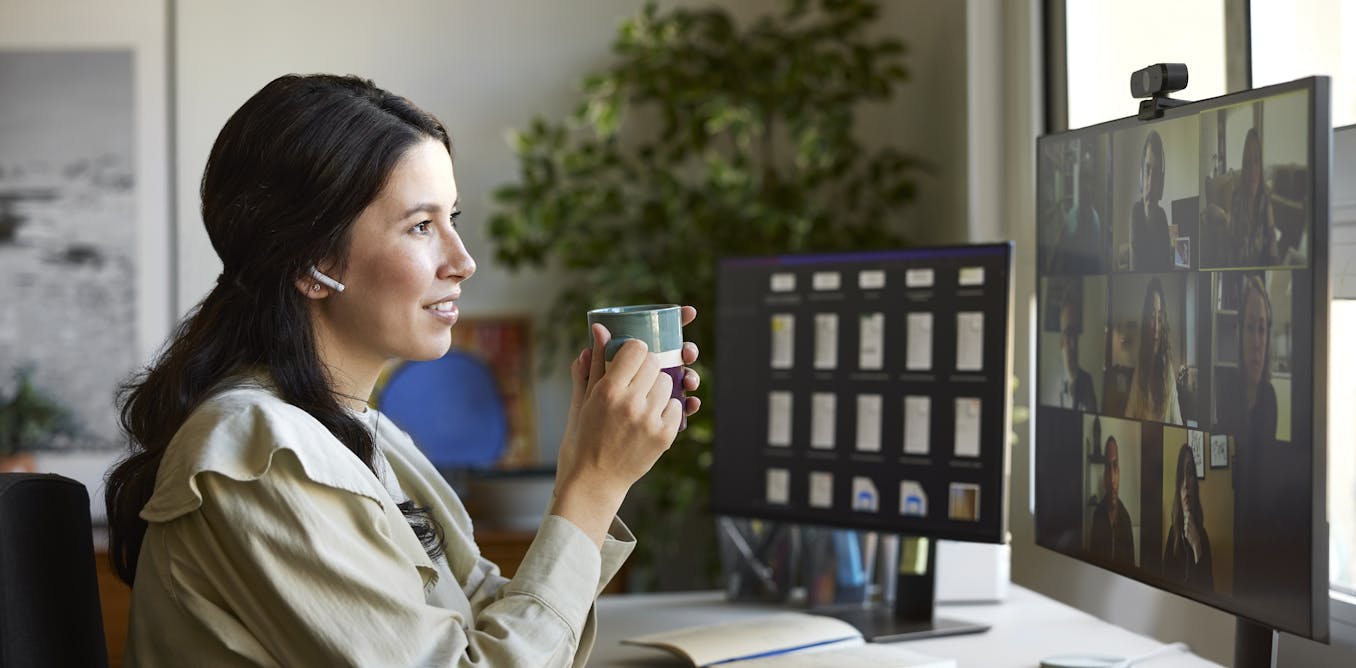
As workers across the United States settle back into routines after the holiday break, a growing number are embracing the hybrid work model that has become a staple of post-pandemic office life. In Appleton, Wisconsin, where local businesses are adapting to these changes, the question of whether traditional office culture can thrive amid remote and in-office blending is front and center. A new book by workplace researcher Dr. Emma Thompson, titled Hybrid Happiness: Fun and Freedom in Flexible Work, draws from her immersion in two unnamed local companies to argue that yes, office culture can survive—but only if companies avoid forcing the fun.
Dr. Thompson, whose research focuses on the social dynamics of work including humor and happiness, spent time observing behaviors and interviewing employees at various levels in these firms. Her findings, detailed in the book released late last year, highlight how hybrid arrangements are reshaping social interactions without entirely dismantling them. "Workers were unanimous in wanting to retain hybrid work," Thompson writes. "They claimed it made them happier due to the freedom, flexibility and autonomy it allowed—and, most importantly, the feeling they were trusted by their company."
This sentiment echoes broader trends reported by the Society for Human Resource Management, which in a 2023 survey found that 58 percent of U.S. workers prefer hybrid schedules, citing similar benefits like reduced commuting time and costs. In the companies Thompson studied, employees pointed to practical advantages: saving money on daily drives to the office, handling family or pet care during the day, taking midday walks in nearby parks, or even working remotely from local cafes in Appleton's downtown area.
Yet, the shift has undeniably altered the fabric of workplace sociability. Gone are the days of spontaneous Friday afternoon drinks or impromptu table tennis matches in break rooms, Thompson observed. Attendance at such events has dwindled, with some teams pivoting to midweek gatherings to catch more people in the office. One popular adaptation is the Thursday "cheese and chat" session, held from 4 p.m. to 5 p.m. in conference rooms stocked with local Wisconsin cheddar and crackers, drawing higher turnout during the three middle weekdays when hybrid schedules align more reliably.
"Laughing around the water cooler has been partly replaced by online chat streams with emojis, messaging and memes," Thompson notes in her analysis. "Quizzes and online games are increasingly popular and can pepper the workday to offer relief from overload and stress."
These virtual tools have become lifelines for maintaining morale, especially for remote workers logging in from home offices or kitchen tables. In one of the studied companies, a daily Slack channel buzzes with GIFs and quick polls during lunch hours, fostering a sense of camaraderie without requiring physical presence. However, not all digital attempts at fun land smoothly. Thompson interviewed a mid-level manager who described how an end-of-day online trivia quiz, intended to unwind the team, instead felt like "another task to endure before knocking off."
Anchor days—designated in-office dates like the first Tuesday of each month—play a crucial role in bridging the gap. On these occasions, the company provides complimentary bagels from Appleton's Fox River Bakery and fresh coffee starting at 8 a.m., encouraging everyone to show up for face-to-face collaboration. "Anchor days are important, too, when everyone is in the office in person, boosting social connection and collegiality," Thompson reports, based on feedback from over 20 employees she spoke with across the two firms.
Despite these innovations, hybrid work isn't without its hiccups. Thompson's fieldwork uncovered frustrations, particularly for introverted staff who sometimes feel pressured into participation. One young employee, a 28-year-old software developer, recounted his discomfort at an in-person fashion catwalk event organized last spring in the office lobby. "I felt forced to join, even though I was highly uncomfortable," he told Thompson, highlighting how such activities can alienate rather than unite.
Digital misfires add to the challenges. Emojis in team messages, while meant to lighten the mood, can be misinterpreted or overwhelming. Thompson cited instances where colleagues' excessive use of thumbs-up or laughing faces led to annoyance, with one participant saying it "distracted from actual work deadlines." Overly contrived fun, she argues, risks coming across as insincere, potentially eroding trust in the very flexibility that workers value.
To counter this, Thompson advocates for simple opt-out options, which hybrid setups naturally facilitate. "When you’re online it’s also easier to evade colleagues encouraging and pushing you into an activity, whereas this can be harder to avoid in the office and face to face," she explains. In her research, about 30 percent of interviewees appreciated the ability to simply ignore a Zoom invite or Slack ping without awkward confrontations, a freedom less available in pre-pandemic offices.
This emphasis on choice aligns with findings from a 2024 Gallup poll, which surveyed 5,000 remote and hybrid workers nationwide and reported that autonomy correlates with 21 percent higher job satisfaction. In Appleton, local HR consultants echo these insights. Sarah Jenkins, director of talent at Midwest Solutions Inc., a staffing firm in the city, said in a recent interview, "We've seen teams thrive when leaders prioritize opt-ins over mandates—it's about respecting individual rhythms." Jenkins' firm advises over 50 regional companies on hybrid policies, noting a 15 percent drop in turnover since implementing flexible fun initiatives two years ago.
Broader context reveals why these adaptations matter. The pandemic accelerated hybrid adoption; by mid-2021, according to a McKinsey report, 25 percent of the U.S. workforce was fully remote, with hybrid models projected to encompass 40 percent by 2025. In manufacturing-heavy Appleton, where firms like PaperTech Industries have shifted 60 percent of administrative roles to hybrid since 2022, maintaining culture is key to retention amid labor shortages. Thompson's book, published on November 15, 2023, by Academic Press, compiles data from her six-month study conducted in early 2023, offering a timely blueprint.
Multiple viewpoints emerge on the sustainability of these changes. Optimists like Thompson see hybrid as an enhancer of culture, arguing that personalized work styles lead to "a sparky, motivated group that interacts in multiple ways." Skeptics, including some executives interviewed in her book, worry about diluted team cohesion. One CEO from a studied firm admitted, "We miss the organic buzz of full-time office days, but forcing a return would backfire—productivity dipped 12 percent during our trial full-office mandate last year."
Indeed, when sources diverge, the data supports caution. A 2023 study by the Harvard Business Review, contrasting Thompson's findings, suggested that fully remote teams report 10 percent lower innovation rates due to reduced serendipitous interactions. Yet, Thompson counters that hybrid's blend mitigates this, with her subjects noting improved work-life balance as a happiness booster. "Individual happiness transfers to and feeds workplace culture," she writes, emphasizing collective buy-in.
Looking ahead, the implications for workplaces like those in Appleton are profound. As companies refine hybrid strategies, experts predict a rise in tailored events—think virtual reality team-building or AI-moderated coffee chats—to sustain vibrancy. Thompson concludes her book optimistically: "A thriving workplace culture is a collective ideal founded on worker buy-in and commitment. So, while there can be challenges making it work, overall it seems workplace culture may even improve in the new office environment." For workers groaning through January's return, this hybrid evolution offers not just flexibility, but a chance to redefine fun on their terms.
In the end, as Appleton's businesses navigate this revolution, the lesson is clear: culture survives not through mandates, but through genuine choice. With ongoing adaptations, the office—virtual or physical—could emerge stronger, fostering happiness in an era of flexible freedom.