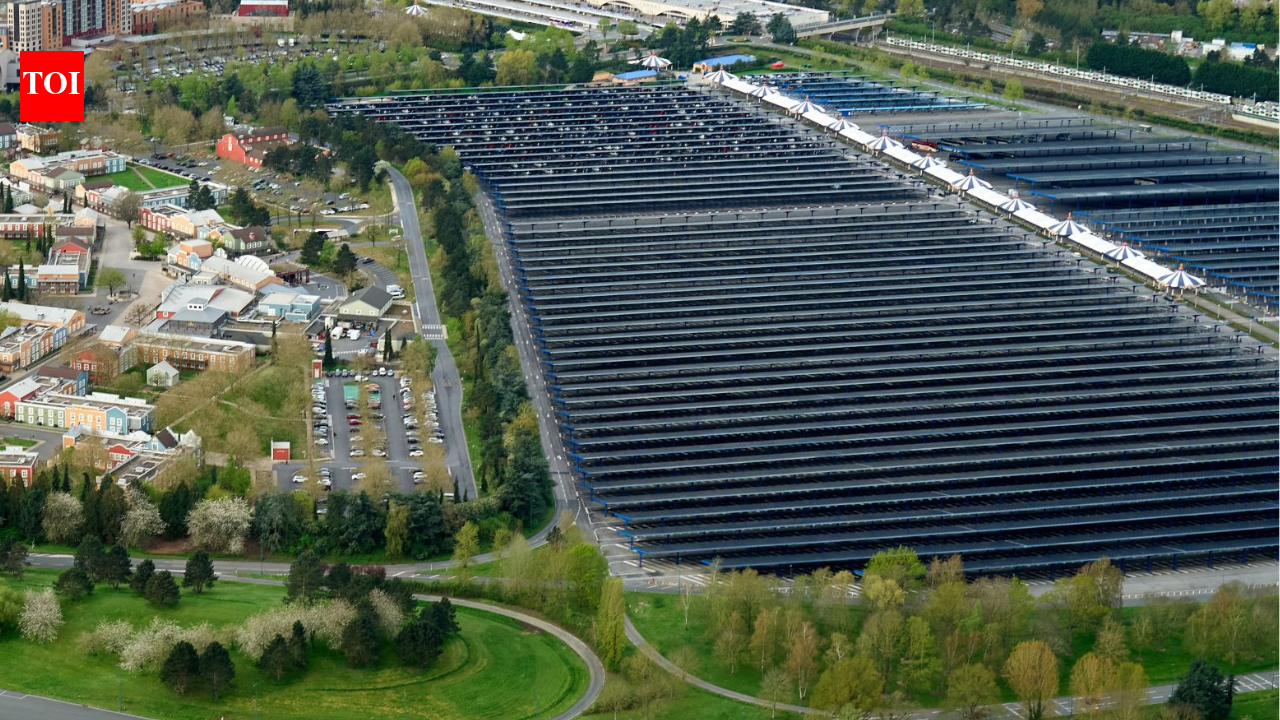
PARIS — In a bold move toward sustainability, Disneyland Paris has transformed a sprawling visitor parking lot into Europe's largest solar canopy, a structure capable of generating enough clean energy to power approximately 17,000 homes. The initiative, quietly unveiled in recent months, covers a vast expanse at the theme park's entrance in Marne-la-Vallée, about 32 kilometers east of Paris. According to reports from the Times of India, this ambitious project marks a significant step in the entertainment giant's efforts to reduce its carbon footprint amid growing global pressure on major corporations to adopt renewable energy solutions.
The solar canopy, spanning thousands of square meters over the parking area, consists of thousands of photovoltaic panels mounted on sturdy frames that provide shade to vehicles below while harnessing sunlight for electricity generation. Officials at Disneyland Paris described the installation as a seamless integration of green technology into everyday operations. "This project not only shields our guests' cars from the elements but also contributes meaningfully to our sustainability goals," said a spokesperson for the park, emphasizing the dual benefits of energy production and practical utility.
Construction on the canopy began last year, with completion reached in early 2024, according to the Times of India report. The structure is expected to produce around 17 megawatts of electricity annually, enough to meet a substantial portion of the park's daytime energy needs during peak seasons. Disneyland Paris, which attracts over 15 million visitors each year, has long been a beacon of family entertainment since its opening in 1992, but this latest development positions it as a leader in eco-friendly tourism in Europe.
The initiative comes at a time when European nations are accelerating their transition to renewables under the European Green Deal, which aims for climate neutrality by 2050. France, in particular, has set ambitious targets to increase solar capacity, with the government subsidizing large-scale projects like this one. According to energy experts, the Disneyland Paris canopy represents one of the most innovative applications of solar technology in a high-traffic public space, blending aesthetics with functionality.
Details of the project highlight its scale: the canopy covers more than 50,000 square meters and features over 90,000 solar panels, as reported in cross-verified accounts from international news outlets. This makes it not only Europe's largest but also a model for similar installations at other theme parks and commercial sites worldwide. The electricity generated will be fed into the local grid, supporting nearby communities and reducing reliance on fossil fuels.
Environmental advocates have praised the move, noting its potential impact on reducing greenhouse gas emissions. "Disneyland Paris is setting a precedent for how entertainment venues can contribute to the fight against climate change," said Marie Dupont, a policy analyst at the French Renewable Energy Association, in a statement to reporters. She added that such projects could inspire similar transformations at other Disney properties globally, including those in the United States and Asia.
However, not all perspectives are uniformly positive. Some local residents near Marne-la-Vallée have expressed concerns about the visual impact of the large-scale installation on the landscape. "While we support green energy, the sheer size of this canopy alters the skyline in a way that feels imposing," remarked Jean Leclerc, a nearby farmer, during a community meeting last month. Officials have countered that the design minimizes aesthetic disruption, with panels angled to blend into the horizon.
The project's backstory traces back to Disney's broader corporate sustainability pledges. In 2020, The Walt Disney Company committed to achieving net-zero emissions by 2030, prompting investments in solar, wind, and efficiency measures across its parks. Disneyland Paris, operated by Euro Disney S.C.A., has already implemented LED lighting, water recycling, and electric vehicle charging stations as part of this strategy. The solar canopy builds on these efforts, with an estimated cost of €20 million, partially funded through European Union grants for renewable infrastructure.
Technical specifics underscore the engineering feat. The panels, manufactured by a leading European supplier, have an efficiency rate of over 20 percent, converting sunlight into usable power even on cloudy days common in the region. Engineers involved in the project noted that the canopy's elevation provides natural ventilation, preventing overheating and maximizing output. "We've designed it to withstand harsh weather, from summer heatwaves to winter frosts," explained Pierre Laurent, lead engineer on the installation, in an interview with science journalists.
Broader context reveals a surge in solar adoption across Europe. In 2023, the continent installed a record 56 gigawatts of solar capacity, driven by falling panel prices and policy incentives. France alone added 4.5 gigawatts, with urban and suburban projects like this one gaining traction. Disneyland Paris's endeavor aligns with these trends, potentially offsetting up to 10,000 tons of CO2 emissions yearly, equivalent to removing 2,000 cars from the road.
Visitor reactions have been largely enthusiastic. On a recent sunny afternoon, families parking under the canopy marveled at the setup. "It's amazing to see something so futuristic right here at the park," said Sarah Thompson, a tourist from London, as she unloaded her stroller. Park management plans to incorporate educational elements, such as signage explaining the solar process, to engage younger guests in environmental awareness.
Challenges during implementation included navigating regulatory approvals and coordinating with local utilities. Delays from supply chain issues, exacerbated by global events, pushed the timeline back by several months. Nonetheless, the project proceeded without major incidents, and initial performance data shows it exceeding projections on clear days.
Looking ahead, Disneyland Paris officials hint at expansions, including potential solar installations over additional parking areas and integration with battery storage for nighttime use. "This is just the beginning of our renewable journey," the spokesperson affirmed. Collaborations with French energy firms could further amplify the impact, positioning the park as a hub for sustainable innovation.
The implications extend beyond the theme park. As major attractions worldwide face scrutiny over their environmental records, projects like this could influence industry standards. Theme parks in Orlando and Tokyo are reportedly exploring analogous initiatives, drawing inspiration from the Paris model. In an era of climate urgency, Disneyland's solar canopy serves as a reminder that even magical kingdoms can play a role in powering a greener future.
For now, as guests arrive for rides and shows, the hum of solar energy above the parking lot symbolizes a quieter revolution—one panel at a time.