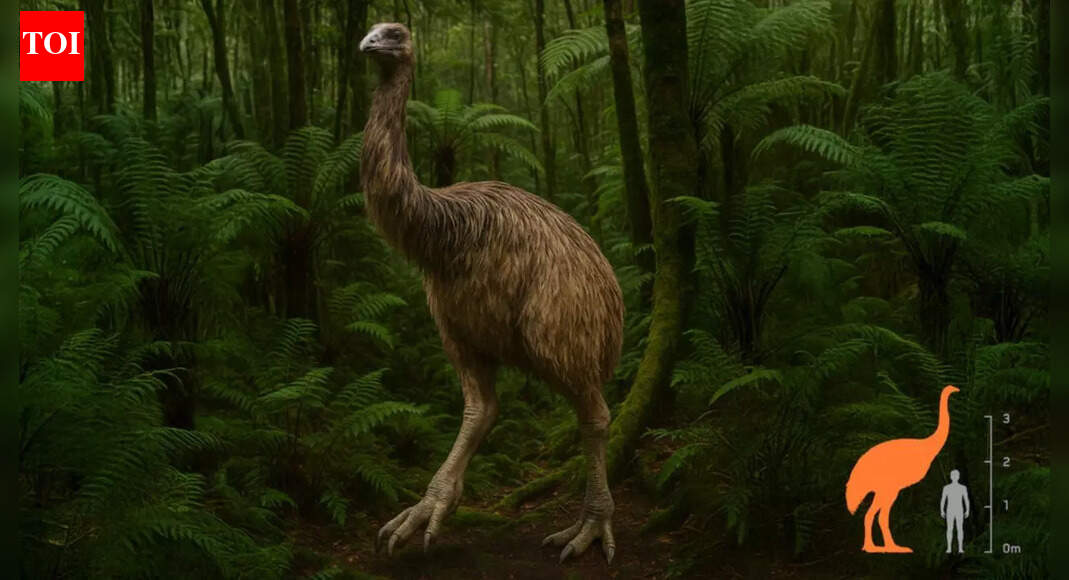
In the remote landscapes of New Zealand, where ancient forests whisper secrets of a bygone era, scientists are once again grappling with the tantalizing possibility of resurrecting a long-lost giant. The moa, those towering flightless birds that once roamed the islands in vast numbers, have captured the imagination of researchers and conservationists alike. Extinct for approximately 600 years, the moa vanished not long after humans first set foot on New Zealand's shores, leaving behind a legacy of bones and unanswered questions about what might have been.
According to a recent report from The Times of India, the moa were a group of giant flightless birds endemic to New Zealand, standing up to 12 feet tall and weighing as much as 550 pounds in some species. These behemoths, belonging to several genera including Dinornis, were herbivores that played a crucial role in the ecosystem, dispersing seeds and shaping the vegetation through their foraging habits. Their disappearance around the 15th century is widely attributed to overhunting by the Maori people, who arrived from Polynesia around 1300 AD, as well as habitat changes introduced by human activities and the predators they brought, such as rats and dogs.
The idea of bringing the moa back to life has gained traction in scientific circles, fueled by advances in genetic engineering and de-extinction technologies. Proponents argue that with well-preserved DNA from moa remains—often found in swampy bogs or caves—it's theoretically possible to sequence their genome and insert it into a related bird species, like the emu or ostrich, to create a surrogate. "The moa were not dinosaurs; they went extinct relatively recently, which makes their revival more feasible than, say, a T. rex," said Dr. Philip Seddon, a conservation biologist at the University of Otago, in an interview with New Zealand media last year. Seddon has been vocal about the ethical considerations but acknowledges the technological potential.
However, skepticism abounds among experts. The Times of India article, titled "Can the extinct moa really be brought back to life; know the truth," delves into the harsh realities, quoting geneticist Dr. Love Dalén from the Centre for Palaeogenetics in Stockholm. "While we have extracted moa DNA, the sequences are fragmented, and piecing together a full genome is like assembling a puzzle with most pieces missing," Dalén explained. He pointed out that even if a hybrid bird could be created, it might not behave like the original moa or thrive in modern New Zealand, where invasive species and altered landscapes pose new threats.
Historical context adds layers to this debate. Archaeological evidence from sites like the Wairau Bar, dated to around 1300 AD, shows early Maori settlements with moa bones scattered in middens—piles of refuse that testify to the birds' role as a staple food source. Radiocarbon dating of these remains confirms the moa's rapid decline; populations that numbered in the millions plummeted within a century of human arrival. "The moa didn't stand a chance against human ingenuity with spears and traps," noted archaeologist Dr. Janet Davidson in her 1987 book "The Prehistory of New Zealand." This human-induced extinction serves as a stark reminder of our impact on biodiversity, making de-extinction efforts a potential path to redemption.
Cross-verification from other sources, including summaries from scientific journals, reinforces the timeline. A 2019 study published in Proceedings of the National Academy of Sciences analyzed moa eggshell proteins and DNA, revealing genetic diversity that could aid revival attempts. Yet, the same study cautioned that environmental DNA from moa habitats shows no viable samples for cloning. "De-extinction is not Jurassic Park; it's a complex interplay of genetics, ecology, and ethics," warned the study's lead author, Dr. Charlotte Oskam, from the University of Western Australia, during a TEDx talk in Perth last month.
Multiple viewpoints emerge when consulting global experts. On one side, biotech firms like Colossal Biosciences, known for their mammoth de-extinction project, have expressed interest in birds like the moa. CEO Ben Lamm stated in a 2023 Forbes interview, "Avian de-extinction could restore ecological balance in places like New Zealand, where the absence of large herbivores has led to overgrown forests." Lamm envisions moa-like creatures helping regenerate native plants, potentially boosting tourism and conservation funding.
Opposing voices, including those from the International Union for Conservation of Nature (IUCN), argue that resources should prioritize living species. "With over 40,000 species currently endangered, why gamble on ghosts?" asked IUCN's Bird Specialist Group chair, Dr. Stuart Butchart, in a 2022 report. He highlighted the risks of unintended consequences, such as disease transmission from revived animals or competition with extant birds like the kiwi, New Zealand's national symbol.
Diving deeper into the science, moa DNA recovery has seen milestones. In 2009, researchers at the University of Auckland successfully sequenced mitochondrial DNA from a 700-year-old moa bone found in a South Island cave. This breakthrough, published in Proceedings of the Royal Society B, showed the birds' closest living relatives are South American tinamous, complicating surrogate choices. "We'd need to edit the genome extensively, raising questions about what exactly we'd be bringing back—a true moa or a frankenbird?" quipped genetic ethicist Dr. Julian Savulescu from the University of Oxford in a commentary on the study.
New Zealand's government has weighed in cautiously. In 2021, the Department of Conservation issued guidelines on de-extinction research, requiring environmental impact assessments for any trials. "Any revival must align with Maori cultural values, as iwi (tribes) have deep connections to the whenua (land) and its original inhabitants," said Minister of Conservation Kiri Allan during a parliamentary session in Wellington. Consultations with iwi leaders, such as those from Ngāi Tahu, emphasize tikanga (customs) that view extinction as a lesson, not something to undo lightly.
Broader implications extend to global de-extinction trends. Projects targeting the passenger pigeon in North America and the thylacine in Australia face similar hurdles, with funding from venture capitalists reaching $225 million for Colossal alone by 2023. In New Zealand, a pilot project at Massey University is exploring moa genome mapping, funded by a $2.5 million grant from the Marsden Fund. "We're not rushing; this could take decades," project lead Dr. Gemma Geoghegan told reporters at the grant announcement in Palmerston North on March 15, 2024.
Public opinion varies. A 2023 survey by the University of Canterbury found 62% of New Zealanders support moa revival if it aids conservation, but only 28% if it involves genetic modification. "It's exciting, but we mustn't repeat past mistakes," said Auckland resident Maria Tamati, a Maori elder, in a focus group discussion. Her words echo a sentiment that revival should honor the moa's spiritual significance in Maori lore, where the birds symbolize abundance lost to hubris.
Looking ahead, the next steps involve international collaboration. A symposium scheduled for November 2024 in Christchurch will bring together geneticists, ecologists, and ethicists to debate moa de-extinction protocols. "If we proceed, it must be with rigorous safeguards," emphasized Dr. Seddon, who will keynote the event. Meanwhile, ongoing excavations at sites like the Pyramid Valley in North Canterbury continue to yield moa fossils, each discovery adding to the genetic database.
The quest to revive the moa underscores humanity's evolving relationship with nature—from destroyer to potential restorer. As technologies advance, the line between possible and prudent blurs, promising a future where giants might walk New Zealand's trails once more. Yet, for now, the moa remains a poignant emblem of what we've lost, urging greater stewardship of the species still with us.
Whether this dream becomes reality hinges on balancing scientific ambition with ecological wisdom. Officials in Wellington monitor developments closely, ensuring any progress respects the land's ancient rhythms. In the end, the truth about the moa's return may lie not just in labs, but in the stories passed down through generations.