By David Kim, The Appleton Times
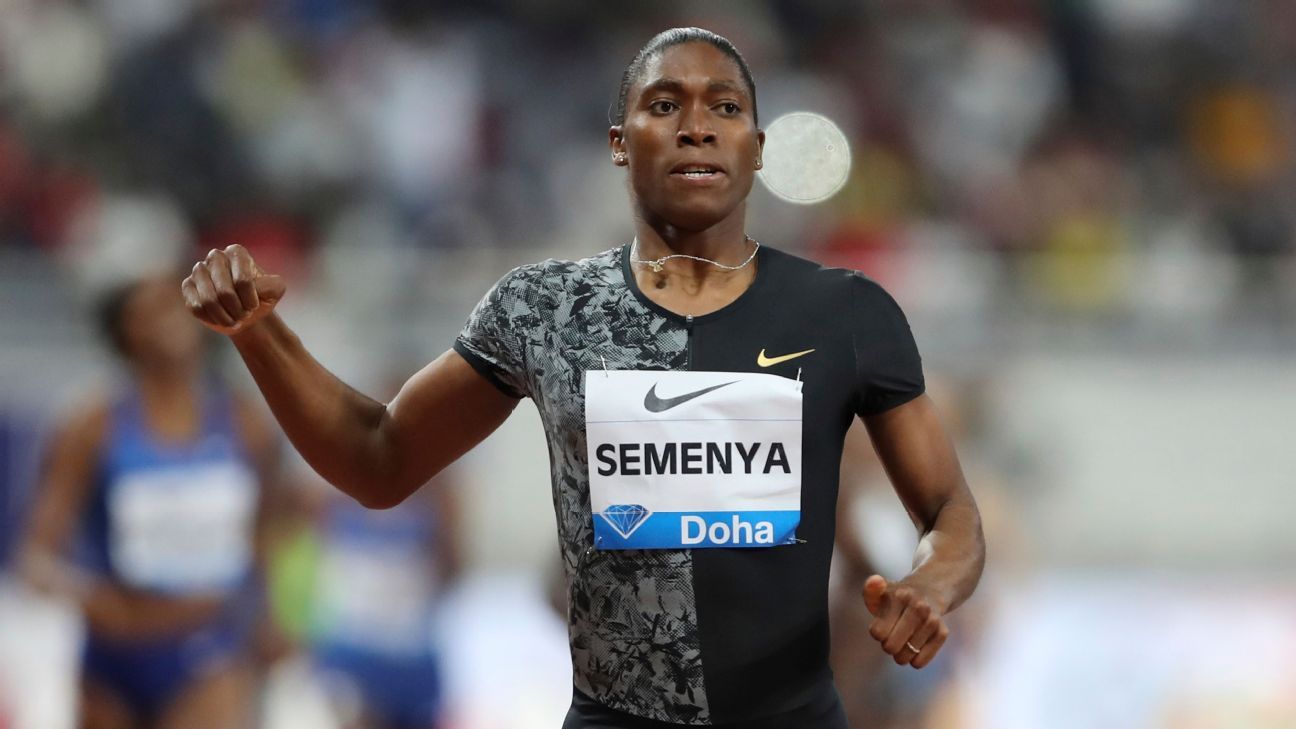
CAPE TOWN, South Africa — Two-time Olympic champion Caster Semenya voiced sharp criticism on Sunday against International Olympic Committee President Kirsty Coventry, expressing disappointment over the IOC's recent decision to bar transgender women from competing in female events at the Olympics and other IOC-sanctioned competitions.
Speaking at a news conference following a women's race event in Cape Town aimed at celebrating female strength, unity, and community support, Semenya, a South African athlete, highlighted her expectations for Coventry, who hails from Zimbabwe and shares an African background. "Personally, for her as a leader, she's an African, I'm sure she understands how, you know, we as Africans, we are coming from, as a global South, you know, you cannot control genetics," Semenya said. She added, "For me personally, for her being a woman coming from Africa, knowing how, you know, African women or women in the global South are affected by that."
The remarks came three days after the IOC announced its new eligibility policy on Thursday, outlined in a 10-page document that excludes transgender women athletes from women's events. The policy also imposes restrictions on female athletes with differences in sex development (DSD), a category that includes Semenya, who was assigned female at birth but has naturally elevated testosterone levels beyond the typical female range.
Semenya, a gold medalist in the 800 meters at the 2012 London Olympics and the 2016 Rio Games, has faced significant barriers in her career. Since 2019, she has been prohibited from competing in her signature event at major international meets, including the Olympics and world championships, after refusing to take medication to lower her hormone levels artificially. Her case has become a flashpoint in debates over gender eligibility in sports.
In her comments, Semenya questioned the scientific basis of the IOC's decision and accused the organization of superficial consultation. "Obviously if you say the science, because we talk about science here, if the science is clear, show us who decided and don't dress that as a lie because it's a lie and we know because we've seen it, so if we were to answer or confront Kirsty, that's how we going to respond, and we'll respond strong as we are because it affects women," she stated.
She further criticized the process as a mere formality. "For me personally, I'll say the voice is not heard because you taking it as a tick box, you ticking a box so you can go clarify or say yes we've consulted," Semenya said. "For me, it's you ticking the box."
The IOC's policy, set to take effect for the 2028 Los Angeles Olympics, aims to "protect fairness, safety and integrity in the female category," according to the organization's statement released Thursday. It specifies that the rules apply to elite-level competitions and are not retroactive, meaning they do not affect past events or lower-level recreational sports. The IOC emphasized that access to sport is a human right, as stated in its Olympic Charter.
Semenya's advocacy echoes her long history of legal battles against similar restrictions. Along with athletes like India's Dutee Chand, she has challenged eligibility rules in court. In a notable case, Semenya won a judgment from the European Court of Human Rights in her multi-year fight against track and field's regulations, though the ruling did not fully overturn the policies. Last year, she announced the end of her seven-year legal challenge against sex eligibility rules, despite that victory.
Leading up to the 2024 Paris Olympics, several high-profile sports federations had already tightened their stance on transgender participation. World Athletics (track and field), World Aquatics (swimming), and the Union Cycliste Internationale (cycling) all excluded transgender women who had undergone male puberty from women's elite events. No transgender women competed in the 2024 Paris Games, though New Zealand weightlifter Laurel Hubbard, who transitioned after being assigned male at birth, participated in the 2021 Tokyo Olympics without medaling.
It remains unclear how many transgender women, if any, are currently competing at an Olympic level. The IOC's decision builds on ongoing discussions within the sports world about balancing inclusion with competitive equity, particularly in women's categories.
Semenya's outspokenness underscores broader tensions in international athletics, where athletes with DSD conditions face scrutiny over their biology. Born in the rural village of Fairlie in South Africa's Limpopo province, Semenya rose to prominence as a teenager, winning gold at the 2009 World Championships in the 800 meters amid controversy over her gender verification. That scrutiny led to years of testing and regulation by governing bodies.
Supporters of the IOC's policy argue it ensures a level playing field, citing physiological advantages from higher testosterone. Critics, including Semenya, contend that such rules discriminate against natural variations and overlook the diverse experiences of women from the global South. Semenya has previously described the regulations as invasive and unfair, forcing athletes to alter their bodies to compete.
The Cape Town event where Semenya spoke was organized to promote women's empowerment in sports, drawing local runners and community members. It provided a platform for her to address not just transgender issues but also the intersectional challenges faced by African women athletes, including limited resources and cultural barriers.
Looking ahead, Semenya indicated a firm resolve to push back. Her comments suggest potential for further advocacy or legal action, especially as the 2028 Los Angeles Games approach. The IOC has not yet responded directly to Semenya's remarks, but the policy's implementation will likely spark continued debate among athletes, officials, and human rights groups.
This development highlights the evolving landscape of gender and inclusion in the Olympics, a movement that has seen incremental changes since the inclusion of women in 1900. As sports bodies grapple with science, ethics, and equity, voices like Semenya's remind stakeholders of the human element at stake. Whether the new rules will face challenges in courts or public forums remains to be seen, but they have already ignited passionate responses from the global athletic community.