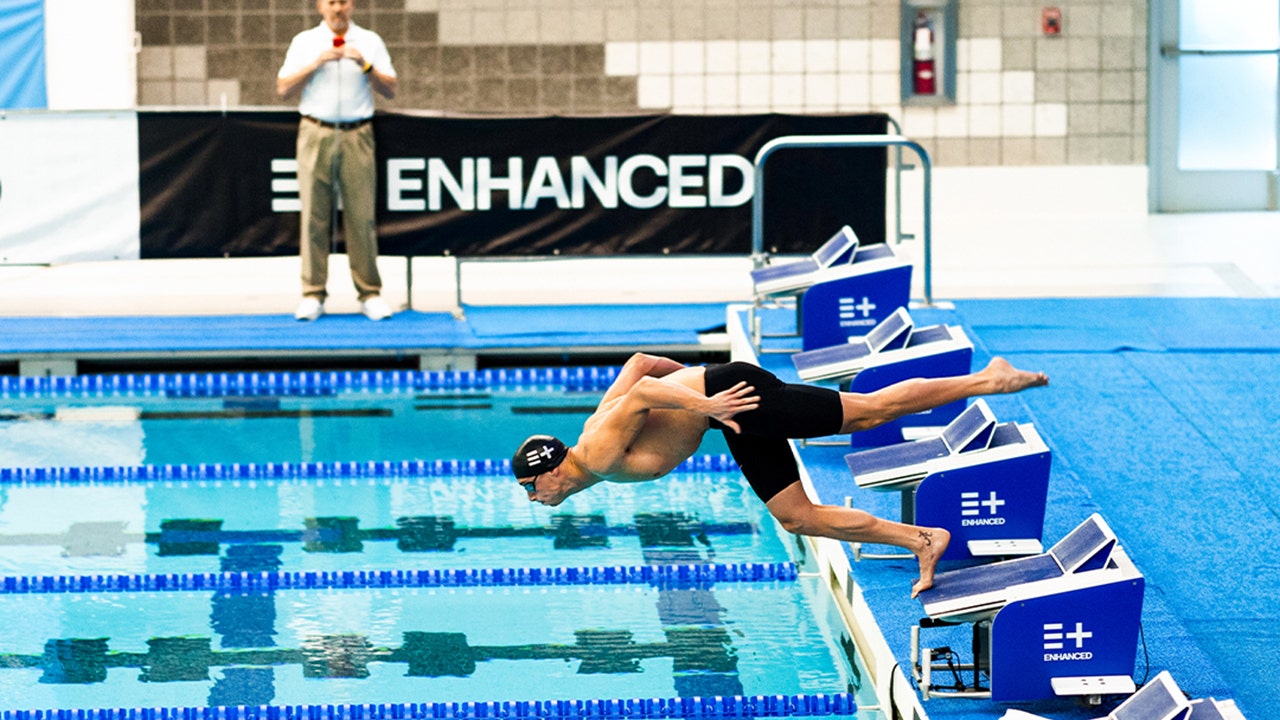
In the wake of the Paris 2024 Olympics, where whispers of doping scandals lingered amid triumphant medal ceremonies, a new sporting venture is positioning itself as a radical alternative. The Enhanced Games, an Olympic-style competition set to debut next year, will openly permit performance-enhancing substances under strict medical oversight. CEO Max Martin, in a recent interview, dismissed critics who dub it the 'Steroid Olympics,' arguing instead that the event prioritizes athlete safety, transparency, and fairness in ways traditional sports cannot match.
The Enhanced Games aim to flip the script on performance enhancements, which have plagued elite athletics for decades. Unlike the International Olympic Committee, which enforces a zero-tolerance policy on doping, this event will allow athletes to use approved substances as part of a regulated program. Martin, speaking to Fox News Digital, emphasized that the misconception of reckless risk-taking couldn't be further from the truth. 'I would say the biggest [misconception] is that athletes are putting their health at risk with what they're doing, and they're just doing it for the money. It's actually quite the opposite,' he said.
Central to Martin's vision is a comprehensive medical protocol designed to mitigate dangers associated with enhancements. Doctors affiliated with the Enhanced Games review each athlete's health data, approving only substances deemed safe based on current research. Athletes undergo extensive testing, including heart checks and blood draws, before receiving a green light to participate. 'They have us do a massive heart check, they take results, we get blood drawn, and we do all these tests, and we check our body to see if we are healthy enough to participate,' explained Hafþor Björnsson, the Icelandic strongman known as 'The Mountain' from HBO's 'Game of Thrones.' Björnsson, a 6-foot-9 competitor weighing over 400 pounds with 32 international Strongman titles, plans to attempt breaking his own deadlift world record of 1,124 pounds at the event.
Once approved, athletes receive ongoing monitoring throughout their training. Martin highlighted that this approach addresses risks from unsupervised use, such as excessive dosing or harmful drug interactions. 'Saying that enhancements are dangerous, in some circumstances, is true, yes. It can be completely abusive—too high of dosing, bad drug-on-drug interaction, because it's unsupervised and unmonitored, that can be very dangerous, yes. But that is exactly what we stand against,' Martin stated. He contrasted this with Olympic athletes, who he claims often resort to untested substances and masking agents to evade detection, putting their health in jeopardy without proper oversight.
The event's safety measures extend to tailoring enhancements to individual athletes and their sports. Australian swimmer James Magnussen, a former Olympian, won't be prescribed the same regimen as a powerlifter like Björnsson. Instead, the focus is on 'fine-tuning' performance. 'The enhancements, what they're doing is they're not pumping (Magnussen) up to be a bodybuilder. What they're doing is they're very, very targeted to who he is as an individual and to what he specifically is training for,' Martin explained. Some athletes have even been required to discontinue certain substances if research on their safety is incomplete.
Björnsson, who has competed in high-stakes events like the Arnold Strongman Classic—where he won three straight titles, including in 2020 at the Greater Columbus Convention Center in Ohio—praised the Enhanced Games' approach. 'Once that is done, we get the green light. Throughout the course of our training, we see doctors, and it's really like, I feel in a lot better position now than I was doing it on my own,' he told Fox News Digital. 'Like, I feel like I'm in good hands with Enhanced. They're really caring, and they really want to make sure that I'm healthy first and foremost.'
Financial incentives add another layer to the Enhanced Games' appeal. Winners in each event will receive $250,000, with an additional $250,000 appearance fee for participants and a $1 million bonus for breaking a world record. This payout structure surpasses traditional Olympic rewards; for context, World Aquatics announced in 2024 that it would award $50,000 to Olympic swimming gold medalists starting that year. Martin suggested the timing wasn't coincidental. 'I think they did that because they know that we're going to start paying athletes well, and athletes will evaluate that. They're scared. It’s a beautiful thing,' he said, pointing to the potential for broader reforms in athlete compensation.
Transparency is a cornerstone of the event, ensuring a level playing field even for non-enhanced competitors. Martin stressed that all enhancements are disclosed, eliminating the paranoia of hidden doping that haunts traditional sports. 'These athletes, they know what they're up against, you know? They have the same opportunities to utilize the same access to the medical program,' he noted. He recounted stories from athletes who placed second in Olympics, suspecting the winner cheated without repercussions. 'And that's the worst feeling you can have, because you stay within the rules, you do everything that you can to become the best, someone else is taking a cheating approach to it, wins, doesn't get caught, it's the worst feeling in the world.'
The debate over legitimacy intensifies when world records are at stake. Martin cited studies estimating that 43% of Olympians use banned substances, with only 1% caught, casting doubt on existing records. Greek swimmer Kristian Gkolomeev exemplifies the Enhanced Games' ethos: he swam the fastest 50-meter freestyle ever at 20.89 seconds last year, aided by enhancements. Though not recognized by World Aquatics, Martin views it as an undeniable achievement. 'Kristian Gkolomeev is the only human being that was ever able to travel the distance of 50 meters in water in 20.89 seconds. That's just the fact,' he asserted. Gkolomeev, who competed in the Paris Olympics semifinals on August 1, 2024, at the La Defense Arena in Nanterre, France, will participate in the Enhanced Games.
Critics, however, remain skeptical, labeling the concept unorthodox and potentially undermining sports integrity. Martin acknowledged the backlash but predicted a shift in perception post-event. 'People can make their opinion on whether they like it or not, but the notion that this is a steroid Olympics where everyone's just going to be shot up with some random drugs, it's just completely wrong,' he said. The inaugural Enhanced Games are slated to begin after May 24, 2025, though exact locations and full schedules have yet to be announced.
Beyond individual competitions, the Enhanced Games seek to address systemic issues in athletics, such as inadequate health insurance for elite performers. Martin pointed out that some Olympic medalists lack basic coverage yet compete at the highest levels. 'What current testing systems are focused on is punitive drug testing. They are only focused on whether an athlete is cheating or not. What they're not focused on is whether an athlete is healthy and safe to compete,' he argued. By contrast, the Enhanced Games' model emphasizes proactive health management, potentially setting a precedent for other organizations.
The involvement of high-profile figures like Björnsson, who presented with a trophy by Arnold Schwarzenegger at the 2020 Arnold Strongman Classic, underscores the event's ambition to attract global talent. Magnussen's participation, following his enhanced but unsuccessful attempt to match Gkolomeev's swim time, highlights the targeted nature of the enhancements. As the Games prepare for launch, they challenge long-held notions of fair play, forcing a reckoning with the hidden underbelly of performance sports.
Looking ahead, Martin envisions the Enhanced Games inspiring positive change across the sporting world. With substantial prize money and a focus on athlete welfare, the event could draw competitors disillusioned by Olympic constraints. Whether it gains mainstream acceptance or remains a niche outlier, the Enhanced Games represent a bold experiment in redefining athletic excellence. As Martin put it, 'After May 24, I think the world is going to have a much different perspective.' For now, the conversation around enhancements continues to evolve, mirroring the very innovations the event seeks to embrace.