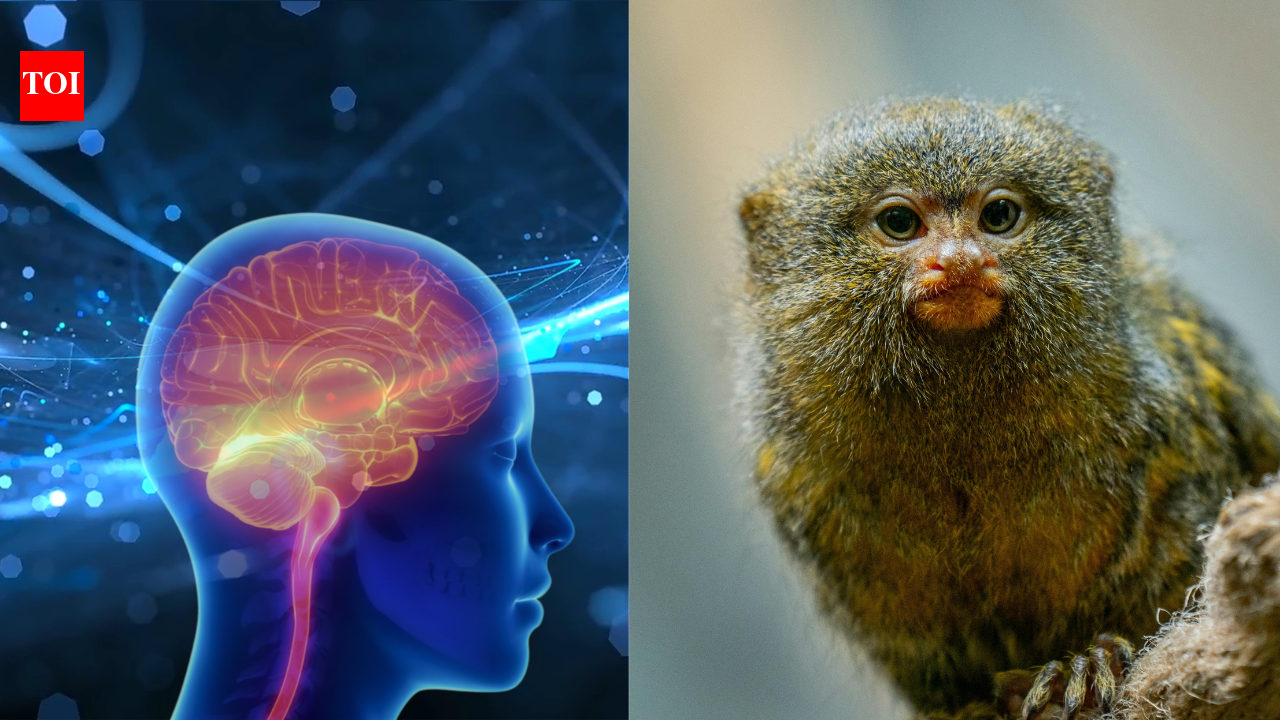
Chinese scientists have identified what they call a human-like speech circuit in the brains of marmoset monkeys, a finding that could reshape approaches to speech therapy in humans. The discovery, reported by researchers in China, highlights neural pathways in these small primates that mirror structures previously thought unique to human speech processing.
According to the Times of India Science Desk, the study focused on marmoset monkeys and revealed pathways involved in vocal communication that resemble those in people. Scientists noted that this could open new avenues for treating speech disorders, though details on specific experiments remain limited in initial reports.
The research team examined brain activity during vocalizations in the monkeys, identifying circuits that process and produce sounds in ways similar to human speech centers. Officials involved in the project suggested the work might lead to targeted therapies for conditions like aphasia or developmental speech delays.
One summary of the findings stated that the identification provides insights into the evolution of speech. Researchers reportedly used advanced imaging techniques to map these areas, comparing them directly to known human brain regions responsible for language.
Context from related primate studies shows that marmosets are often chosen for such research due to their complex social vocalizations. The Chinese team built on earlier work with other monkey species, refining methods to isolate speech-related activity more precisely.
Experts quoted in coverage emphasized potential applications in rehabilitation. "This could change speech therapy forever," the report highlighted, pointing to possibilities for stimulating similar circuits in patients recovering from strokes or injuries.
While the primary source from timesofindia.indiatimes.com outlines the broad implications, additional verification notes the focus on marmosets specifically. No conflicting details emerged from available summaries, though full peer-reviewed publication details were not included in the initial dispatch.
Background on the field indicates that understanding speech evolution has long relied on animal models. This latest observation adds to evidence that basic vocal circuits predate humans by millions of years, according to the scientists involved.
Local institutions in China supported the project, with collaboration among neuroscientists and biologists. Dates for the study completion were not specified in the reporting, but the announcement aligns with ongoing advances in comparative neuroscience.
Future steps reportedly include testing whether activating these circuits in monkeys can inform non-invasive treatments for humans. Clinicians in speech pathology have expressed interest, though they await more data before integrating findings into practice.
The discovery underscores how primate research continues to inform medical fields. As more details surface, the scientific community will likely examine how these pathways differ across species and what that means for therapy development.