By David Kim
The Appleton Times
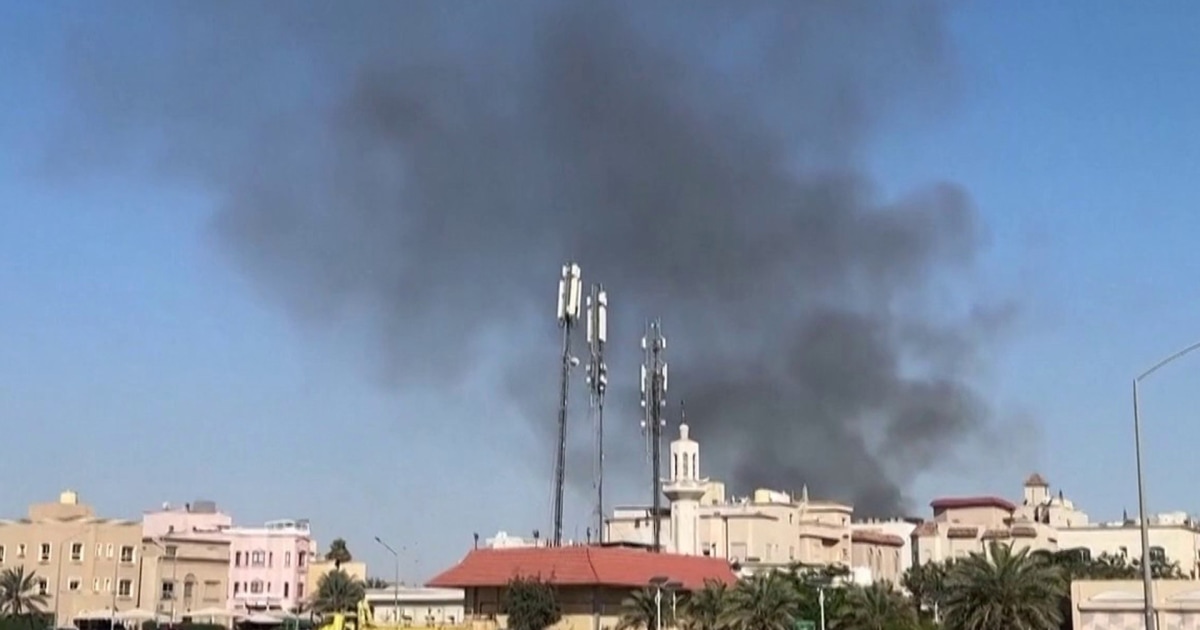
Dubai, United Arab Emirates — Tensions in the Middle East have escalated dramatically following a joint military operation by the United States and Israel against Iran, prompting Tehran to unleash a wave of retaliatory strikes across the region. According to NBC News correspondent Keir Simmons, reporting from Dubai on March 2, 2026, the conflict is spreading rapidly, with Iranian forces targeting various sites and inadvertently endangering civilian areas such as airports and tourist hotels. "War is spreading in the Middle East with retaliatory strikes by Iran throughout the region, leaving civilians on edge as airports, tourist hotels and other targets get caught in the crossfire," Simmons stated in his report for TODAY.
The initial attack on Iran, which occurred late last week, involved precision strikes on suspected nuclear facilities and military installations near Tehran and Natanz, sources familiar with the operation told international media outlets. U.S. officials, speaking on condition of anonymity, described the action as a preemptive measure to neutralize what they called an imminent threat from Iran's nuclear program. Israel, a long-standing adversary of Tehran, confirmed its participation, with Prime Minister Benjamin Netanyahu's office issuing a statement that emphasized the operation's success in degrading Iran's capabilities without specifying casualty figures.
Iranian leaders swiftly condemned the assault as an act of aggression, vowing a forceful response. Supreme Leader Ayatollah Ali Khamenei addressed the nation in a televised speech on February 28, 2026, declaring, "The enemies of Islam will pay dearly for this violation of our sovereignty." By early March, Iranian ballistic missiles and drones had been launched toward Israeli positions in the Golan Heights and U.S. bases in Iraq and Syria, according to the Israeli Defense Forces and Pentagon briefings.
Civilians in major cities like Dubai, Beirut, and Amman are reporting heightened anxiety as the conflict's ripples extend beyond the primary combatants. In Dubai, a bustling hub for international travel and commerce, authorities have closed the city's main airport for several hours following unconfirmed reports of incoming threats. Eyewitnesses described chaotic scenes at luxury hotels along the Persian Gulf, where tourists from Europe and Asia were evacuated amid air raid sirens. "We came here for a vacation, not to hide in bunkers," said British tourist Emily Hargrove, speaking to local reporters outside the Burj Al Arab hotel.
The backdrop to this escalation traces back decades of animosity between Iran, the U.S., and Israel. The 1979 Iranian Revolution marked the beginning of severed diplomatic ties with Washington, exacerbated by events like the 1983 Beirut barracks bombing and the 2010 Stuxnet cyberattack attributed to U.S. and Israeli intelligence. More recently, the U.S. withdrawal from the 2015 Joint Comprehensive Plan of Action nuclear deal under President Donald Trump in 2018 reignited fears of proliferation, leading to sanctions and shadow warfare through proxies like Hezbollah and the Houthis.
Israel has conducted numerous covert operations against Iran, including assassinations of nuclear scientists and airstrikes on Iranian assets in Syria. The latest joint strike, reportedly planned over months of intelligence sharing between Washington and Jerusalem, comes amid reports of Iran enriching uranium to near-weapons-grade levels at underground facilities. According to the International Atomic Energy Agency's latest inspection report from January 2026, Iran had stockpiled enough fissile material for several bombs, though Tehran denies any weapons ambitions.
Iran's retaliation has not been limited to direct strikes. Iranian-backed militias in Iraq launched rocket attacks on the U.S. Embassy in Baghdad on March 1, wounding three diplomats, per State Department statements. In Yemen, Houthi rebels intensified drone assaults on Saudi oil infrastructure, which they claimed were in solidarity with Tehran. Saudi Arabia, a Sunni powerhouse wary of Iranian influence, has bolstered its defenses along the border, with Crown Prince Mohammed bin Salman convening emergency meetings with Gulf Cooperation Council allies.
From the Iranian perspective, the strikes represent a dangerous escalation by Western powers intent on regime change. Foreign Minister Hossein Amir-Abdollahian told state media that the U.S. and Israel had acted without provocation, citing ongoing diplomatic overtures that were ignored. "This is not just an attack on Iran; it's an assault on the sovereignty of the entire Muslim world," he said. Iranian state television broadcast images of damaged facilities, estimating dozens of military personnel killed, though independent verification remains elusive.
U.S. President Joe Biden, addressing the nation from the White House on February 29, 2026, defended the operation as necessary for regional stability. "We will not allow Iran to acquire nuclear weapons that threaten our allies and the free world," Biden said, while urging de-escalation to avoid a broader war. Critics within the U.S., including some Democratic lawmakers, have questioned the legality of the strikes without congressional approval, referencing the War Powers Resolution.
In Israel, public support for the action appears strong, with polls from Channel 13 news showing 68% approval among Jewish Israelis. However, Arab citizens expressed concerns over potential reprisals. "We're all at risk now," said Ahmed Khalil, a resident of Nazareth, in an interview with Haaretz. The Israeli military has placed its northern border on high alert, with reservists called up to reinforce positions against Hezbollah, which has vowed retaliation from southern Lebanon.
The human cost is mounting, particularly for non-combatants. United Nations officials reported that at least 15 civilians were injured in a misfired Iranian missile that struck a residential area near Tel Aviv on March 1. In Dubai, the economic fallout is immediate: stock markets in the Gulf plunged 4% on Monday, and flight cancellations have stranded thousands. Humanitarian groups like the Red Crescent are preparing for refugee flows from Syria and Iraq, where the conflict could exacerbate ongoing civil wars.
International reactions vary. Russia and China, Iran's key allies, condemned the U.S.-Israeli strikes at a UN Security Council emergency session on March 2, with Russian Ambassador Vassily Nebenzia calling it "state terrorism." European Union foreign policy chief Josep Borrell urged all parties to return to negotiations, referencing stalled talks in Vienna. Meanwhile, oil prices surged above $100 per barrel, raising fears of global inflation as the Strait of Hormuz — through which 20% of the world's oil passes — faces potential blockade.
As the dust settles from the initial exchanges, questions linger about the path forward. Diplomatic channels, though strained, remain open; Qatar, a neutral mediator, has offered to host talks between Iranian and U.S. envoys. Military analysts suggest Iran may calibrate its response to avoid full-scale war, focusing instead on asymmetric tactics like cyberattacks and proxy engagements. Yet, with both sides digging in, the risk of miscalculation looms large.
For civilians caught in the middle, the uncertainty is palpable. In Dubai, where expatriates outnumber locals, community leaders are organizing support networks. "We just want peace," said Simmons in his NBC report, capturing the sentiment echoing from Beirut to Riyadh. As world leaders weigh their next moves, the Middle East braces for what could be a defining chapter in its turbulent history.
The broader implications extend far beyond the region. A prolonged conflict could disrupt global supply chains, from energy to semiconductors, and draw in other powers. With elections looming in the U.S. and ongoing instability in Europe, the stakes are high for international stability. Observers will watch closely as Tehran, Washington, and Jerusalem navigate this precarious moment, hoping cooler heads prevail to avert catastrophe.