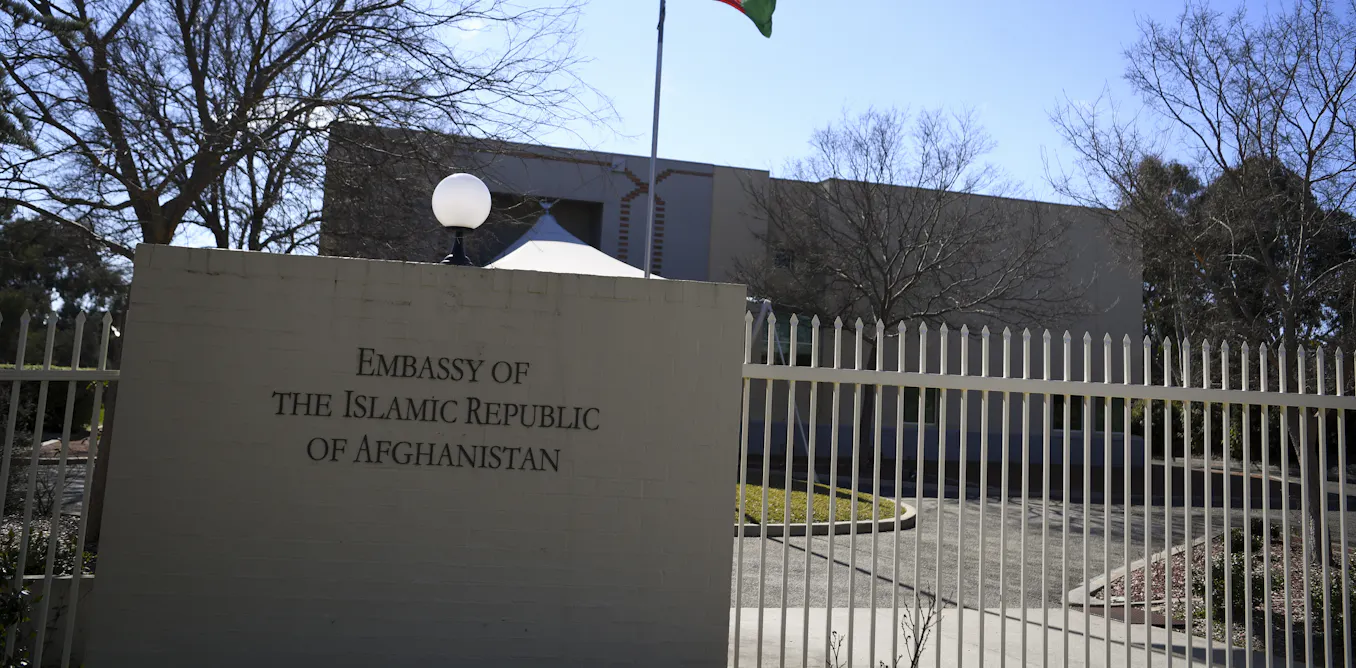
Canberra, Australia — The Australian government has directed the Afghan embassy in Canberra to cease operations by June, a move that diplomats and human rights advocates warn could endanger vulnerable Afghans living in exile. Since the Taliban seized control of Kabul in August 2021, the embassy, led by Ambassador Wahidullah Waissi, has operated independently, providing essential consular services like passport issuance and document verification to Afghan refugees in Australia. Now, with the Department of Foreign Affairs and Trade issuing the closure order, critics argue it severs a critical lifeline for those fleeing Taliban persecution.
The decision comes amid ongoing tensions with the Taliban regime, which Australia does not recognize. In 2024, the Taliban government in Kabul formally requested that Australia shut down the embassy, according to reports from diplomatic sources. However, the Canberra outpost has maintained that it represents the Afghan state and people, not the Islamist rulers. Waissi and his staff have continued to advocate for human rights, particularly for women and girls, despite lacking funding from Kabul and facing immense challenges.
Last September, the Australian government instructed the embassy to halt consular services, a step that already limited its ability to assist the diaspora. The full closure, set for June, means no replacement ambassador will be accepted from the Taliban, as officials have stated. This leaves a diplomatic vacuum at a time when regional instability is mounting, with potential shifts in power that could require established channels for communication.
Experts like William Maley, an Afghanistan specialist, have decried the closure as misguided. Maley, who has advised on Australian policy since 1988, argues that the country has long recognized states rather than governments in its diplomatic relations. "The legal arguments provided for the closure are spurious," Maley said, adding that the move would insult Australian personnel who served 20 years fighting the Taliban and effectively hand a victory to the regime.
Azadah Raz Mohammad, an Afghan lawyer at the University of Melbourne and legal advisor for the End Gender Apartheid campaign, echoed these concerns in an interview. "The closure of the embassy is deeply concerning," she said. "The absence of formal diplomatic representation risks further isolating an already vulnerable diaspora community, undermining access to documentation, rights, and essential consular support." Mohammad's words highlight the practical fallout for Afghans rebuilding lives in Australia without official channels.
One stark example involves an Afghan woman who is a permanent resident in Australia. According to supporters who spoke on condition of anonymity, she formerly served in the Afghan National Police and faces grave risks if returned to Taliban-controlled territory. While visiting her husband in China on her Afghan passport, which had only five months remaining, she was threatened with deportation by Chinese authorities upon attempting to return to Australia.
Without the embassy's help, she couldn't renew her passport or seek consular intervention, her advocates said. This case, they noted, is likely to multiply once the embassy closes entirely. The outpost had been issuing a limited number of passports post-2021, which proved lifesaving for individuals targeted by the Taliban, including policewomen and women's rights activists. These documents allowed escapes to safety, even as the Taliban recently stopped recognizing them for travel to or from Afghanistan or allied nations.
For Afghans in Australia, those passports remain valid for visiting family elsewhere, providing a thread of connection in exile. The embassy also verified official Afghan documents, such as drivers' licenses, crucial for integrating into Australian society—helping secure local licenses and employment. Fees from these services formed a vital revenue stream, sustaining operations without Kabul's support.
The Australian Department of Home Affairs has adjusted its humanitarian visa processing for Afghans, shifting priorities away from vulnerability factors like ethnicity, gender, or LGBTQI status. Now, prioritization hinges on familial ties, such as a mother sponsoring a son or a husband his wife. This change, implemented recently, has drawn criticism from researchers studying Afghan resettlement.
Upcoming research by an expert contributing to the Australian Journal of International Affairs points to the dangers of overlooking at-risk groups in visa decisions. The study, set for publication, analyzes how such policies could strand the most persecuted Afghans, exacerbating isolation as diplomatic support wanes. In the embassy's absence, obtaining vital paperwork becomes even harder, potentially blocking access to education, jobs, and safety nets.
Broader geopolitical currents add urgency to the debate. To Afghanistan's west, Iran's Supreme Leader Ayatollah Ali Khamenei was reportedly killed in recent U.S. and Israeli airstrikes, alongside other high-ranking officials, shaking the region's power dynamics. Southward, Pakistan's defense minister declared open war with the Taliban, raising fears of prolonged conflict. Humanitarian organizations have urged de-escalation, but experts warn of spillover effects.
In this volatile context, maintaining the embassy could position Australia to engage swiftly if the Taliban regime falters. Waissi has emphasized the outpost's role in fostering diplomacy during transitions, arguing it serves not the rulers but the Afghan populace. Closing it now, opponents say, risks blinding Australia to opportunities for supporting a post-Taliban future.
The Taliban, for their part, have pushed the closure as a way to consolidate control over Afghan representation abroad. Yet, with no Australian recognition forthcoming, the request appears symbolic, aimed at pressuring holdout embassies like Canberra's. Other Afghan missions worldwide face similar dilemmas, but Australia's stance has been particularly supportive of the independent operation until now.
Australian officials have not detailed the precise rationale beyond the Department of Foreign Affairs and Trade's directive, but sources suggest it's tied to evolving foreign policy amid stalled talks with the Taliban on issues like women's rights and counterterrorism. The government continues humanitarian aid to Afghanistan, channeling over $100 million since 2021 through UN agencies, but direct diplomatic engagement remains off-limits.
As June approaches, Afghan community leaders in cities like Sydney and Melbourne are mobilizing, petitioning lawmakers to reconsider. "This isn't just about paperwork—it's about survival," one diaspora member told reporters, recounting friends who relied on the embassy to flee persecution. With no immediate alternative in sight, the closure looms as a quiet but profound setback for those who escaped the Taliban's grip, underscoring the fragile threads holding exile communities together.
Looking ahead, the implications extend beyond Australia. If regional conflicts escalate, as some analysts predict, the loss of such embassies could hinder coordinated international responses. For now, Waissi and his team prepare to wind down, their work a testament to resilience amid adversity. Whether this marks the end of an era or a temporary pause remains unclear, but for vulnerable Afghans, the stakes could not be higher.