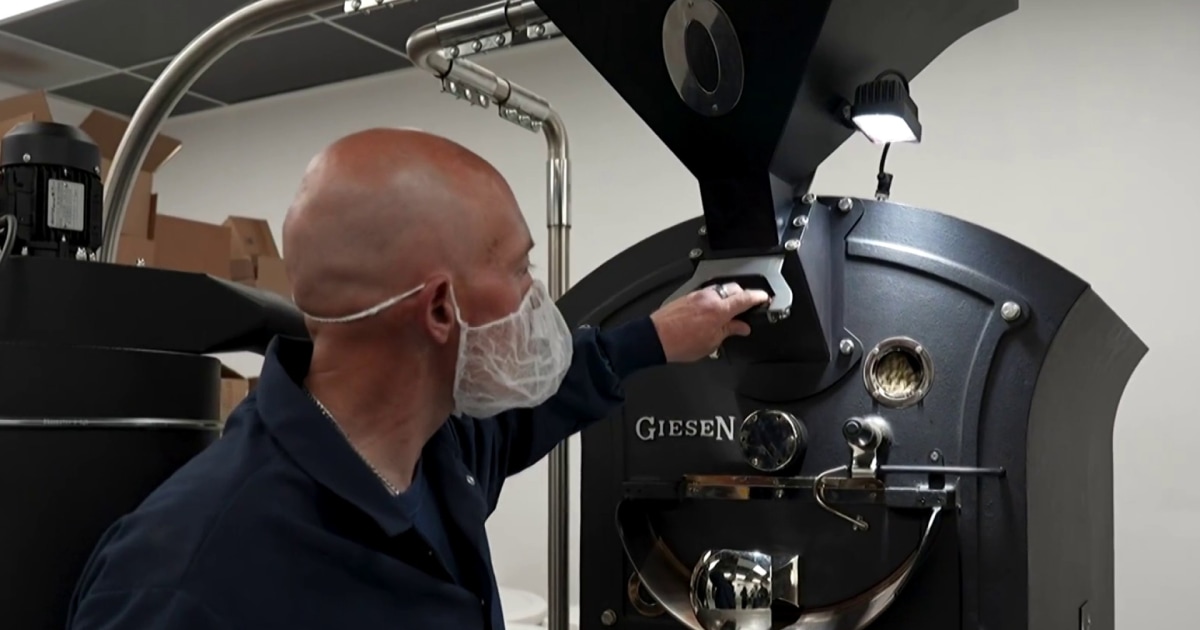
In the sun-drenched hills of California, a small coffee wholesaler is brewing more than just beans—it's offering second chances to those battling homelessness. Casters Coffee, based in the state, has made headlines for its innovative hiring practices, employing up to 30 individuals struggling with housing instability four days a week. According to a report from NBC News, the company not only pays these workers but also provides training to help them rebuild their lives amid one of the nation's most acute homelessness crises.
The initiative comes at a time when California grapples with over 180,000 people experiencing homelessness, according to the U.S. Department of Housing and Urban Development's 2023 annual report. Los Angeles County alone accounts for nearly 75,000 unhoused individuals, with rising costs of living and limited affordable housing exacerbating the issue. Casters Coffee's approach stands out in this landscape, focusing on employment as a pathway out of desperation rather than temporary aid.
Founded in 2018 by entrepreneur Maria Gonzalez, Casters Coffee started as a modest roaster serving local cafes. Gonzalez, a former social worker, drew from her experiences in community outreach to launch the employment program in 2020. "We saw so many talented people on the streets who just needed a hand up, not a handout," Gonzalez said in an interview with NBC News. The company's model pairs on-the-job training with counseling sessions, aiming to equip participants with skills for long-term employment in the competitive food service industry.
Each week, the 30 spots fill quickly, with participants rotating through roles like bean sorting, packaging, and basic machine operation. Workers earn a starting wage of $16 per hour, above California's minimum, and receive benefits after 90 days. According to program coordinator Javier Ruiz, the four-day schedule allows flexibility for job seekers attending shelter programs or medical appointments. "It's not just about the paycheck; it's about restoring dignity," Ruiz told reporters.
One participant, 42-year-old Carlos Mendoza, shared his story after six months on the job. "I was sleeping in my car for two years after losing my warehouse gig to the pandemic," Mendoza recounted. "Casters gave me a routine, skills, and now I'm applying for full-time positions elsewhere. It's changed everything." Stories like Mendoza's highlight the program's potential, though advocates note it's a drop in the bucket compared to statewide needs.
California's homelessness epidemic has roots in the 2008 financial crisis, when foreclosures spiked, followed by tech booms driving up rents in cities like San Francisco and San Diego. State officials have poured billions into solutions, including Governor Gavin Newsom's Project Homekey, which has converted motels into housing for over 15,000 people since 2020. Yet, tent encampments persist, and critics argue that employment programs like Casters' must scale up to make a dent.
Supporters of the model point to similar efforts elsewhere. In Seattle, Coffee Corral employs formerly incarcerated individuals, while Denver's Hope Coffee trains refugees. According to a 2022 study by the National Alliance to End Homelessness, job training programs reduce recidivism to shelters by 40 percent when combined with housing support. Casters Coffee collaborates with local nonprofits like the California Homeless Coalition to identify candidates, ensuring a steady pipeline of motivated workers.
Not everyone agrees on the best path forward. Some housing-first advocates, who prioritize permanent shelter over work, question whether employment readiness is feasible without stable addresses. "You can't pour from an empty cup," said Elena Torres, director of the Bay Area Housing Advocacy Group. "Programs like this are noble, but they sideline the immediate need for roofs over heads." Casters counters that their holistic approach includes referrals to housing services, with 25 percent of graduates securing apartments within a year, per internal data.
The company's operations run from a 5,000-square-foot warehouse in Riverside County, where the scent of freshly roasted Ethiopian and Colombian blends fills the air. Suppliers praise Casters for its ethical sourcing, with fair-trade certifications ensuring farmers abroad receive living wages. This commitment extends to employees: the program covers transportation costs via van services and partners with therapists for mental health support, addressing common barriers like trauma and addiction.
Financially, Casters sustains the initiative through a mix of wholesale contracts with 50 regional cafes and grants from foundations like the California Wellness Foundation. Annual revenue has grown 30 percent since the program's launch, reaching $2.5 million in 2023. Investors, including impact funds focused on social enterprises, have taken note, providing low-interest loans to expand training capacity.
Challenges remain, however. Participant turnover can hit 50 percent annually due to relapses or external pressures, according to Ruiz. The COVID-19 pandemic disrupted operations in 2020, forcing temporary shutdowns and remote training via Zoom. Yet, the company adapted, delivering coffee kits to participants and maintaining stipends during closures. "Resilience is key in this work," Gonzalez emphasized.
Looking ahead, Casters plans to open a second location in Los Angeles by mid-2024, aiming to double its workforce to 60. The expansion includes a cafe storefront where trainees can gain customer-facing experience. State legislators have expressed interest, with bills in committee to offer tax credits for businesses hiring the unhoused. "If more companies follow this lead, we could transform lives on a larger scale," said Assemblymember Rosa Lopez, who toured the facility last month.
Beyond California, the model has inspired national conversations. A recent White House roundtable on homelessness featured Gonzalez as a panelist, alongside leaders from Starbucks' community stores program. Federal funding through the American Rescue Plan has allocated $5 billion for such initiatives, though distribution favors larger cities. Experts predict a wave of copycat programs as corporations seek to align with ESG—environmental, social, and governance—goals.
For those like Mendoza, the impact is personal and profound. Now housed in a subsidized apartment and pursuing a barista certification, he mentors new hires. "This place didn't just employ me; it employed hope," he said. As Casters Coffee continues to percolate change, it serves as a reminder that small businesses can tackle big problems, one cup at a time.
In a state where solutions often feel as elusive as affordable rent, stories of reinvention offer glimmers of progress. Whether Casters' blueprint spreads remains to be seen, but for now, it's grinding against the odds, one bean and one second chance at a time.