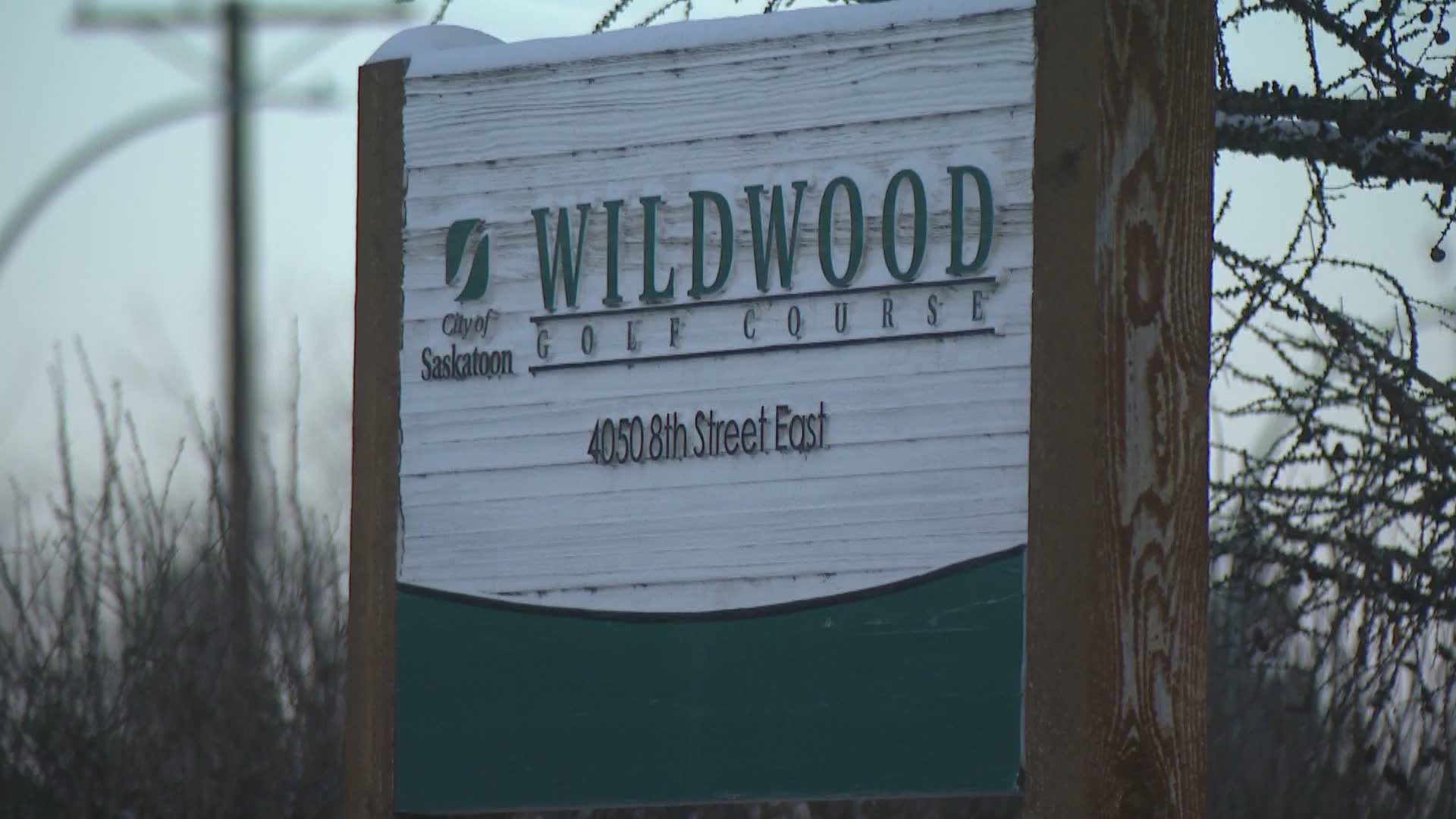
SASKATOON, Saskatchewan — A proposal to relocate the city's beloved Wildwood Golf Course to pave the way for new housing developments has sparked significant concern among residents in surrounding neighborhoods. Ward 10 Coun. Zach Jeffries has introduced a motion before Saskatoon city council, urging administration to explore moving the city-owned facility to better align with the city's infill housing objectives. The idea, which aims to address growing housing demands within existing urban boundaries, is set to be discussed at a council meeting next Wednesday.
The Wildwood Golf Course, located in the city's west end, has long served as a multifaceted recreational hub. Spanning a generous expanse of green space, it caters to golfers during the warmer months while transforming into a winter wonderland for cross-country skiing and snowshoeing enthusiasts. According to local residents, the course represents more than just a place to play sports; it's a vital community asset that provides year-round outdoor activities and preserves precious urban greenery in an increasingly developed landscape.
Coun. Jeffries, representing Ward 10 which encompasses parts of the Wildwood area, argues that repurposing the site could help meet Saskatoon's ambitious infill goals. Infill development focuses on building housing on underutilized land within city limits rather than expanding outward, a strategy the city has prioritized to manage urban sprawl and promote sustainable growth. "This is an idea brought forward by Ward 10 Coun. Zach Jeffries, who is asking city council to direct administration to look into relocating the city-owned course in favour of meeting infill goals," as reported by Global News.
However, the proposal has not been met with enthusiasm from those who live nearby. Residents in neighborhoods surrounding the course, such as Wildwood and neighboring areas, worry that displacing the facility would strip away a key recreational resource and erode the green spaces that enhance their quality of life. "Some residents in the surrounding neighbourhoods are concerned with the proposal, saying getting rid of a facility that has activities for all seasons, as well as lots of green space, is a bad idea," according to commentary published on Global News.
One recurring sentiment among opponents is the belief that the city should look elsewhere for housing solutions. They advocate for development on the outskirts of Saskatoon, where vacant lands are available without disrupting established community amenities. "Some residents suggest the city should utilize other areas for housing such as the outskirts of the city where there are no existing establishments, rather than a used facility," the report notes, highlighting a preference for preserving inner-city assets over aggressive infill tactics.
To understand the stakes, it's worth considering the broader context of Saskatoon's housing landscape. The city, home to over 266,000 residents as of the latest census, has faced mounting pressure to increase housing stock amid rising costs and population growth driven by the province's resource economy. In recent years, council has approved several infill projects, including high-density developments in older neighborhoods, but public pushback has occasionally stalled progress when beloved public spaces are involved.
The Wildwood Golf Course itself has a storied history dating back to the mid-20th century. Established as one of Saskatoon's original municipal courses, it was designed to offer affordable access to the sport for residents of all skill levels. Over the decades, it has hosted local tournaments and community events, fostering a sense of connection among users. Its 18-hole layout, complete with mature trees and rolling fairways, provides a serene escape just minutes from downtown.
Beyond golf, the course's versatility has made it indispensable during Saskatchewan's harsh winters. Cross-country ski trails groomed by the city attract hundreds of visitors annually, while snowshoeing paths wind through the preserved natural areas. Environmental advocates point out that such spaces also support local biodiversity, serving as corridors for wildlife in an urban setting. Losing this, they argue, could have ripple effects on community health and ecological balance.
Coun. Jeffries' motion comes at a time when similar debates are unfolding across Canadian municipalities. In cities like Calgary and Edmonton, proposals to convert parks or recreational facilities for housing have met with mixed results, often requiring compromises such as partial relocations or enhanced community benefits. In Saskatoon, administration has yet to release detailed feasibility studies on the Wildwood idea, but preliminary discussions suggest potential sites on the city's periphery, though no specifics have been confirmed.
Local golf enthusiasts and outdoor recreation groups have begun mobilizing in response. While no formal opposition campaign has launched yet, social media chatter and neighborhood association meetings indicate growing unease. "The Wildwood Golf Course offers many activities year-round, including cross-country skiing, snow shoeing, and of course, golf during the summer," residents emphasize in informal comments gathered by reporters, underscoring the facility's broad appeal.
City officials, for their part, stress that the motion is exploratory at this stage. Administration will need to assess logistical challenges, including the costs of relocation—estimated in the millions for site preparation and infrastructure—and potential revenue impacts, as the course generates fees that contribute to municipal coffers. Environmental impact assessments would also be required under provincial guidelines, adding layers of review before any shovels hit the ground.
Proponents of the relocation, including some urban planners, view it as a pragmatic step toward affordability. Saskatoon's average home price has climbed above $400,000 in recent years, pricing out young families and newcomers. By densifying areas like Wildwood, the city could introduce a mix of single-family homes, townhouses, and apartments, potentially easing the shortage of over 5,000 units reported in the latest housing needs study.
Yet, the tension between development and preservation is palpable. Residents' concerns echo broader national conversations about balancing growth with livability. In Saskatoon, where winters dominate half the year, access to outdoor venues like Wildwood is not just recreational—it's essential for mental and physical well-being, especially post-pandemic when demand for such spaces surged.
As the Wednesday council meeting approaches, all eyes will be on how members respond. The session, scheduled for 4 p.m. at city hall, will include public input opportunities, allowing residents to voice their positions directly. "The city will discuss the proposal next week in a city council meeting on Wednesday," as outlined in the agenda previews.
Whatever the outcome, the debate over Wildwood's future underscores the challenges of urban evolution in mid-sized Canadian cities. Relocating the course could unlock housing potential but at the risk of alienating a community that cherishes its green oases. For now, the motion remains just that—a starting point in what promises to be a contentious conversation about Saskatoon's path forward.