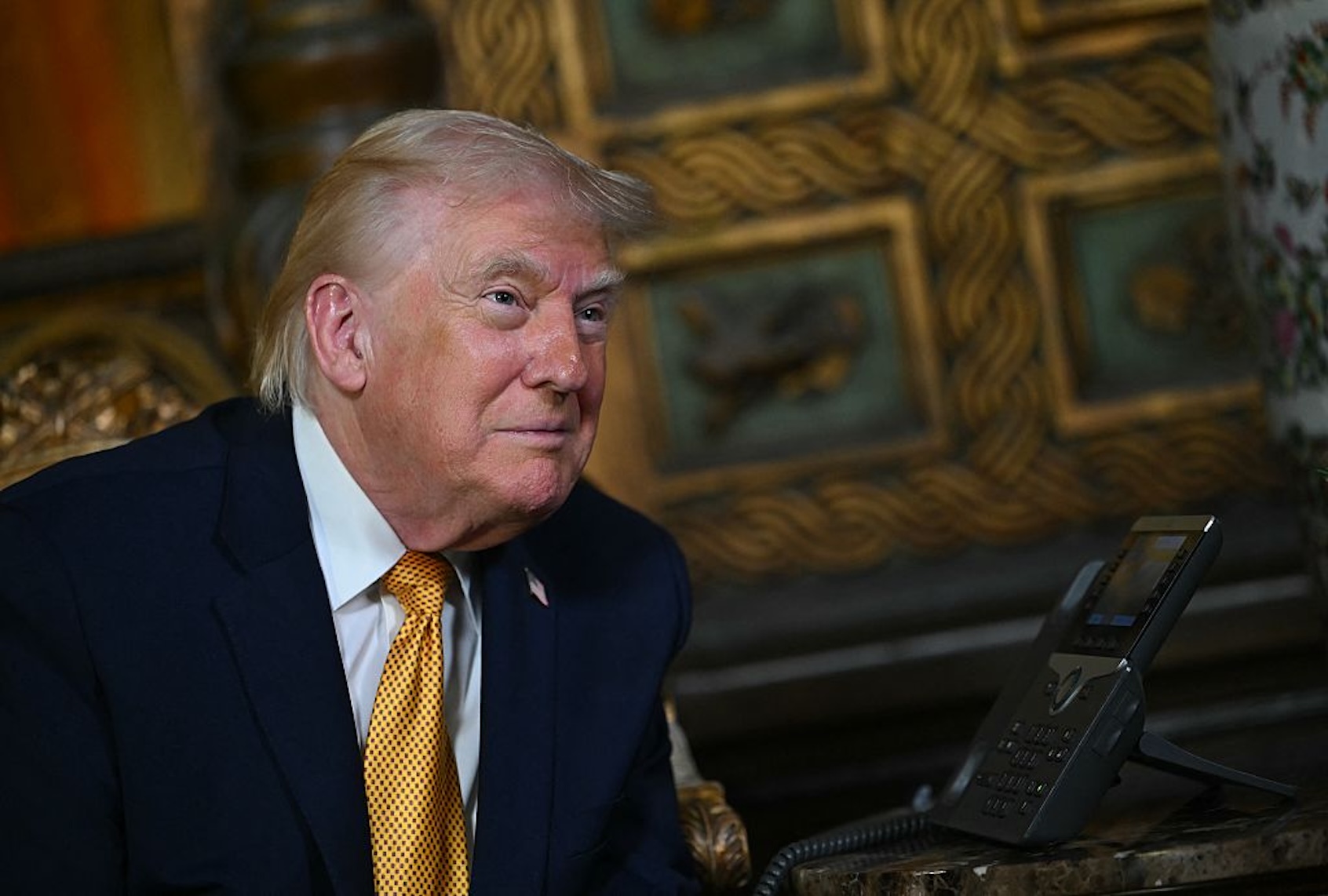
In a recent visit to Georgia, former President Donald Trump focused much of his attention on longstanding claims of voter fraud, overshadowing discussions about the economy during stops in Rep. Marjorie Taylor Greene's district. Speaking at a steel company tour and a restaurant last week, Trump highlighted the FBI raid on Fulton County election offices and advocated for stricter voter identification requirements, according to reports from the event on February 15, 2026.
Trump's remarks come amid his continued assertions that the 2020 presidential election was stolen, a narrative that has persisted despite numerous investigations and court rulings finding no widespread fraud. These claims, which played a role in the January 6, 2021, Capitol insurrection, have become a defining part of his political legacy, as noted by political analysts. However, historians point out that allegations of voter fraud have deep roots in American politics, predating Trump by over a century and often linked to efforts to limit voting access for certain groups.
According to Alexander Keyssar, a historian at Harvard University and author of "The Right to Vote: The Contested History of Democracy in the United States," accusations of election fraud have historically served as a pretext for disenfranchising minorities and the poor. Keyssar writes that during the Jim Crow era in the South, practices such as poll taxes were justified as measures to prevent vote-selling, with claims that Black voters, viewed as inferior, were particularly prone to such actions. "There was never any real evidence of voter fraud," Keyssar states in his book, emphasizing that these tactics were designed to maintain elite control and suppress the votes of racial and ethnic minorities.
In the early 20th century, Southern states implemented gerrymandering and "whites-only" primaries to dilute Black political power, all under the guise of safeguarding elections from tampering. Northern cities, meanwhile, imposed barriers to registration for immigrant populations, frequently altering rules to hinder their participation, reportedly to curb supposed fraud. These measures ensured that disenfranchised groups remained sidelined, a system that endured until the Voting Rights Act of 1965 provided federal protections for minority voters.
The Civil Rights Movement of the 1950s and 1960s shifted Black voters' allegiance from the Republican Party to the Democrats, prompting the GOP's Southern Strategy. This approach, which appealed to white voters' backlash against integration, laid the groundwork for ongoing debates over voting rights. As Black participation grew, conservative leaders expressed concerns about expanding the electorate, viewing it as a threat to their influence.
At a 1980 evangelical gathering, conservative activist Paul Weyrich, co-founder of the Heritage Foundation, articulated this perspective bluntly. "I don’t want everybody to vote," Weyrich said, adding, "as a matter of fact, our leverage in the elections quite candidly goes up as the voting populace goes down." His comments reflected a broader resistance within conservative circles to initiatives aimed at broadening voter access.
President Jimmy Carter's 1977 proposals for Election Day registration, public financing of campaigns, and the abolition of the Electoral College faced sharp opposition from Republican activists. They labeled the plan "Fraud and Carter’s Voter Registration Scheme," and it never advanced in Congress. A decade later, the National Voter Registration Act, known as motor-voter legislation, which allowed registration at motor vehicle offices, was vetoed by President George H.W. Bush in 1993 before being signed into law by President Bill Clinton in 1993.
Following the lowering of the voting age to 18 by the 26th Amendment in 1971, states with Republican majorities introduced strict rules for college students, such as requiring proof of residency, to limit youth turnout. The 2000 presidential election, decided by a margin of 537 votes in Florida, intensified these efforts. Republicans, recognizing the potential for narrow victories in a polarized nation, ramped up scrutiny of voting processes.
Post-2000, the focus shifted to voter impersonation, a form of fraud experts describe as exceedingly rare. Michael Waldman, president of the Brennan Center for Justice, has noted that the risks of impersonating a voter—facing felony charges for minimal electoral impact—make it impractical. Investigations by Attorney General John Ashcroft after the 2000 election, along with probes by Republican attorneys general nationwide, yielded no significant findings of such fraud, according to reports from the Brennan Center.
Claims involving undocumented immigrants committing voter fraud have also been dismissed as unfounded, with experts arguing that these individuals risk deportation for negligible gain. Despite the lack of evidence, these narratives persisted, motivating conservative bases and justifying stricter laws. By 2015, when Trump entered the presidential race, his campaign incorporated these themes, building on earlier falsehoods like birtherism questioning Barack Obama's eligibility.
Trump began alleging a rigged 2016 election before voting even occurred, stating he would accept results only if he won. As president, he established a voter fraud commission in 2017 to substantiate claims of winning the popular vote, though it disbanded in 2018 without producing evidence. Ahead of the 2020 election, Trump promoted suspicions about mail-in ballots, contributing to post-election challenges that were rejected in over 60 court cases.
Today, these issues remain central to national discourse. The FBI raid on Fulton County election offices, referenced by Trump in Georgia, stems from ongoing probes into 2020 voting procedures, though officials have not confirmed widespread irregularities. Trump's advocacy for onerous voter ID plans aligns with Republican-led legislation in several states since 2020, aimed at enhancing election security, according to party statements.
Looking ahead, the Supreme Court is set to rule in Louisiana v. Callais, a case that could significantly weaken the Voting Rights Act. Critics argue it might allow states greater leeway in redistricting, potentially affecting minority representation. Chief Justice John Roberts, who as a lawyer in the Reagan administration in the 1980s argued against extensions of the act, leads the conservative majority expected to favor the state, per legal observers.
While Trump's personal stake in revisiting 2020 results has drawn widespread attention, the underlying tensions trace back to foundational debates over who should vote in America. Historians like Keyssar suggest that fraud claims have long served as tools to preserve power structures, a pattern that continues to shape policy. As the nation approaches future elections, these historical echoes underscore the stakes in ongoing battles over access to the ballot box.
The broader implications extend to democratic integrity, with advocates on both sides emphasizing the need for secure yet inclusive voting. Republican leaders maintain that safeguards like voter ID prevent potential abuse, while Democrats and civil rights groups warn of disproportionate impacts on minorities. With the Supreme Court's decision pending, possibly by mid-2026, the outcome could redefine protections established in 1965, influencing elections for years to come.