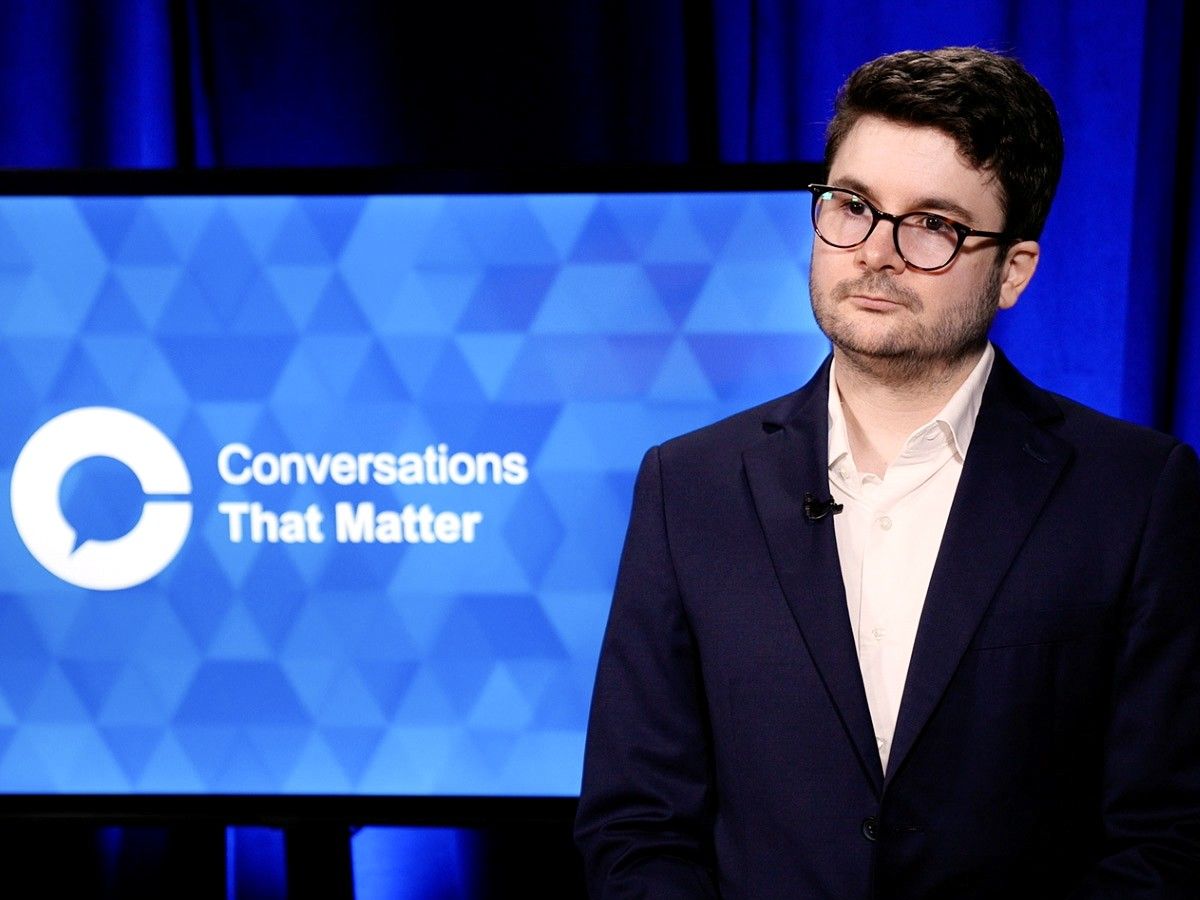
VANCOUVER, British Columbia — In the high-stakes world of pharmaceutical development, where discovering new drugs can take years and cost billions, a Vancouver-based startup is harnessing artificial intelligence to tackle one of the industry's thorniest challenges: chemical synthesis testing. Redwood AI, founded by a team of innovators including Louis Dron, has developed proprietary software that promises to revolutionize how chemists design and scale compounds, potentially accelerating the path from lab to market.
The company's platform, trained on more than one billion molecules and reactions, can evaluate manufacturing pathways in mere seconds, according to Dron. This speed is crucial in an industry where traditional methods often involve painstaking trial-and-error processes that delay drug discovery. 'Chemical synthesis testing is one of the pharmaceutical industry’s biggest challenges,' Dron explained during a recent discussion hosted by the Vancouver Sun as part of its 'Conversations That Matter' series.
Redwood AI's technology doesn't just crunch numbers; it predicts and optimizes synthesis pathways throughout the drug discovery and development lifecycle. By embedding predictive intelligence into chemical decision-making, the platform allows chemists to refine compounds with greater precision and efficiency. Dron emphasized this integration as a cornerstone of the company's approach. 'Key to the success of our platform is its ability to integrate across the drug development life cycle by embedding predictive intelligence into chemical decision making processes,' he said. 'It’s a game-changer for the pharmaceutical industry and for Vancouver.'
The conversation, which explored the convergence of advanced chemistry and AI, highlighted how Redwood AI is positioning Vancouver as a hub for chemical synthesis innovation targeted at global pharmaceutical giants. Dron, who co-founded the company, joined the forum to discuss these advancements, with a video of the full discussion available on the Vancouver Sun's website under the 'Conversations That Matter' tag. This event underscores Vancouver's growing role in tech-driven biotech, building on the city's established strengths in life sciences and software development.
According to the Vancouver Sun, Redwood AI's goal is to improve and speed up the development and production of pharmaceutical drugs, addressing bottlenecks that have long plagued the sector. The pharmaceutical industry spends an estimated $2.6 billion and 10 to 15 years on average to bring a single drug to market, with chemical synthesis often accounting for significant portions of that time and cost. By leveraging AI, Redwood AI aims to compress those timelines, potentially enabling faster responses to global health needs, such as emerging pandemics or rare disease treatments.
Dron's insights during the conversation painted a picture of a transformative tool. 'Our system evaluates manufacturing pathways in seconds,' he noted, contrasting this with conventional approaches that might require days or weeks of lab work. This capability could not only reduce costs but also minimize waste in the synthesis process, aligning with broader industry pushes toward sustainability in drug manufacturing.
Vancouver's tech ecosystem provides fertile ground for such innovations. The city has seen a surge in AI and biotech startups, supported by institutions like the University of British Columbia and proximity to major ports for global collaboration. Redwood AI's focus on chemical testing fits into this landscape, where companies are increasingly blending computational power with wet-lab science. While Dron's comments were optimistic, he acknowledged the challenges of scaling AI models for real-world pharmaceutical applications, including ensuring data accuracy and regulatory compliance.
The 'Conversations That Matters' series, which featured Dron, is part of a broader effort by the Vancouver Sun to spotlight key issues in business and technology. Upcoming events include a forum on April 12 discussing B.C.'s critical minerals sector and a panel on April 28 with British Columbia Conservative leadership candidates. These gatherings reflect the region's dynamic economic conversations, from resource extraction to political leadership.
Industry experts have long called for innovations like Redwood AI's to address synthesis hurdles. A 2023 report from the Boston Consulting Group noted that AI could cut drug development timelines by up to 30 percent, though adoption remains uneven due to concerns over model interpretability and validation. Dron's platform, by focusing on predictive analytics for pathways, aims to bridge these gaps, offering chemists actionable insights rather than black-box predictions.
Redwood AI's emergence comes amid a global race in AI-pharma integration. Competitors in Silicon Valley and Europe are developing similar tools, but Dron highlighted Vancouver's advantages, including a collaborative environment and access to diverse talent pools. The company's software is already being tested in partnerships with undisclosed pharma firms, though specifics on outcomes remain under wraps pending further validation.
For Vancouver's economy, Redwood AI represents more than just technological promise; it's a boost to the local job market in high-tech fields. The startup has drawn interest from investors eyeing Canada's burgeoning AI sector, which received over $5 billion in venture funding last year. Dron's vision extends beyond immediate applications, suggesting that predictive tools could extend to materials science and environmental chemistry, broadening the platform's impact.
As the pharmaceutical industry grapples with post-pandemic supply chain disruptions and rising R&D costs, tools like Redwood AI's could prove pivotal. Officials from Health Canada have expressed support for AI-driven innovations, provided they meet stringent safety standards. Dron noted in the conversation that regulatory alignment is a priority, with the company working closely with bodies like the FDA and EMA to ensure compliance.
Looking ahead, Redwood AI plans to expand its dataset and refine algorithms based on user feedback from early adopters. The 'Conversations That Matter' discussion served as a launchpad for these ambitions, inviting industry stakeholders to engage with the technology. For more on Dron's career and similar profiles, resources like careersthatmatter.ca offer deeper dives into the professionals driving B.C.'s innovation economy.
In a city known for its natural beauty and progressive policies, Redwood AI's work underscores Vancouver's pivot toward cutting-edge science. While challenges like data privacy and ethical AI use persist, the potential to streamline drug development offers hope for faster, more equitable access to medicines worldwide. As Dron put it, this isn't just about efficiency—it's about propelling Vancouver to the forefront of a global industry in flux.
The broader implications extend to policy and education. British Columbia's government has invested in AI research hubs, including the Pacific Institute for the Mathematical Sciences, to foster such advancements. Educators and policymakers alike are watching closely, as successes like Redwood AI could inspire curricula reforms and funding shifts toward interdisciplinary training in AI and chemistry.