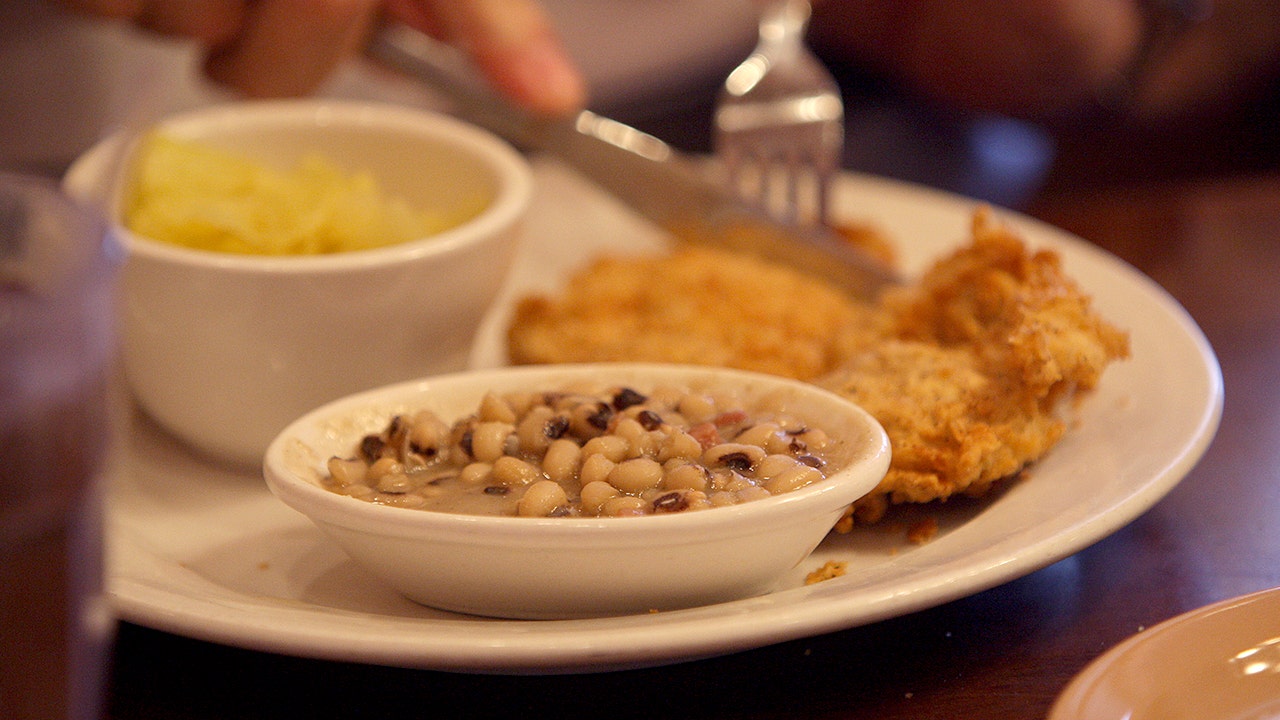
In the heart of Southern tradition, where New Year's Day meals are laden with symbols of luck and prosperity, a quiet change at Cracker Barrel Old Country Store has left some longtime patrons puzzled and nostalgic. For decades, the Tennessee-based restaurant chain served up complimentary black-eyed peas on January 1, a staple believed to usher in good fortune for the year ahead. But in recent years, that offering has vanished from menus without fanfare, prompting questions from customers who once relied on the chain as a convenient outpost for upholding family rituals.
Black-eyed peas have long held a special place in Southern cuisine, particularly on New Year's Eve and Day. According to Southern food writer John Egerton in his book Southern Food: At Home, On the Road, In History, the legumes are associated with a "mystical and mythical power to bring good luck" in the coming year. This belief traces back to the Civil War era, when Union troops reportedly overlooked black-eyed peas during raids on Southern supplies, dismissing them as mere animal feed. As a result, they became a vital, accessible food source for Confederates amid scarcity, evolving into a symbol of resilience and fortune, according to culinary historian Elevating Kitchen.
Celebrity chef Jason Smith, a Kentucky native and winner of Food Network's Food Network Star season 13, explained the dish's enduring appeal. "Black-eyed peas in the South [are] a super-huge traditional food for New Year's Day," Smith told Fox News Digital. He noted their practicality as well: "Another reason was black-eyed peas [were] cheap to buy and could feed a huge family." Often paired with collard greens, which represent money, and cornbread, symbolizing gold, the meal forms a trifecta of prosperity on Southern tables.
Cracker Barrel, with its 660 locations across 44 states, once embraced this custom enthusiastically. The chain promoted complimentary black-eyed peas on social media in years past, positioning itself as a go-to spot for displaced Southerners far from home kitchens. Customers could order them alongside cornbread and other country sides, especially via the Country Vegetable Plate. But that tradition appears to have ended quietly around a few years ago, with no public announcement.
When contacted by Fox News Digital about New Year's operations, a Cracker Barrel spokesperson confirmed the chain would be "operating during our usual hours and serving our standard menu on New Year's." However, the company did not respond to specific inquiries about the absence of black-eyed peas, leaving the decision unexplained.
Sarah Moore, Cracker Barrel's chief marketing officer, addressed menu evolution in a May interview with Fox News Digital, shedding light on the chain's broader strategy. "I think there are two strategies here," Moore said. "I think, first and foremost, what we will focus on as we continue to evolve the menu is a localized regional strategy as well. We operate in 44 states. I think we have a great opportunity to bring more localized flavors and regionality into our menu."
At the same time, Moore emphasized preserving the brand's core identity amid recent controversies, including a failed logo redesign and restaurant makeover that drew widespread backlash last year. The chain ultimately reverted to its original logo, a move some dubbed a return to "common sense." "But the other side of it is that destination menu — [the] country comforts and classics that we're known for," she added. "So, we will continue to look and evolve as to how we bring those country classics in and keep all the classics that everybody loves about Cracker Barrel on the menu."
Moore, who is married to a man from Kentucky, personally connects with the tradition. "I actually do make it every single year," she said of black-eyed peas. "It is something we will continue to look at as we build out our pipeline," hinting at potential future considerations without committing to a return.
For many, the loss feels personal. Rachel Love, a Tennessee mother and avid Cracker Barrel fan who publicly criticized the chain's abandoned makeover, shared fond memories of the dish. "My mom would have a pot of black-eyed peas simmering on the stove for good luck in the year ahead," Love recounted to Fox News Digital. "She'd scoop up a spoonful, hold it out and say, 'Here, try it. You don't want to start the year off with bad luck.'"
Love also recalled her late grandmother's habits. "During the years [that] black-eyed peas were offered as a side, she would get hers from Cracker Barrel, ordering the Country Vegetable Plate," she said. Now, with the option gone, Love and others must turn elsewhere to maintain the ritual.
Smith, the chef, echoed the sentiment, noting that few restaurants still participate in the tradition. "There's not too many restaurants that today partake in this age-old tradition any longer, but they should," he told Fox News Digital. He often relies on smaller, mom-and-pop spots in the South when home cooking isn't feasible, praising their commitment to regional customs.
The shift at Cracker Barrel comes amid broader challenges for the chain, which has faced declining sales and customer traffic. Last year, it settled discrimination claims by paying thousands to affected students, and it has experimented with promotions like free pancakes and hearty fall menus to regain diners' favor. The logo saga, which pitted Cracker Barrel against rivals like Waffle House in online debates, underscored the emotional ties customers have to its rustic, traditional image.
While Cracker Barrel's national footprint necessitates standardized menus, the disappearance of black-eyed peas highlights tensions between corporate efficiency and cultural heritage. In a chain spanning from New England to the West Coast, not every location can cater to Southern specifics year-round. Yet, for those in the 10 states where the chain has deep roots— including Tennessee, its headquarters state—the change disrupts a slice of nostalgia.
As New Year's 2024 approaches, some Southerners are adapting by seeking out independent eateries or preparing the dish at home. Others express hope that customer feedback might prompt a revival, much like the logo reversal. Cracker Barrel's silence on the matter leaves room for speculation, but Moore's comments suggest the company remains attuned to its audience's preferences.
Whether black-eyed peas return to Cracker Barrel tables remains uncertain, but their story underscores the power of food in preserving regional identity. In an era of fast-changing menus, traditions like this one remind diners of the luck they hope to carry into the new year.