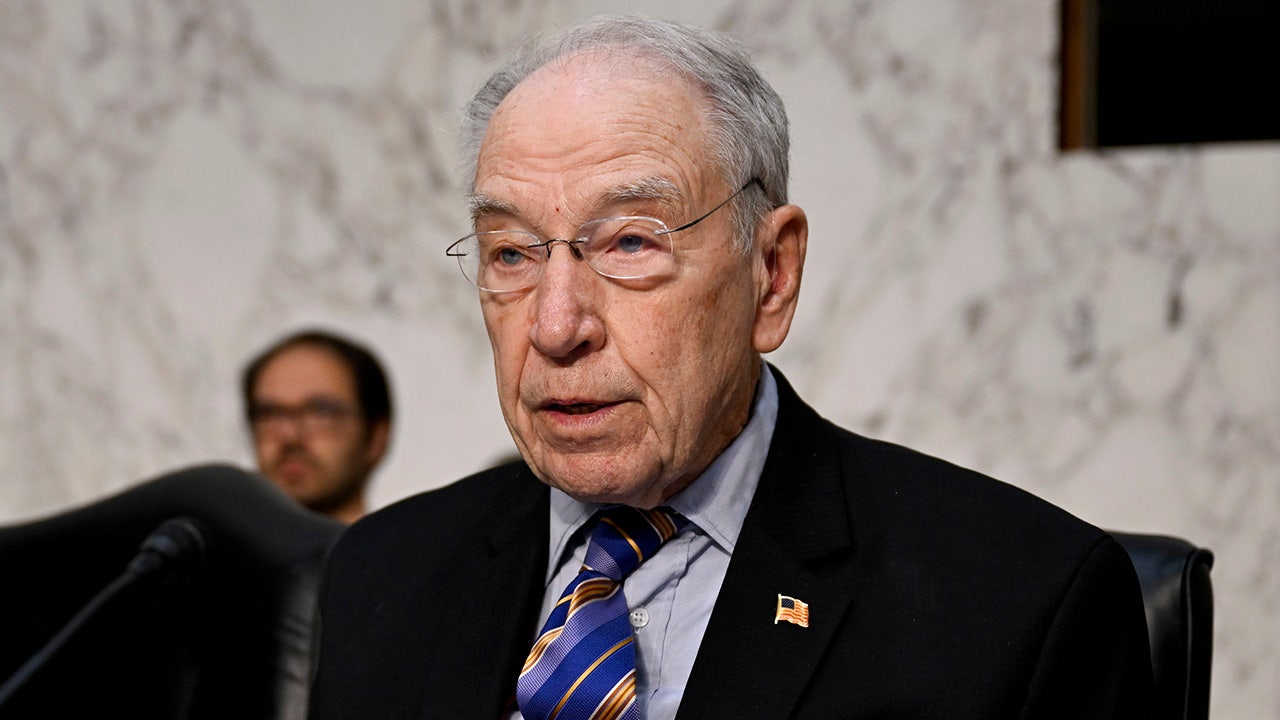
WASHINGTON — An investigation into Credit Suisse has uncovered 890 accounts linked to the Nazi regime, according to Sen. Chuck Grassley, the Republican from Iowa who chairs the Senate Judiciary Committee. The findings, revealed ahead of a congressional hearing on Tuesday, include wartime accounts tied to the German Foreign Office, a German arms manufacturing company, and the German Red Cross. Grassley announced the details on Monday, drawing renewed attention to the historical ties between Swiss banks and the Holocaust era.
The probe gained momentum following UBS's acquisition of Credit Suisse in 2023, a deal that prompted the Swiss banking giant to launch a thorough review of its predecessor's records. To lead the effort, UBS hired Neil Barofsky, a former U.S. prosecutor known for his work on financial accountability issues. Multiple reports submitted to Grassley identified the dormant accounts, which date back to World War II and the atrocities committed under Adolf Hitler's regime.
Grassley, speaking to reporters on Monday, emphasized the significance of the discovery. "These accounts are a stark reminder of the financial mechanisms that supported the Nazi war machine," he said, according to accounts from the briefing. The senator has long advocated for transparency in international banking practices, particularly regarding unclaimed assets from the Holocaust period.
The Tuesday hearing, titled an examination of connections between Swiss banks and the Nazis, will feature testimony from UBS representatives, including Robert Karofsky, president of UBS Americas. A copy of Karofsky's prepared remarks, obtained by NBC News, outlines the bank's commitment to the investigation. "We approach today’s topic with solemn respect," Karofsky is expected to say. The statement continues, "Now, with three years of experience, our priority is to complete this review so that the world can benefit from the findings in the coming final report."
This development comes just a week after International Holocaust Remembrance Day on January 27, marking the 80th anniversary of the liberation of Auschwitz-Birkenau by Allied forces in 1945. That date, when Soviet troops entered the Nazi concentration camp in occupied Poland, exposed the horrors of the genocide that claimed the lives of six million Jews and millions of others, including Slavs, Roma people, individuals with disabilities, religious leaders, those targeted for their sexual orientation, and political prisoners.
President Donald Trump, marking the occasion last week, issued a statement reflecting on the genocide. "Today, we pay respect to the blessed memories of the millions of Jewish people, who were murdered at the hands of the Nazi Regime and its collaborators during the Holocaust—as well as the Slavs and the Roma, people with disabilities, religious leaders, persons targeted based on their sexual orientation, and political prisoners who were also targeted for systematic slaughter," Trump said in the White House release. He noted the liberation of Auschwitz-Birkenau, where over one million people were killed.
Trump, who returned to the White House as the 47th president last year, highlighted his administration's efforts to combat antisemitism. "After I took office as the 47th President of the United States, I proudly made it this administration’s priority directing the Federal Government to use all appropriate legal tools to combat the scourge of antisemitism," he asserted. "My Administration will remain a steadfast and unequivocal champion for Jewish Americans and the God-given right of every American to practice their faith freely, openly, and without fear."
The timing of the Credit Suisse revelations underscores ongoing questions about Swiss banks' roles during World War II. Historically, Switzerland maintained neutrality amid the conflict, but its financial institutions have faced scrutiny for handling Nazi-looted assets, including gold from concentration camps and property stolen from Jewish victims. In the 1990s, Swiss banks agreed to a $1.25 billion settlement with Holocaust survivors and their heirs over such claims, but critics argue that more accounts remain undiscovered.
Grassley's involvement stems from his position as chairman of the Senate Judiciary Committee, where he has pushed for accountability in global finance. The hearing on Tuesday morning in Washington will delve deeper into the 890 accounts and their implications. UBS officials are expected to provide updates on the investigation's progress, while Grassley and other lawmakers may question the bank's handling of historical records.
Representatives from Grassley's office did not immediately respond to requests for additional comment on Monday evening. However, the senator's office confirmed that the hearing will focus on ensuring that findings from the Credit Suisse review are shared publicly, potentially aiding efforts to return assets to rightful heirs or contribute to Holocaust education and remembrance initiatives.
The UBS acquisition of Credit Suisse, orchestrated in March 2023 amid a banking crisis, not only stabilized the Swiss financial sector but also inherited a legacy of complex historical dealings. Credit Suisse, founded in 1856, had previously faced fines for money laundering and other infractions, but the Nazi-era accounts represent a particularly sensitive chapter. Barofsky's team, working since the merger, has reportedly sifted through millions of documents to identify links to the Third Reich.
Among the accounts highlighted in reports to Grassley are those associated with the German Foreign Office, which coordinated diplomatic efforts under the Nazis, and a major arms manufacturer that supplied weapons to the Wehrmacht. The inclusion of the German Red Cross account adds another layer, as the organization was co-opted during the war to support eugenics programs and other regime initiatives, despite its humanitarian facade.
Experts on Holocaust restitution have welcomed the disclosures but cautioned that the full scope may take years to unravel. "This is a step forward, but Swiss banks must go further to atone for their past," said one historian specializing in wartime finance, speaking on condition of anonymity pending the hearing. The investigation could influence ongoing international discussions on reparations, especially as aging survivors and their descendants continue to seek justice.
Broader implications extend to U.S.-Swiss relations and global banking regulations. Lawmakers like Grassley have signaled that the hearing could lead to recommendations for stricter oversight of historical asset recovery. Meanwhile, Jewish advocacy groups, including the Anti-Defamation League, have praised the probe as vital to preserving Holocaust memory in an era of rising antisemitism.
As the hearing unfolds on Tuesday, it serves as a poignant reminder of the enduring legacy of World War II. With Trump's administration emphasizing the fight against hate, and institutions like UBS confronting their histories, the event in Washington could mark a new chapter in accountability for one of the darkest periods in modern history. Updates from the proceedings are expected throughout the day, with potential announcements on the final report's timeline.