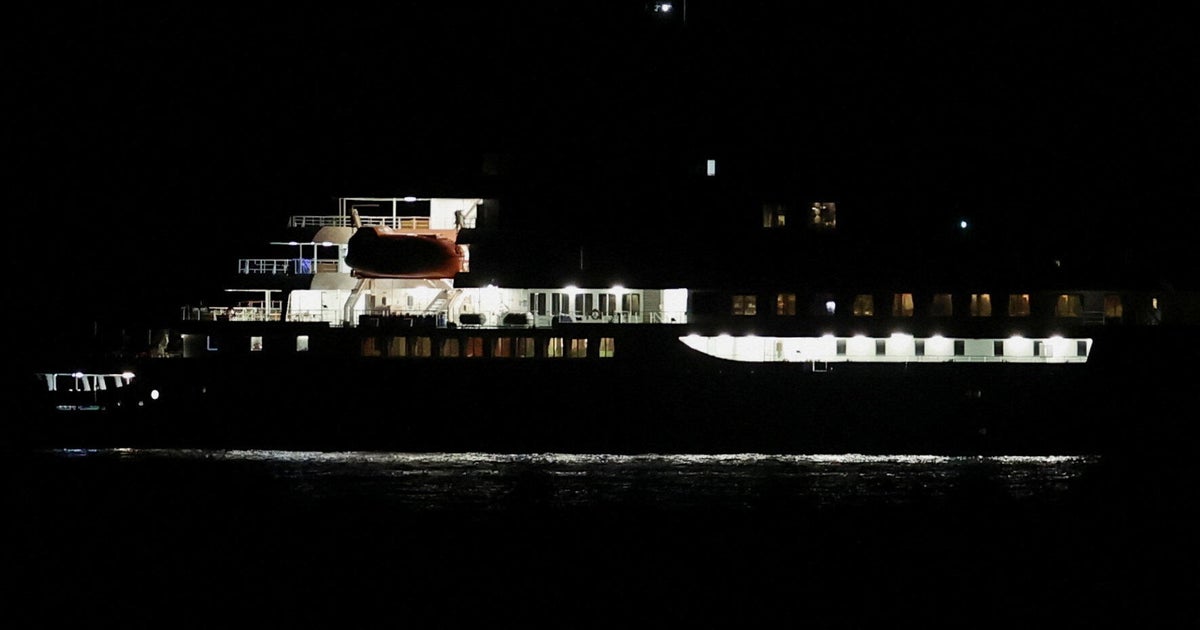
TENERIFE, Canary Islands — The MV Hondius, a Dutch-flagged expedition cruise ship plagued by a hantavirus outbreak that has claimed three lives, docked early Sunday at the port of Granadilla on Tenerife, the largest of Spain's Canary Islands. Health officials immediately began a meticulously coordinated evacuation of nearly 150 passengers from more than 15 countries, including 17 Americans, along with a portion of the vessel's approximately 60 crew members. The operation, described as complex by authorities, aims to repatriate everyone swiftly using small launch boats and chartered flights, with no health screenings planned on land to expedite the process.
According to Oceanwide Expeditions, the ship's operator, the first passengers started disembarking Sunday morning via boats that carry between five and 10 people at a time. Spanish nationals were prioritized for initial evacuation, followed by a flight to the Netherlands carrying Germans, Belgians, Greeks, and some crew. Subsequent flights were scheduled for Canada, Turkey, France, Great Britain, Ireland, and the United States as aircraft become available. The final group, including Australians, New Zealanders, and passengers from Asia, was set to depart Monday on a specially arranged flight from Australia.
The outbreak, linked to at least nine confirmed or suspected cases, has been particularly devastating. Among the fatalities are a Dutch couple — a 70-year-old man and his 69-year-old wife — who had spent weeks bird-watching in Argentina, Chile, and Uruguay before boarding, areas known to harbor rodents carrying the Andes strain of hantavirus. The man fell ill on April 6 and died aboard the ship on April 11, his symptoms initially mistaken for a common respiratory virus. His wife disembarked at St. Helena, a British territory, and died in Johannesburg, South Africa, on April 26 after testing positive for the virus. A German woman succumbed on May 2 after showing symptoms on April 28.
Three other patients were airlifted to the Netherlands for emergency care earlier this week, while a Swiss man who fell ill after leaving the ship is being treated in Zurich. Two British nationals also required medical evacuations: one to South Africa and another who is hospitalized on Tristan da Cunha. Oceanwide Expeditions reported that 32 passengers from about a dozen countries had already disembarked at St. Helena between April 21 and 24, including the Dutch woman who later died. Among those who returned to the U.S. before the outbreak was fully recognized, state health agencies in California, Georgia, Texas, Virginia, and Arizona are now monitoring several Americans.
The MV Hondius departed Ushuaia, Argentina, on April 1 for a voyage through the South Atlantic, visiting remote spots like South Georgia, the South Sandwich Islands, Gough Island, and St. Helena. It then anchored off Cape Verde, an archipelago off West Africa, for several days before Spain agreed to accept the vessel at Tenerife. Health officials aboard confirmed Sunday that no one remaining on the ship was exhibiting symptoms, a development that eased some immediate concerns during the evacuation.
After all passengers and most crew are offloaded, a skeleton crew will restock supplies and sail the Hondius to Rotterdam, Netherlands, a journey expected to take about five days, Oceanwide Expeditions said. The World Health Organization (WHO) is overseeing the evacuation alongside other health bodies, with WHO Director-General Dr. Tedros Adhanom Ghebreyesus arriving on Tenerife ahead of the ship's docking to supervise operations.
Hantavirus, a family of diseases transmitted from rodents via urine, droppings, or saliva, typically takes up to eight weeks for symptoms to appear after exposure, according to the Centers for Disease Control and Prevention (CDC). The Andes strain, prevalent in Latin America, is the only known variant capable of human-to-human transmission, though WHO assesses the overall public risk as low. Dr. Tedros, speaking at a briefing Sunday morning, sought to calm fears about the repatriation of U.S. citizens.
This is not another COVID, and the risk to the public is low. So, they shouldn't be scared and they shouldn't panic,
he told reporters, emphasizing that years of scientific study on the virus, combined with observations from this outbreak, support that evaluation.
Acting CDC Director Dr. Jay Bhattacharya echoed the sentiment in a statement released Wednesday.
Hantavirus is not spread by people without symptoms, transmission requires close contact, and the risk to the American public is very low,
he said, underscoring the limited pathways for spread outside of rodent exposure.
For the 17 Americans still aboard, the U.S. response is robust. The CDC dispatched a team of epidemiologists and medical professionals to Tenerife to assess exposure risks and recommend monitoring protocols. Once evacuated, they will board a dedicated medical repatriation flight arranged by the CDC and the Department of Health and Human Services, landing at Offutt Air Force Base in Omaha, Nebraska. From there, the passengers will transfer to the University of Nebraska Medical Center's National Quarantine Unit, a specialized biocontainment facility.
Michael Wadman, the unit's medical director, explained that each American will receive an individual room during quarantine, the duration of which remains unspecified pending further assessments. This setup mirrors protocols used for high-risk infectious disease cases, ensuring isolated care while minimizing broader exposure.
The source of the outbreak is still under investigation, but suspicions center on the Dutch couple's pre-boarding travels in South America, where the rodent vectors for the Andes strain are endemic. The man's death went untested initially due to symptom overlap with other illnesses, a factor WHO officials noted delayed recognition. The German woman's case, confirmed later, prompted heightened alerts as the ship progressed toward Europe.
Passengers and crew hail from diverse nations, reflecting the expedition-style cruise's appeal to adventure seekers. The vessel's itinerary, focused on remote Atlantic islands, likely contributed to the challenges in managing the outbreak, as medical resources were limited far from major ports. Prior to Cape Verde, the ship had no reported stops that might explain additional exposures, though investigators are reviewing all possibilities.
WHO's involvement highlights the global stakes, even as officials downplay pandemic potential. Dr. Tedros' presence on Tenerife signals the organization's commitment to containing any spread, particularly given the ship's international manifest. Spanish authorities, in agreeing to host the docking, coordinated with European Union partners to facilitate the rapid exodus, avoiding prolonged stays on the islands.
As the evacuation unfolds, questions linger about long-term implications for cruise travel in remote areas. Oceanwide Expeditions has not commented on potential itinerary changes or compensation, focusing instead on safe repatriation. For the affected families, the tragedy underscores the unforeseen risks of such voyages, where isolation can amplify health crises.
Looking ahead, the CDC's monitoring of earlier returnees and the quarantined group will provide critical data on the outbreak's scope. Health experts anticipate no widespread transmission, given hantavirus's characteristics, but vigilance remains key. Dr. Bhattacharya's assurance of low risk aims to prevent public alarm, drawing parallels to past contained incidents rather than escalating crises like COVID-19.
In Rotterdam, once the Hondius arrives, thorough decontamination will likely follow, as per standard protocols for vessels involved in infectious disease events. Meanwhile, the passengers' journeys home mark the end of a harrowing chapter, with hopes that swift action has averted further tragedy. Officials continue to urge calm, trusting in the layered safeguards now in place across borders.