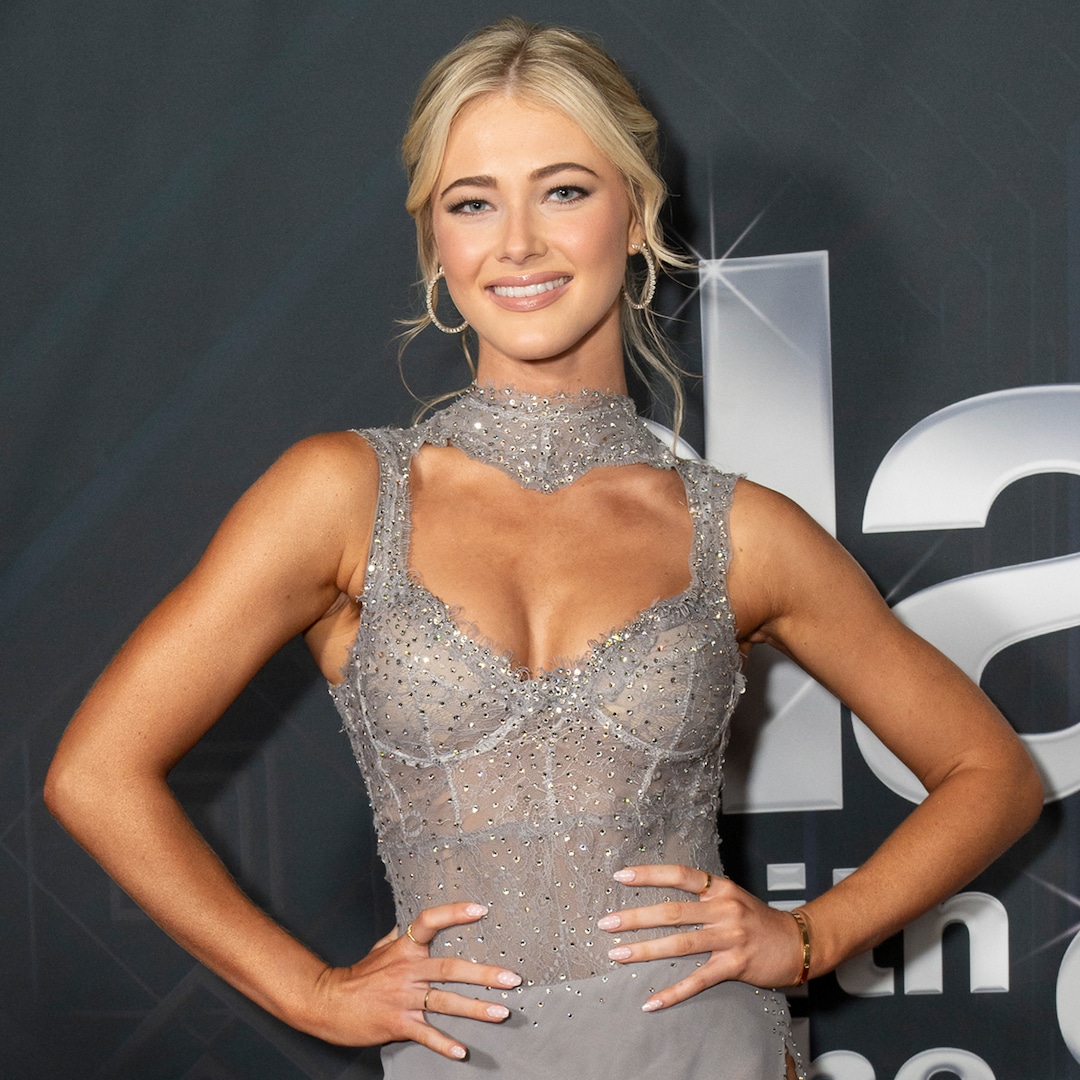
Los Angeles, CA – Rylee Arnold, the 20-year-old professional dancer on Dancing With the Stars, is brushing off online criticism about her skills and future on the show, expressing enthusiasm for returning in season 35 despite fan doubts. In a recent interview, Arnold addressed the backlash she faced during season 34, where she was eliminated alongside partner Scott Hoying in the Oct. 21 Wicked-themed episode. Some viewers online attributed their early exit to her relative inexperience, with comments questioning her teaching abilities and predicting she wouldn't be asked back.
Arnold shared her thoughts during the Nov. 19 episode of The Morning After (Show), hosted by Julianne Hough. “There’s been a lot of things this year [and] people saying that I’m not coming back next season, that I’m not gonna be asked back,” she said, “or people saying I don’t know how to teach.” The dancer, who joined the pro lineup in season 32 in 2023 after appearing on Dancing With the Stars: Juniors in 2018, emphasized tuning out the negativity. “I’ve been reminding myself that it’s just noise,” she added, clarifying that decisions about the cast aren't finalized until summertime.
“We don’t know if we’re gonna be on the show until the summertime,” Arnold continued in the interview. “I would absolutely love to do another season—if not a bunch of more seasons—in my life, if they want me there.” Her previous partners included reality star Harry Jowsey in season 33 and Olympic gymnast Stephen Nedoroscik, with whom she reached further in the competition. The criticism peaked after her elimination with Hoying, a member of the a cappella group Pentatonix, prompting debates among fans about judging fairness and dancer readiness.
Behind the glamour of the ballroom, the world of Dancing With the Stars involves rigorous demands and opaque financial structures, as revealed by insiders. According to a 2019 Variety report citing multiple sources, celebrity contestants earn $125,000 for the rehearsal period and the first two weeks of the show. If they advance, payments increase weekly, potentially reaching a maximum of $295,000. However, country radio host Bobby Bones, who won season 27 with pro Sharna Burgess in 2018, claimed higher earnings on a September 2025 episode of Jason Tartick's podcast Trading Secrets.
“That show pays OK,” Bones said. “Like, first episode, no money. Second episode, $10,000. I think it's like, $10,000, $10,000, $20,000, $20,000. It ends up being $50,000 an episode if you last.” He noted a base salary of around $110,000 and said he ultimately made close to $400,000 from the season. ABC has not publicly confirmed these figures, leaving exact compensation a matter of speculation among participants and observers.
Professional dancers like Arnold face similar uncertainties in pay, though details are even scarcer. Jenna Johnson, a two-time winner who triumphed in season 26 with Olympic figure skater Adam Rippon and season 33 with The Bachelor's Joey Graziadei, discussed the structure on a June 2025 episode of Kelly Stafford and Hank Winchester's podcast The Morning After. “You're guaranteed until a certain amount of weeks,” she said. “I think there's different contracts though. I can't speak for everybody.” Even early eliminations ensure some compensation, but longevity boosts earnings significantly.
Johnson clarified that winning doesn't yield extra pay beyond the standard season amount. “If you make it all the way to the end, you're getting paid the whole season, which is amazing, and you get a bonus on top of that for making it to the finale,” she explained. “If you win, it's not like you win a $1 million and split it with your partner. You're just getting a cute trophy together”—now known as the Len Goodman Mirrorball Trophy. Troupe members, who support group numbers but aren't paired with celebrities, earn considerably less; Lindsay Arnold, Jenna's sister and a former pro, said on a 2022 episode of Trading Secrets that her salary was cut “more than in half” when demoted to troupe status.
Pairing pros with celebrities is another tightly controlled aspect of the production, with dancers having minimal input. “You get no say,” Lindsay Arnold stated on a May 2025 episode of Maggie Sellers' Hot Smart Rich podcast. “It's very much just, 'Here's your partner. Make it work.'” Jenna Johnson echoed this on The Morning After, noting that pairings are kept secret until the live reveal for authentic reactions. “They really want to keep it a secret until you meet them live,” she said. “They want that genuine reaction. So I think people always think we know who we have and we're keeping it a secret. Absolutely not.”
Former showrunner Rob Wade described the matching process to E! News in 2015, emphasizing compatibility. “It's based on height, build and personality and compatibility,” he said. “We don't pair people who aren't going to get on. It's too intense. It's not like The Bachelor or something, we couldn't do that. That would just be miserable experience for the celebrity, for us and the viewer.” Wade admitted past mistakes in pairings that led to on-screen tension, underscoring the high stakes of these decisions.
The grueling rehearsal schedule leaves little room for downtime, as Arnold detailed on a September 2024 episode of the Lightweights Podcast With Joe Vulpis. “Every day we have four-hour rehearsals,” she said, typically from 9:00 a.m. to 1:00 p.m., 1:00 p.m. to 5:00 p.m., or 5:00 p.m. to 9:00 p.m. Post-rehearsal, pros often consult with producers, refine choreography, or analyze dance videos. “Literally my whole life is devoted to it,” Arnold added, “but it's my passion and it's what I love. So, it makes me so happy.”
We have our show day on Tuesday and then it's Wednesday to Sunday, straight rehearsals. And then Monday we have camera blocking and then Tuesday's show day again.
Pros like Emma Slater and Britt Stewart have some influence over weekly song choices, but it's a collaborative effort with producers, as they revealed in a September 2025 Instagram video: “Mostly yes, though it's a collaboration with producers.” This input helps tailor performances to the celebrities' strengths and the episode's theme.
The costume department operates at a frenetic pace to keep outfits fresh each week. Daniela Gschwendtner, a costume designer, told TV Insider in 2017 that the team meets with set designers, lighting experts, dancers, and talent to craft a story for each pair. “Then we sketch out ideas. We have five days, max, to make all the outfits. That’s half a day per costume, not including all the rhinestones,” she said. With about 20 people in the department plus a separate tailor shop, fittings often happen hours before showtime.
Steven Norman Lee, another costume designer, noted that while men's pants might be reused occasionally, competition costumes are custom-made weekly. Gschwendtner added, “We do reuse things for group numbers or promo shoots, but not for the competition. We don’t reuse things unless there’s a specific reason to do so. We try to keep everybody fresh and new in something different every week, so it stays interesting.” This attention to detail contributes to the show's visual spectacle, even as pros like Arnold navigate personal and professional pressures.
As season 34 wraps up, Arnold's resolve amid criticism highlights the resilience required in competitive dance television. With cast announcements for season 35 not expected until summer, her future remains uncertain, but her passion suggests she'll continue pushing forward if given the chance. The blend of intense preparation, strategic pairings, and behind-the-scenes logistics underscores why Dancing With the Stars endures as a cultural staple, drawing both admiration and scrutiny from its devoted audience.