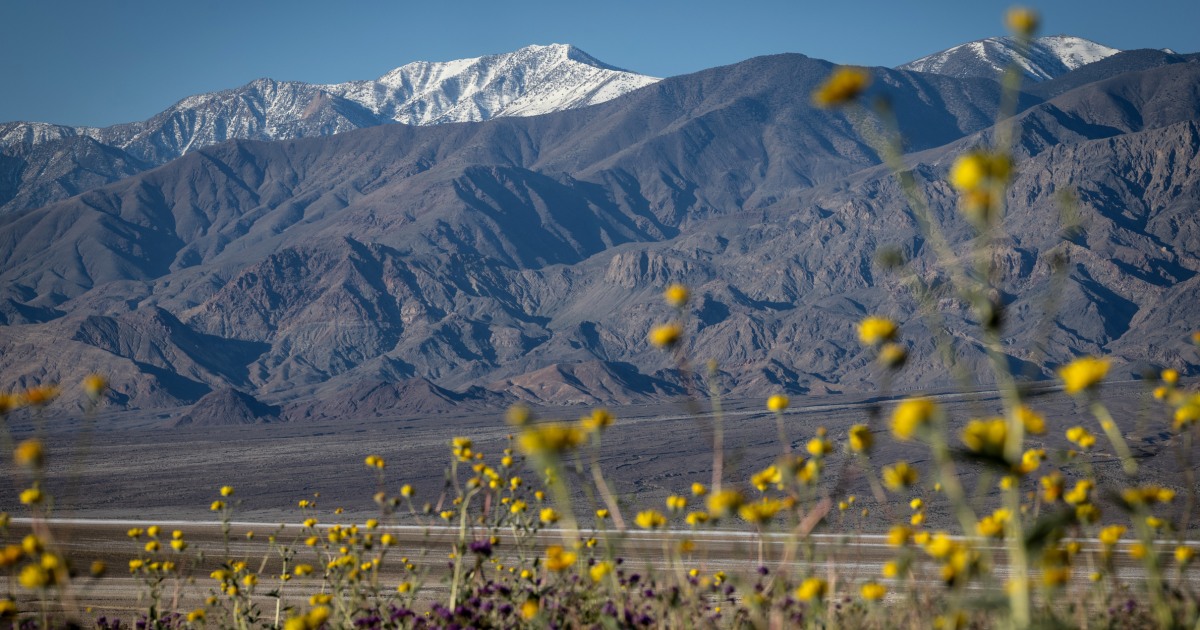
DEATH VALLEY NATIONAL PARK, Calif. — In a rare burst of color amid one of North America's harshest environments, Death Valley National Park is experiencing its most spectacular superbloom in a decade, transforming vast stretches of barren desert into vibrant fields of pink, purple and yellow wildflowers.
The phenomenon, which has drawn an influx of visitors in recent weeks, stems from unusually heavy rainfall last fall and early winter, according to park officials. Death Valley, renowned as the hottest and driest spot on the continent, typically receives just about 2 inches of precipitation annually. But from November through early January, the park saw more than 2.5 inches — exceeding the yearly average in a mere two and a half months.
"This area that’s known basically for hot weather, sand and dirt has just become this amazing landscape of colors," said David Blacker, executive director of the nonprofit Death Valley Natural History Association. "The smell is just amazing."
Abby Wines, acting deputy superintendent at the park, described the superbloom as a fleeting gift from nature. While some wildflowers emerge each spring, superblooms — an informal term for these explosive displays — require specific conditions, including wetter-than-normal seasons followed by mild spring weather. "We had more than our annual average in just two and a half months," Wines noted, highlighting how the deluge triggered the germination of dormant seeds.
Blacker emphasized the importance of the rain's character in fostering such widespread blooms. "We need multiple days of drizzly, foggy, gentle rain that soaks in, but not the heavy monsoon rains that wash out our highways and destroy our roads," he explained. "And then we need mild temperatures going into spring, because once the flowers come up, their big enemy is wind and heat." This year's conditions aligned perfectly, allowing ephemerals — desert wildflowers adapted to survive as seeds during droughts — to flourish across low-elevation areas.
These ephemerals, unlike resilient cacti that store water, employ a strategy of dormancy to endure the desert's extremes. "You can think of it like drought evasion," said Erik Rakestraw, a curator of botany at the Arizona-Sonora Desert Museum in Tucson. "In their seed form, it’s like they’re not even existing. They’re just laying in the soil."
Under ideal circumstances, the seeds sprout, bloom, get pollinated and produce new seeds to restart the cycle. Rakestraw added that the plants are resilient to irregular rains: "If there isn’t a good rain event next year, or even the year after that, or several years in a row, those seeds have evolved to just sit and wait it out." This adaptation has enabled such displays in Death Valley, where the landscape can remain unchanged for years between blooms.
The National Park Service has declared this the park's most impressive superbloom since 2014, when similar rains led to a memorable explosion of flora. That event drew record crowds and put Death Valley's wildflower potential on the map for nature enthusiasts. This year, the blooms are visible along major routes like the southern end of Badwater Road, one of the lowest points on Earth's surface at 282 feet below sea level.
For those seeking quieter spots, Blacker recommends Mud Canyon or the Beatty Cutoff Road, though accessing prime viewing areas often involves short hikes. He maintains an updated wildflower report on the Death Valley Natural History Association's website, providing real-time guidance on peak locations. The National Park Service site also offers tracking resources, helping visitors plan amid fluctuating conditions.
Time is limited for witnessing the low-elevation spectacle, with Wines estimating that flowers there will persist only until mid- to late March, depending on weather patterns. Higher elevations, such as those in the Panamint Mountains, could see blooms from April through June, but these will be more scattered among shrubs and terrain, lacking the carpet-like effect now blanketing the valley floor.
"The next few weeks will be the peak of the bloom," Wines said. "By the time the higher elevations are blooming, there will be lots of flowers and they’ll be beautiful, but they’re going to be interspersed with bushes and plants, and it doesn’t create the same visually stunning landscape that you can see right now at low elevations, where a rocky landscape has transformed into a wildflower field."
Park visitation has surged as word spreads, with Wines noting an uptick in recent days. Officials urge travelers to prepare for crowds and variable road conditions, especially after winter rains that can lead to flash floods or washouts. Entrance fees apply, and the park recommends checking alerts for any closures.
Protecting the fragile ecosystem is paramount. Picking wildflowers is strictly prohibited, and visitors are asked to stay on trails to avoid trampling seeds that could seed future generations. "Be mindful to protect the area’s pristine environments," Wines advised, underscoring the balance between sharing this natural wonder and preserving it.
Superblooms like this one offer a glimpse into the desert's hidden resilience, but they also highlight broader environmental dynamics. While climate patterns can enhance such events in the short term, experts note that long-term shifts toward drier conditions in the Southwest could make future occurrences less predictable. For now, though, Death Valley stands as a testament to nature's capacity for surprise.
As the blooms fade, the park will return to its stark beauty, seeds lying in wait for the next generous rain. Those who make the trek in the coming weeks stand to witness a transformation that Blacker calls "amazing," a colorful counterpoint to the valley's enduring reputation for extremity.