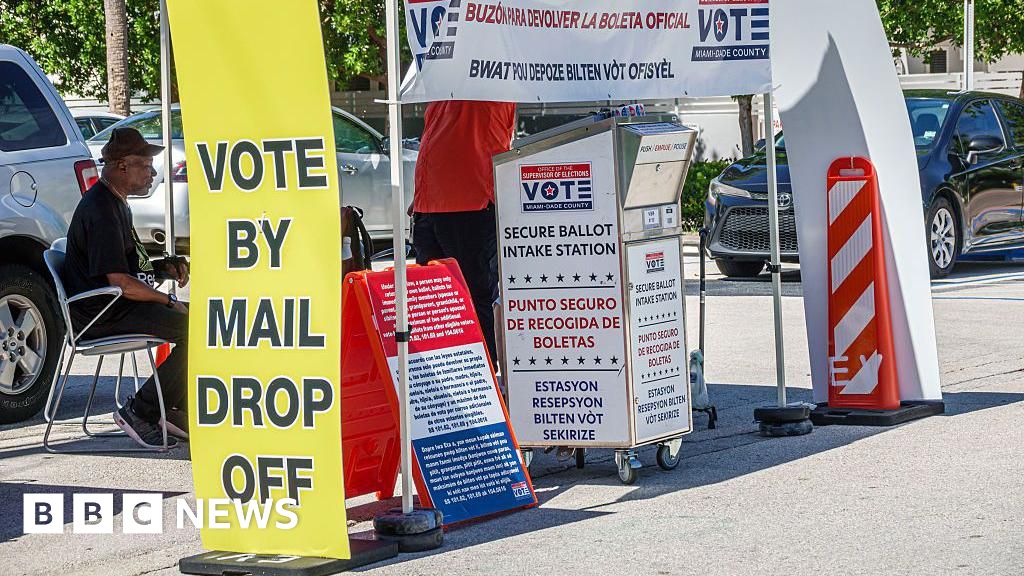
In a significant legal challenge to President Donald Trump's election policies, attorneys general from 23 Democratic-led states filed a lawsuit on Wednesday to block a newly issued executive order aimed at restricting mail-in voting. The suit, lodged in federal court, contends that the order oversteps the president's constitutional authority by attempting to dictate how states administer elections, a power reserved primarily for state governments under the U.S. Constitution.
The executive order, signed by Trump on Tuesday, seeks to impose nationwide changes to mail-in and absentee voting procedures ahead of the November midterm elections. It directs federal agencies, including the U.S. Postal Service, to compile a comprehensive list of eligible voters and to transmit ballots only to individuals enrolled on state-specific mail-in and absentee participation lists. Proponents of the order argue it is designed to prevent fraud, but critics, including the suing states, maintain it unlawfully interferes with state sovereignty.
"The new rules transgress Plaintiff States' constitutional power to prescribe the time, place, and manner of federal elections," the lawsuit states, adding that the order attempts to "amend and dictate election law by fiat based on the President's whims." The document emphasizes that while Congress holds the authority to regulate federal elections under Article I, Section 4 of the Constitution, the executive branch lacks such unilateral power.
New York Attorney General Letitia James, who is leading the coalition of Democratic attorneys general, issued a strongly worded statement underscoring the gravity of the challenge. "Free and fair elections are the cornerstone of our democracy, and no president has the power to rewrite the rules on his own," James said. Her office, along with those from states like California, Illinois, and Massachusetts, argues that the order could disenfranchise millions of voters by complicating access to mail-in ballots, a method that has become increasingly popular amid concerns over in-person voting during the ongoing political climate.
Trump has long voiced skepticism about mail-in voting, repeatedly claiming without evidence that it enables widespread fraud. Despite these assertions, the president himself voted by mail in Florida's recent primary election, citing his duties as president. His wife, Melania Trump, and son, Donald Trump Jr., have also utilized mail-in ballots in past elections, a point highlighted by opponents to underscore perceived inconsistencies in the administration's stance.
Legal experts familiar with election law expressed doubt over the order's viability. "The president simply doesn't have the constitutional authority to make these sweeping changes," said one anonymous constitutional scholar who spoke to reporters outside the courthouse. Another expert, Professor Elena Ramirez of Georgetown University Law Center, noted in a recent interview that similar attempts by the executive branch to influence state election procedures have historically been struck down by courts.
This is not the first time Trump's administration has faced judicial pushback on election-related executive actions. Earlier this year, federal judges blocked a separate order that threatened to withhold funding from states not complying with certain federal election guidelines. That ruling, issued by a panel in the U.S. District Court for the District of Columbia, reinforced the principle that election administration remains a state prerogative, with federal involvement limited to congressional legislation.
The timing of the executive order is particularly notable as it coincides with Trump's aggressive push for the SAVE America Act, a proposed bill currently stalled in Congress. The legislation, championed by the president and Republican lawmakers, would require proof of U.S. citizenship for all voters in federal elections, aiming to tighten voter eligibility verification. Supporters, including House Speaker Mike Johnson, argue it is essential to safeguard election integrity, while Democrats counter that it imposes unnecessary barriers, potentially suppressing turnout among eligible citizens who lack easy access to documentation.
"What to know about the SAVE America Act," as outlined in White House briefings, includes provisions for nationwide voter ID requirements and enhanced database sharing between states and federal agencies. Trump signed the executive order partly as a stopgap measure while urging congressional Republicans to revive the bill, which passed the House in a narrow vote last spring but has languished in the Senate amid Democratic filibuster threats.
The lawsuit was filed in the U.S. District Court for the Southern District of New York, a venue chosen for its proximity to several plaintiff states and its history of handling high-profile election disputes. The 23 states involved represent a broad swath of the Democratic coalition, from coastal powerhouses like New York and California to Midwestern states such as Michigan and Wisconsin, where mail-in voting played a pivotal role in the 2020 presidential election.
Background on mail-in voting reveals its evolution as a cornerstone of American democracy, particularly expanded during the COVID-19 pandemic. In 2020, over 65 million Americans cast ballots by mail, according to the U.S. Election Assistance Commission, contributing to record turnout. States have varied approaches: some, like Colorado and Oregon, conduct nearly all elections by mail, while others, including parts of the South, have more restrictive policies. Trump's order, if implemented, could standardize these processes in ways that conflict with state laws, potentially leading to chaos in the lead-up to the midterms.
Republicans defending the executive order point to isolated incidents of voter fraud as justification, though studies from organizations like the Brennan Center for Justice indicate such cases are exceedingly rare, affecting less than 0.0001% of votes. White House Press Secretary Karine Jean-Pierre, in a briefing on Thursday, reiterated the administration's position: "The president is committed to ensuring only eligible Americans vote, and this order provides necessary safeguards."
From the Democratic perspective, the lawsuit is framed as a defense of democratic norms against executive overreach. Governors from suing states, including California's Gavin Newsom and Illinois' J.B. Pritzker, have publicly rallied behind the effort, warning that unchecked presidential power could erode public trust in elections. Newsom, in a statement released Friday, said, "We will not allow one man's agenda to undermine the will of the people."
As the case progresses, it is unlikely the order will take effect before the November 5 midterm elections, when all 435 House seats and 33 Senate seats are contested. Analysts predict the litigation could drag into 2025, influencing the national discourse on voting rights. The outcome may set precedents for future executive actions on elections, especially as the 2024 presidential race looms on the horizon.
Beyond the immediate legal battle, the executive order highlights deepening partisan divides over election administration. With control of Congress at stake in the midterms, both parties are mobilizing voters, with Democrats emphasizing accessibility and Republicans focusing on security. As one election watchdog group, the nonpartisan League of Women Voters, observed in a recent report, "The integrity of our elections depends on balancing these priorities without alienating any eligible voter." The coming months will test whether the courts uphold this balance or allow federal intervention to reshape the landscape.