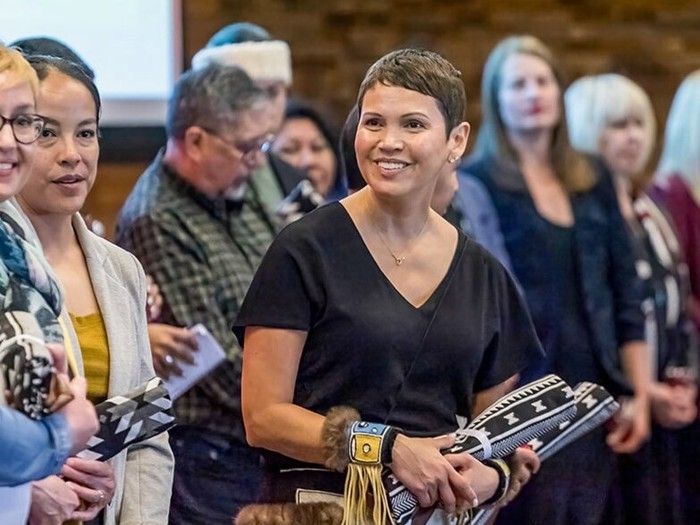
VANCOUVER, British Columbia — Michelle Bryant-Gravelle, who served as Vancouver's senior director of Indigenous relations for three years, has resigned amid concerns over the city's true commitment to reconciliation with First Nations people. Bryant-Gravelle, who led the initiative from 2022 until her departure last month, expressed in a recent interview that a misalignment between public statements and internal actions made it impossible for her to continue leading with integrity.
"When the words spoken at the political level don’t align with that deeply transformational work that they mandated us to do, it becomes very difficult to lead with integrity, knowing that the words spoken behind closed doors are not the words that are being shared with the nations," Bryant-Gravelle told Postmedia News. Her comments highlight ongoing tensions within municipal governments as they navigate reconciliation efforts in the wake of Canada's broader national reckoning with Indigenous history.
Bryant-Gravelle's tenure was marked by significant projects aimed at addressing colonial legacies. One key achievement was her involvement in the renaming of Trutch Street on Vancouver's west side, a road originally named after Joseph Trutch, British Columbia's first lieutenant-governor known for his racist policies toward Indigenous peoples. In June 2025, the street was officially renamed šxʷməθkʷəy̓əmasəm Street, reflecting a name provided by the Musqueam First Nation in the hən̓q̓əmin̓əm̓ language, with the English equivalent Musqueamview Street. Council had directed staff to pursue the change as a step toward acknowledging harmful colonial impacts.
Another cornerstone of her work was the development of Vancouver's United Nations Declaration on the Rights of Indigenous Peoples (UNDRIP) action plan. Approved by the current city council in June 2024, this plan is described as the first of its kind for a Canadian municipality. It outlines the city's responsibilities in upholding Indigenous rights and includes recommendations for advancing reconciliation with local First Nations and urban Indigenous communities. Bryant-Gravelle's team of four staff members played a central role in crafting these initiatives, which she said demonstrated genuine progress at the operational level.
Despite these accomplishments, Bryant-Gravelle cited a growing sense of undervaluation from some senior managers and political leaders. She praised the dedication of her team and noted positive relationships with certain city hall staffers, but overall, she felt the depth of support was lacking. "I’m not looking to burn bridges at the City of Vancouver. But my experience at the city really reflects how Indigenous leaders are positioned inside those colonial institutions," she said. "It’s more than one thing, is what I will say, and it happened over time."
A pivotal moment that nearly prompted her immediate resignation was the leak of a memo from Mayor Ken Sim's office in February, first reported by Globe and Mail journalist Frances Bula. The document outlined plans for rejuvenating Vancouver's Downtown Eastside, including a proposal to assist Indigenous residents in relocating from the neighborhood to their home Nations. Bryant-Gravelle described the idea as sending a harmful signal that Indigenous people were not valued in the city.
"You’re sending a signal that Indigenous people are not important, and we need to send them home. That was the first kind of hit, like what am I even doing here?" Bryant-Gravelle said.
Following the memo's exposure, she raised her concerns with senior city management and staff in the mayor's office. According to Bryant-Gravelle, their responses amounted to "surface-level appeasements" that failed to address the underlying issues. She declined to elaborate on other specific incidents, emphasizing her desire to avoid further conflict, but stressed that reconciliation demands more than symbolic gestures.
"Working with Indigenous people is not just attending a ceremony and being a witness, and then not doing the work," she added. "It requires you to do the deep work to make transformative change that is true reconciliation, because reconciliation is not about one party. It’s about both parties figuring out the way to move forward together in a good way."
Bryant-Gravelle's exit coincided with broader city efforts to streamline its workforce and budget. As part of a voluntary separation program offered to non-unionized staff, she applied and was approved to leave her role. This program, aimed at reducing municipal expenditures, provided an opportunity for her to depart without additional acrimony.
The City of Vancouver responded to inquiries about Bryant-Gravelle's departure through an emailed statement from a spokesperson. "The city is committed to advancing the work of UNDRIP and our work to implement the city’s UNDRIP action plan continues," the statement read. It also expressed well-wishes: "The city wishes Michelle well in what is next and thanks her for her contributions and commitment to advancing the city’s work in Indigenous relations."
However, the mayor's office declined to address Bryant-Gravelle's specific criticisms regarding the city's reconciliation commitment, citing a policy of not commenting on human resources matters. This reticence leaves unanswered questions about internal dynamics at city hall, particularly under Mayor Sim's administration, which took office in 2022 promising pragmatic governance.
Bryant-Gravelle's role as senior director will not be eliminated. Lindsay Grant, the former assistant director of Indigenous relations, has assumed the position on an interim basis while the city recruits a permanent replacement. This continuity suggests that, despite the leadership change, the structural commitment to Indigenous relations remains in place—at least on paper.
The broader context of reconciliation in Vancouver is tied to Canada's national efforts following the 2015 Truth and Reconciliation Commission report, which detailed the impacts of residential schools and called for systemic change. Municipalities like Vancouver have been at the forefront, with actions such as land acknowledgments, cultural programming, and policy reforms. Yet, critics, including Indigenous leaders, argue that progress is uneven, often hampered by bureaucratic inertia or conflicting priorities like urban development.
Bryant-Gravelle's experience echoes similar stories from other Canadian cities. In Toronto, for instance, Indigenous advisory committees have voiced frustrations over tokenism, while in Winnipeg, reconciliation plans have faced pushback amid budget cuts. Her departure raises questions about whether Vancouver's UNDRIP plan, now in its implementation phase, can sustain momentum without strong leadership aligned with political will.
As Vancouver continues to grapple with these issues, the Downtown Eastside remains a flashpoint. Home to a significant urban Indigenous population, the neighborhood has long struggled with poverty, addiction, and homelessness. The leaked memo's proposal to encourage relocations was part of a larger revitalization strategy, but Indigenous advocates, including those who spoke out after the February report, criticized it as displacement rather than support.
Looking ahead, the success of Vancouver's reconciliation efforts may hinge on how the city responds to such internal critiques. With Grant in the interim role and a search underway for a new director, observers will watch closely for signs of deeper institutional change. Bryant-Gravelle, for her part, remains proud of her contributions and hopeful that her voice might contribute to ongoing dialogue.
This story underscores the challenges of embedding reconciliation into everyday governance. As Canadian cities mark milestones like the UNDRIP plans, personal accounts like Bryant-Gravelle's remind stakeholders that true partnership requires consistency across all levels of leadership.
By David Kim, The Appleton Times