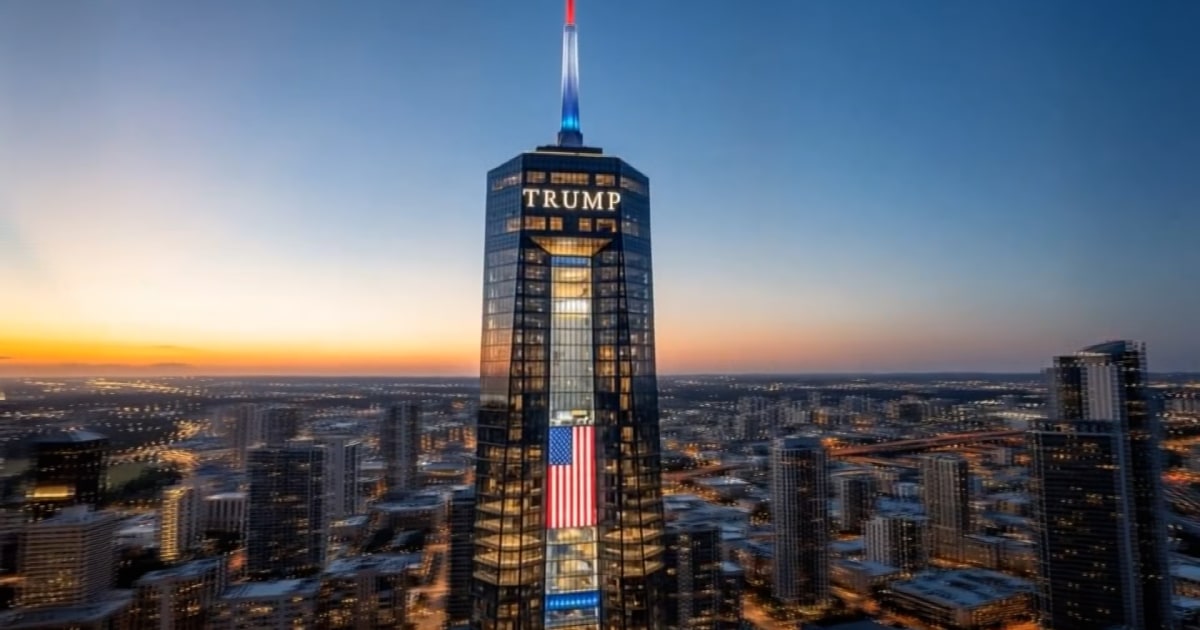
Miami, Florida — Former President Donald Trump unveiled renderings for his proposed presidential library on Thursday, sparking a mix of enthusiasm and backlash in the host city. The design, shared via a video on social media, depicts a towering skyscraper that would rise prominently along Miami's skyline, blending elements of modern architecture with nods to Trump's business empire. According to NBC News, the project has already ignited debates among local residents, politicians, and urban planners about its potential impact on the city's landscape and tourism economy.
The video, posted by Trump himself, showcases a sleek, glass-clad structure estimated to reach heights comparable to some of Miami's tallest buildings, though exact dimensions remain undisclosed. Trump described the library as a 'monument to American greatness,' according to the footage. Supporters, including members of the local business community, hailed the proposal as a boon for Miami, predicting it could attract millions of visitors annually and revitalize the downtown area.
"This will put Miami on the map like never before," said Maria Gonzalez, a Miami Chamber of Commerce spokesperson, in comments reported by local outlets echoing the NBC coverage. Gonzalez emphasized the library's potential to generate jobs in construction, hospitality, and education, drawing parallels to successful presidential libraries in cities like Simi Valley, California, home to Ronald Reagan's facility, which draws over 300,000 visitors each year.
However, the announcement has not been without controversy. Protests erupted outside Trump's Mar-a-Lago resort in nearby Palm Beach shortly after the reveal, with demonstrators voicing concerns over environmental impacts and the project's alignment with Miami's zoning laws. "A skyscraper library? This feels more like a vanity project than a public resource," remarked environmental activist Javier Ruiz, who organized a small rally on Friday. Ruiz pointed to rising sea levels in South Florida as a reason to question the wisdom of such a large-scale build in a flood-prone area.
City officials in Miami have responded cautiously. Mayor Francis Suarez, a Republican who has previously supported Trump initiatives, issued a statement welcoming the idea but stressing the need for community input. "We're proud to be considered for this historic project, but any development must respect our city's character and sustainability goals," Suarez said, according to his office's press release. The mayor's office confirmed that preliminary discussions with Trump's team began in early 2023, though no formal site has been selected.
Presidential libraries have long served as repositories of historical documents, museums, and educational centers, governed by the National Archives and Records Administration (NARA). Trump's library would follow this tradition but with a distinctive flair, incorporating interactive exhibits on his administration's achievements, such as tax reforms and border security policies. NARA guidelines require libraries to be privately funded through foundations, and Trump's team has indicated that the project would be supported by donations from supporters, similar to how the George W. Bush Library in Dallas raised over $500 million.
Critics, including historians and urban development experts, argue that the skyscraper design deviates from the more subdued, campus-like settings of past libraries. "Traditional presidential libraries emphasize reflection and accessibility, not ostentation," said Dr. Elena Vasquez, a history professor at the University of Miami, in an interview with NBC News. Vasquez expressed worry that the project's scale could overshadow its educational mission, potentially turning it into a political shrine rather than a neutral archive.
The proposal comes amid Trump's ongoing political activities, as he campaigns for the 2024 Republican nomination. Miami, a city with a significant Cuban-American population that has leaned Republican in recent elections, could serve as a strategic location for the library, bolstering Trump's influence in Florida. Polling data from a 2022 Quinnipiac survey showed Trump maintaining strong support in South Florida, with 55% approval among Hispanic voters in Miami-Dade County.
Environmental groups have been quick to highlight potential challenges. The Sierra Club's Florida chapter released a statement on Saturday, citing a 2021 study by the University of Miami that warned of increased flooding risks in downtown areas by 2030 due to climate change. "Building a massive structure here ignores the science," said chapter director Lisa Torres. "We need green spaces, not more concrete." Protesters at the Palm Beach event carried signs reading 'Miami Isn't Trump's Billboard,' underscoring fears that the library could exacerbate gentrification in already expensive neighborhoods.
On the economic front, proponents point to precedents like the Barack Obama Presidential Center in Chicago, which is expected to create 7,000 jobs during construction and stimulate $3.1 billion in economic activity over 25 years, according to city estimates. Trump's library foundation, established in 2021, has already reported raising $100 million in pledges, per federal filings. Local developers, including those involved in Miami's Brickell district high-rises, have expressed interest in partnering, seeing the project as an extension of the city's booming real estate market.
Legal hurdles may lie ahead. Miami's zoning board will need to review the plans, and any approval could face lawsuits from opponents. A similar controversy arose with the proposed height of a luxury condo tower in 2020, which was scaled back after public outcry. Trump's legal team, familiar from his impeachments and election challenges, is prepared to navigate these waters, sources close to the project told NBC News.
As the story unfolds, community meetings are scheduled for next week at Miami City Hall, where residents can voice opinions. Organizers expect hundreds to attend, reflecting the polarized reactions. Trump, in a follow-up post, urged supporters to contact local officials, framing the library as essential to preserving his legacy.
Beyond the immediate buzz, the project raises questions about the evolving role of presidential libraries in American democracy. With Trump's polarizing tenure, including two impeachments and the January 6 Capitol riot, the library could become a flashpoint for national discourse. Historians like those at the Miller Center at the University of Virginia note that libraries often outlive political battles, serving future generations with unvarnished records.
For now, Miami stands at a crossroads, balancing economic opportunity with cultural preservation. Whether the skyscraper library materializes remains to be seen, but its reveal has undeniably heightened the city's profile. As one local business owner put it, "Trump's library might divide us, but it'll put eyes on Miami." The coming months will test the city's resolve in shaping its future.
In related developments, Trump's foundation has scouted sites near Biscayne Bay, with renderings suggesting integration with waterfront parks. No timeline for groundbreaking has been announced, but insiders suggest 2025 as a target, aligning with potential post-election momentum.