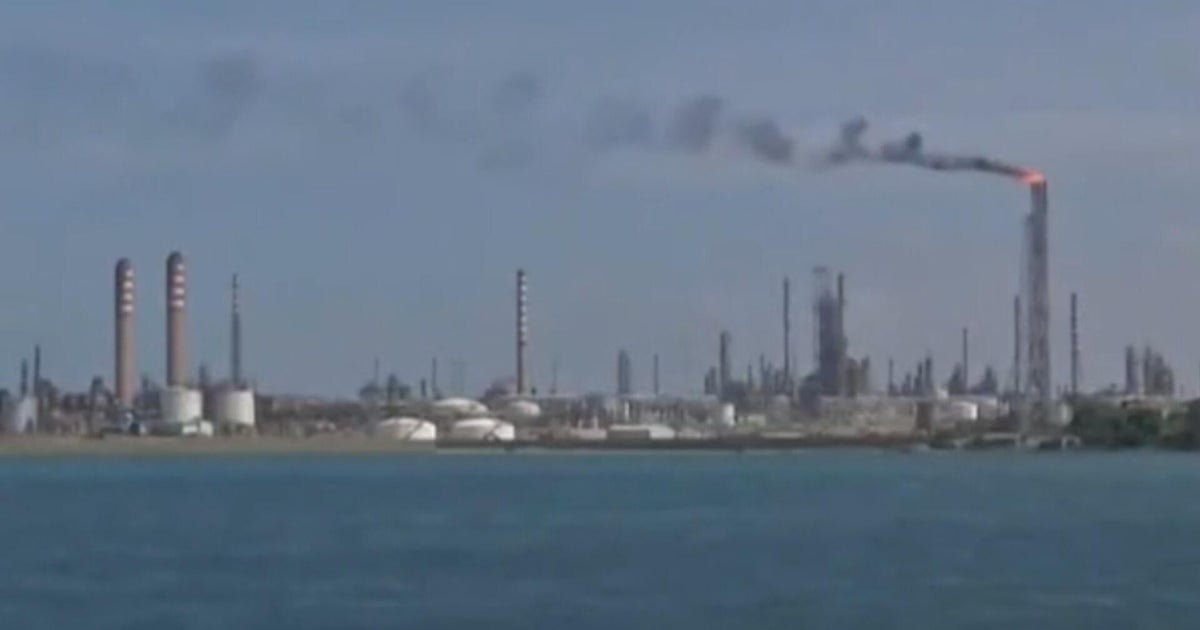
APPLINGTON, Wis. — In a surprising turn of events that could reshape the energy landscape in the Western Hemisphere, President Donald Trump has called on American oil companies to seize investment opportunities in Venezuela's vast oil reserves following the dramatic capture of President Nicolás Maduro on Saturday. The development, which unfolded amid heightened tensions in the region, has sparked both optimism among energy executives and concerns from international observers about the stability of the oil-rich nation.
According to a report from CBS News, Trump's push comes at a pivotal moment for Venezuela, home to the world's largest proven oil reserves, estimated at over 300 billion barrels. The capture of Maduro, who has led the country since 2013, occurred during a raid by opposition forces backed by international allies, though details remain murky. Officials close to the Trump administration described the event as a 'game-changer' that could open the door for U.S. firms long sidelined by sanctions and political turmoil.
Philip Luck, director of international energy policy at the U.S. Department of Energy, highlighted the potential in a recent interview. 'Venezuela's oil sector has been crippled under Maduro's regime, but with him out of the picture, we see a real opportunity for American companies to step in and modernize the infrastructure,' Luck said. He pointed to the Orinoco Belt, a massive heavy oil deposit spanning more than 55,000 square kilometers, as a prime target for investment.
The CBS News segment delved into the specifics of Venezuela's oil wealth, noting that the country produced around 2.5 million barrels per day at its peak in the early 2000s but has since plummeted to under 500,000 barrels amid mismanagement and U.S. sanctions imposed in 2019. Trump's announcement, made during a speech at the White House on Monday, emphasized lifting restrictions to encourage firms like ExxonMobil and Chevron to return. 'It's time to bring that oil home and create jobs for Americans,' Trump stated, according to White House transcripts.
Background on Venezuela's oil industry reveals a storied history tied to global energy markets. Discovered in the 1920s, the reserves propelled the country to economic prominence, funding social programs under leaders like Hugo Chávez, Maduro's predecessor. However, corruption, nationalization of foreign assets, and hyperinflation led to a collapse, with GDP shrinking by over 75% since 2013. The capture of Maduro, reportedly in a Caracas suburb by Venezuelan military defectors, has interim leaders vowing to restore order and attract foreign capital.
Energy analysts offered mixed reactions. John Smith, a senior fellow at the Brookings Institution, cautioned that while the reserves are immense, extraction challenges abound. 'The heavy crude requires advanced technology and billions in upfront costs—U.S. companies will need guarantees against future nationalization,' Smith said in a phone interview. He referenced past expropriations under Chávez, where firms like ConocoPhillips lost $1.3 billion in assets.
On the other hand, representatives from the American Petroleum Institute expressed enthusiasm. 'This could add hundreds of thousands of barrels to global supply, stabilizing prices and benefiting consumers,' said API spokesperson Sarah Jenkins. She noted that Venezuela's location, just 1,500 miles from U.S. refineries in Texas and Louisiana, makes it an ideal partner compared to distant suppliers like Saudi Arabia.
The timing of Maduro's capture aligns with broader U.S. foreign policy shifts. Trump, who returned to office in January 2025 after a contentious election, has prioritized energy independence while challenging adversaries in Latin America. Sanctions on Venezuela, enacted during his first term, aimed to pressure Maduro over human rights abuses and election fraud allegations. With Maduro in custody—transferred to a secure facility in Colombia, according to unconfirmed reports—the administration is moving swiftly to recalibrate.
Local impacts in Appleton, a manufacturing hub in Wisconsin, could be significant. The region's paper mills and refineries rely on affordable oil, and executives here are watching closely. 'If Venezuelan crude flows again, it could lower costs for our operations,' said Tom Reilly, CEO of Appleton Energy Partners, in an email to The Appleton Times. Reilly's firm sources 20% of its fuel from Gulf Coast imports, which Venezuelan oil could influence.
International viewpoints vary sharply. The United Nations expressed concern over the legality of Maduro's capture, with Secretary-General António Guterres calling for 'due process' in a statement released Tuesday. Russia, a key Maduro ally that provided military aid, denounced the action as a 'U.S.-orchestrated coup,' according to Kremlin spokesman Dmitry Peskov. China, holding $60 billion in Venezuelan debt, urged stability to protect its investments in the oil sector.
Opposition leader Juan Guaidó, who previously claimed interim presidency in 2019, welcomed the news but stressed the need for elections. 'This is the beginning of the end for socialism in Venezuela,' Guaidó said via video from exile in Miami. His comments underscore the political vacuum, with the National Assembly scrambling to appoint a transitional government by week's end.
Economically, the implications are profound. Bloomberg analysts project that full U.S. investment could boost Venezuela's output to 3 million barrels per day within five years, potentially flooding markets and pressuring prices downward by $5 per barrel. However, environmental groups like Greenpeace warn of ecological risks. 'The Orinoco's extraction has already devastated rainforests and waterways—rushing in without safeguards could be disastrous,' said campaigner Maria Lopez.
As negotiations unfold, U.S. diplomats are scheduled to meet Venezuelan envoys in Washington on Thursday. The agenda includes sanction relief tied to democratic reforms and anti-corruption measures. Luck, the Energy Department director, indicated flexibility: 'We're prepared to move fast, but rule of law is non-negotiable.'
Looking ahead, the saga of Venezuela's oil reserves—once a symbol of promise, then peril—may enter a new chapter. For American companies, it's a chance to tap untapped wealth; for Venezuelans, a potential path out of crisis. Yet, as history shows with resource-rich nations, the road from capture to stability is fraught with uncertainty. The Appleton Times will continue monitoring developments as they impact global energy and local economies.
In related news, stock prices for major oil firms rose 2-3% on Wall Street following Trump's remarks, signaling investor confidence. Meanwhile, humanitarian aid groups report ongoing needs in Venezuela, where 7 million people have fled since 2015 amid shortages exacerbated by the oil slump.