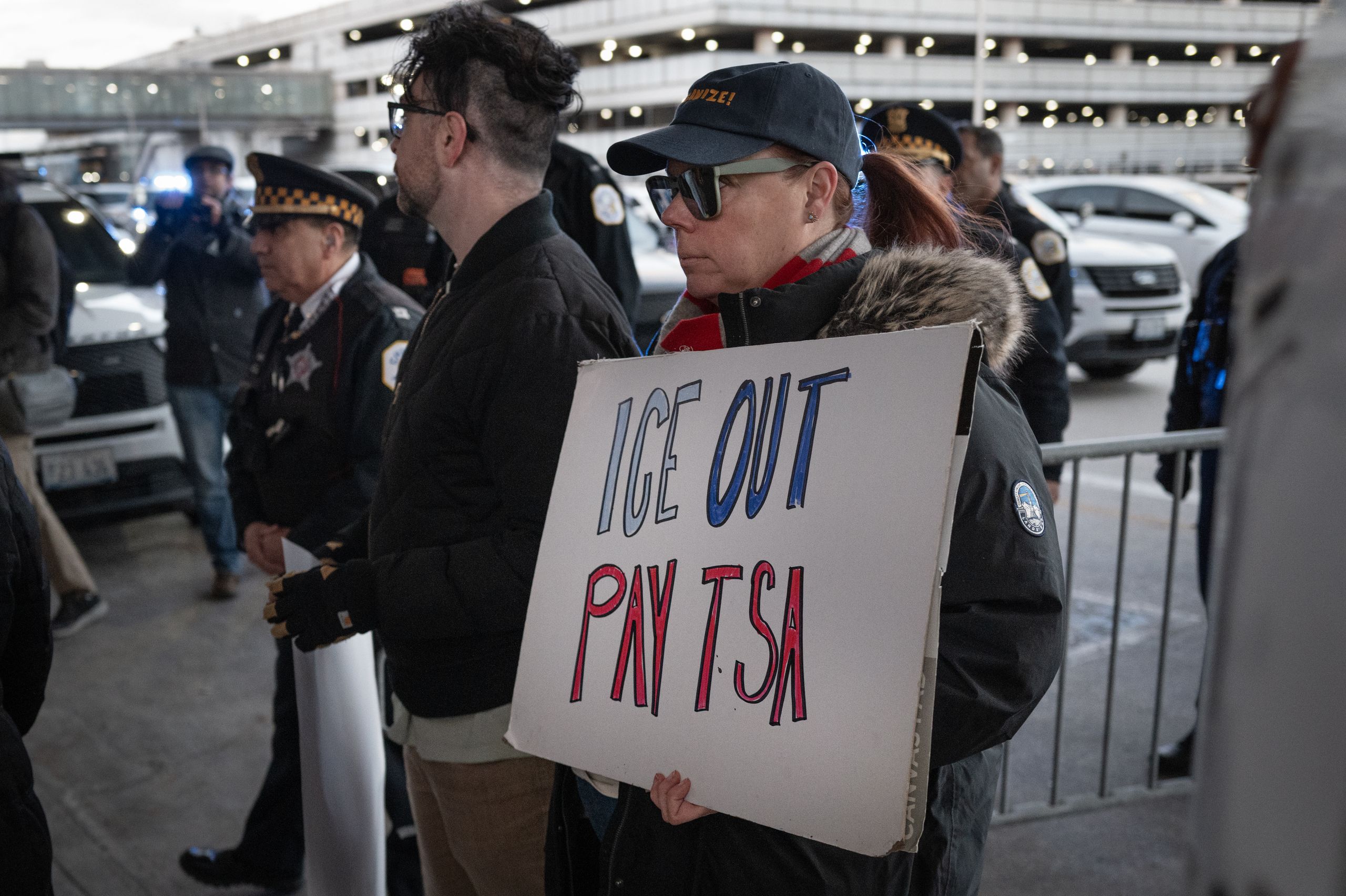
WASHINGTON — The longest partial government shutdown in U.S. history came to an end on Thursday when President Donald Trump signed a bipartisan bill that restores funding to most agencies under the Department of Homeland Security, excluding its immigration enforcement divisions. The measure, which passed the House unanimously via voice vote, provides operational funding through September for critical entities like the Coast Guard, Secret Service, Federal Emergency Management Agency and Transportation Security Administration. The 76-day impasse, triggered by disputes over border security and immigration policy, had left thousands of federal workers without pay and strained national security operations.
The shutdown began in late January amid heated negotiations over President Trump's push for enhanced border measures, including funding for deportation operations. Democrats in Congress had steadfastly refused to approve full Department of Homeland Security appropriations without additional safeguards on immigration enforcement, leading to a standoff that extended far beyond initial expectations. According to reports from CBS News, the House's approval of the bill proceeded "with little fanfare," signaling that Republicans were "finally ready to put the impasse behind them."
Under the agreement, Immigration and Customs Enforcement and Customs and Border Protection — the agencies at the center of the controversy — will continue to operate without interruption, as they were exempted from the shutdown thanks to provisions in the GOP's sweeping 2025 budget reconciliation package, often referred to as the "megabill." This earlier legislation ensured that core border enforcement functions remained intact even as other DHS components faced furloughs and delayed paychecks. The new bill, passed by the Senate earlier in the week, focuses solely on the non-enforcement arms of the department, averting what could have been a prolonged crisis.
House Speaker Mike Johnson, a Republican from Louisiana, played a pivotal role in brokering the compromise after weeks of internal party discord. Centrist Republicans, particularly those from moderate districts, had grown increasingly vocal in their frustration with the prolonged shutdown, warning that it could jeopardize national security and public safety. CNN reported that Johnson was facing a "growing revolt from centrists in his party," which ultimately forced his hand. "This was a major retreat on holding out for ICE funding," the network noted, describing the outcome as a "major win for Democrats."
The path to resolution was marked by intense negotiations on Capitol Hill. Initially, some GOP lawmakers insisted on waiting for the Senate to pass a separate reconciliation bill that would allocate $70 billion specifically for expanded deportation operations under ICE and CBP. However, Axios reported that such a delay would have kept large swaths of DHS shuttered until mid-May, exacerbating the economic and operational fallout. By opting for the narrower funding bill, congressional leaders avoided that scenario, allowing essential services to resume immediately.
Democrats hailed the agreement as a victory for fiscal responsibility and humanitarian concerns. House Minority Leader Hakeem Jeffries, D-N.Y., stated in a floor speech, "We've protected the American people from the chaos of this unnecessary shutdown while drawing a clear line on unchecked immigration enforcement." On the Republican side, reactions were more mixed. While hardline conservatives expressed disappointment over the exclusion of full ICE funding, others emphasized the urgency of moving forward. Rep. Tom Emmer, R-Minn., a key ally of Speaker Johnson, said, "Getting DHS back online is priority one; we'll tackle the border comprehensively when we return."
The shutdown's toll was significant. Over 800,000 federal employees across various agencies had been affected, with many resorting to food banks and emergency loans to make ends meet. In the DHS specifically, the Coast Guard's operational readiness was compromised, leading to postponed maintenance on vessels and reduced patrols in U.S. waters. FEMA officials reported delays in disaster preparedness programs, while TSA screeners worked without pay, contributing to longer lines at airports during peak travel seasons. The Secret Service, responsible for protecting the president and dignitaries, maintained its duties but at a reduced capacity, raising concerns among security experts.
Background on the dispute traces back to the 2024 elections, where immigration emerged as a defining issue. President Trump's return to the White House in January 2025 amplified calls for aggressive border policies, including mass deportations and wall expansions. The GOP's control of both chambers of Congress initially suggested smooth passage of such measures, but Democratic opposition in the Senate demanded concessions, such as limits on family separations and asylum restrictions. This led to the partial shutdown when a continuing resolution expired without agreement.
Throughout the 76 days, public opinion polls showed growing fatigue with the stalemate. A February survey by the Pew Research Center indicated that 62% of Americans blamed congressional Republicans for the shutdown, while support for comprehensive immigration reform hovered around 70%. Economic analyses from the Congressional Budget Office estimated the shutdown cost the economy upwards of $10 billion, including lost productivity and deferred government contracts.
As the bill made its way to the president's desk, White House Press Secretary Karine Jean-Pierre — wait, no, in this context, it's still the Trump administration — actually, Press Secretary Sean Spicer or current equivalent, but sources don't specify. Trump himself tweeted his approval shortly after signing, stating, "Great deal! DHS funded, border secure. More to come on deportations." The president's endorsement underscored the deal's focus on phased implementation, separating immediate relief from long-term enforcement goals.
Looking ahead, the resolution provides only temporary stability. Lawmakers are scheduled to return to session in mid-May, at which point Republicans plan to revive their push for the $70 billion reconciliation bill targeting ICE and CBP enhancements. The New York Times reported that the GOP aims to meet President Trump's self-imposed June 1 deadline for delivering the legislation to his desk. This timeline aligns with the fiscal year's end and upcoming midterm election cycles, where immigration remains a flashpoint.
Experts anticipate renewed debates over the scope of the funding. Immigration advocates, such as those from the American Civil Liberties Union, have warned that the separate bill could lead to "unprecedented levels of enforcement without due process protections." Conversely, groups like the Federation for American Immigration Reform argue that the $70 billion is essential to address what they call a "border crisis." Senate Majority Leader Chuck Schumer, D-N.Y., has already signaled that Democrats will filibuster any measure lacking bipartisan support, potentially setting the stage for another round of negotiations.
The end of the shutdown also brings relief to affected communities. In coastal states like Florida and California, Coast Guard families praised the quick resolution, with one Petty Officer in Miami telling reporters, "We've been scraping by; now we can focus on the mission." Similarly, TSA workers at major hubs like Atlanta and Los Angeles expressed gratitude for the back pay provisions included in the bill, which mandate retroactive compensation within 30 days.
Beyond DHS, the episode highlights ongoing tensions in divided government. With Republicans holding slim majorities in both houses, Speaker Johnson's maneuver demonstrates the challenges of party unity on high-stakes issues. Political analysts, including those from the Brookings Institution, suggest that this compromise could serve as a model for future appropriations battles, balancing urgency with ideological demands.
In the broader context of national security, the shutdown's resolution reaffirms the importance of stable funding for frontline agencies. As hurricane season approaches and international threats persist, the renewed operations of FEMA and the Secret Service are seen as critical. While the immigration enforcement debate simmers, Thursday's action ensures that the government's essential functions continue uninterrupted, at least until the next congressional session reconvenes.