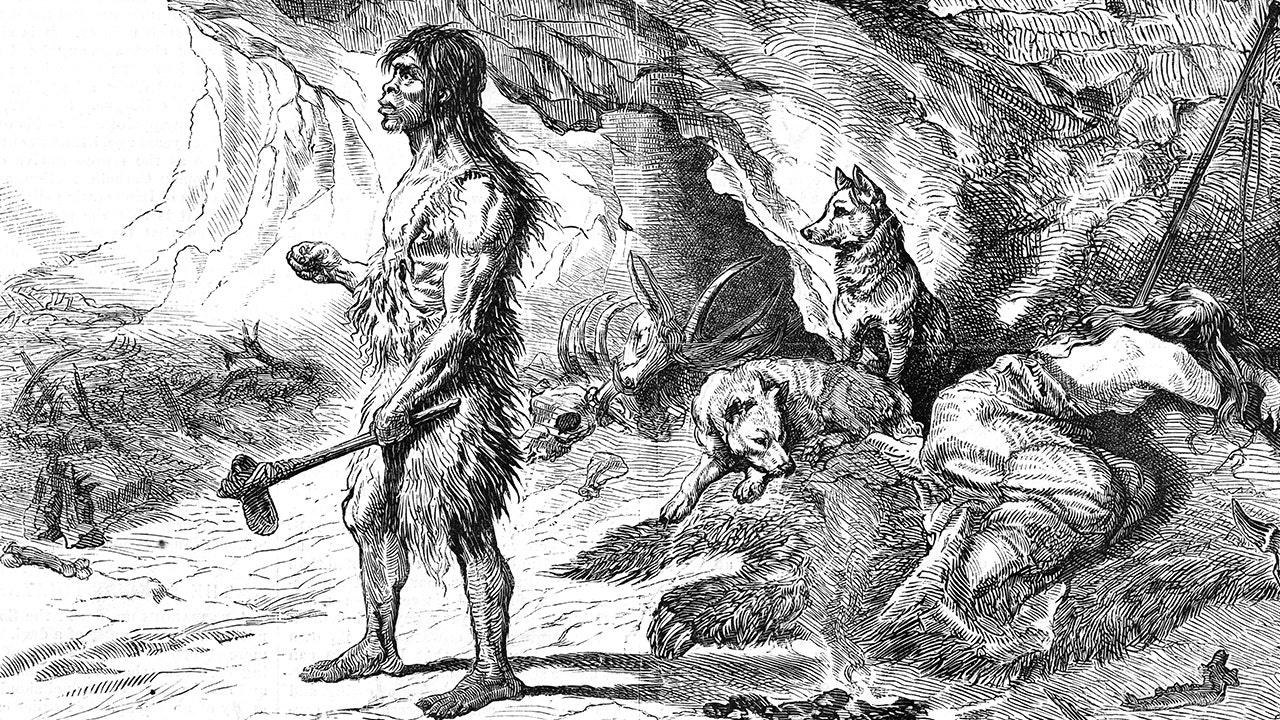
LONDON — A groundbreaking study has revealed that dogs were domesticated and serving as loyal companions to Ice Age hunters as far back as 14,000 to 16,000 years ago, pushing the timeline of human-canine partnership thousands of years earlier than previously thought. Published in the journal Nature on March 26, the research draws on ancient DNA analysis from archaeological sites in the United Kingdom and Turkey, challenging long-held assumptions about when wolves first evolved into man's best friend.
The findings, detailed in a University College London press release, center on skeletal remains that researchers initially struggled to classify as either dogs or wolves, given their physical similarities during that era. By sequencing DNA from these ancient bones and comparing it to genetic profiles from over 1,000 modern and historical dogs and wolves worldwide, the international team confirmed the animals were early domesticated dogs. The remains date to the Late Upper Palaeolithic period, a time when humans were nomadic hunter-gatherers navigating the harsh landscapes of post-Ice Age Europe and the Near East.
Key evidence came from Gough's Cave in Somerset, England, a site known for its rich Paleolithic artifacts. "Researchers from UCL played a critical role by identifying that skeletal remains excavated from the Upper Palaeolithic site of Gough’s Cave in Somerset belonged to domesticated dogs rather than wolves," the UCL release stated. Similar analysis applied to bones from Pınarbaşı and Boncuklu in Turkey also pointed to dogs from the same period, suggesting domestication occurred across a wide geographic range much earlier than the 10,000-year mark established by prior studies.
This new timeline extends the history of dog domestication by about 5,000 years, reshaping our understanding of early human societies. Previous research had pinpointed the emergence of domestic dogs around the end of the last Ice Age, roughly 10,000 years ago, coinciding with the rise of agriculture in the Fertile Crescent. But these findings indicate that the bond between humans and dogs formed during the height of the Paleolithic, when survival depended on close cooperation in hunting large game like mammoths and reindeer.
Simon Parfitt, a co-author of the study and archaeologist at the UCL Institute of Archaeology, emphasized the significance of the discovery. "The DNA confirms they were ancient domestic dogs, loyal companions to Ice Age hunters at the northern edge of the inhabited world," Parfitt said. He noted that some bones showed deliberate human modifications, such as perforations in the mandibles, hinting at ritualistic or symbolic importance. "Notably, some bones show deliberate human modification, including perforations in mandibles, suggesting these dogs held symbolic significance after death as well as companionship during life," he added.
The genetic analysis also shed light on the ancestry of modern breeds. The ancient dogs were found to be more closely related to the forebears of contemporary European and Middle Eastern varieties, such as boxers and salukis, rather than cold-adapted Arctic breeds like Siberian huskies. According to the study, this points to the establishment of today's major dog genetic lineages by the Upper Palaeolithic period, implying that early diversification happened sooner than expected.
William Marsh, a postdoctoral researcher at the Natural History Museum in London and a member of the research team, described the identification as a "step-change in our understanding of the earliest dogs." Marsh explained that the specimens enabled the team to spot additional ancient dogs at sites in Germany, Italy, and Switzerland. "These specimens allowed us to identify additional ancient dogs from sites in Germany, Italy and Switzerland, which clearly show that dogs were already widely dispersed across Europe and Türkiye by at least 14,000 years ago," he said.
These early dogs likely played multifaceted roles in human life, serving as hunting partners, guards, and emotional companions during the rigors of Paleolithic existence. The discovery of burials further underscores this intimacy; at Boncuklu, some dogs were interred alongside humans, a practice that speaks to their elevated status. UCL Professor Louise Martin, another collaborator on the project, highlighted this aspect. "It highlights the special close relationship between people and dogs even at these early stages," Martin said, noting that the dogs at Boncuklu were "given burials, with some at Boncuklu buried alongside humans."
The research builds on decades of archaeological work at these sites. Gough's Cave, for instance, has yielded human remains and tools from around 14,700 years ago, including evidence of cannibalism that reflects the desperate survival strategies of the time. The Turkish sites, Pınarbaşı and Boncuklu, are part of the Anatolian region's rich prehistoric record, where hunter-gatherers transitioned toward more settled lifestyles. By integrating ancient DNA with these contextual findings, the study provides a more nuanced picture of domestication as a gradual process rather than a sudden event.
Experts not involved in the study have welcomed the results, though they caution that further excavations are needed to confirm the extent of early dog distribution. The reliance on DNA sequencing represents a methodological advancement, allowing scientists to revisit old bones with modern tools. As Marsh pointed out, the dogs' presence across Eurasia by 14,000 years ago suggests they facilitated human migration and adaptation, perhaps aiding in tracking prey or alerting to dangers in unfamiliar territories.
Beyond the scientific community, the findings resonate with broader questions about human-animal bonds. Dogs' role in early societies mirrors their enduring place in human culture today, from herding livestock to providing therapy. The study's emphasis on symbolic burials evokes parallels with ancient myths and art, where canines often symbolize loyalty and the afterlife. Parfitt's observation about mandible perforations could indicate early forms of adornment or ritual, practices that persisted into later prehistoric periods.
Looking ahead, researchers plan to expand DNA analysis to more sites, potentially uncovering even older evidence of domestication. The team's work also raises implications for conservation and breed history, as understanding ancient lineages could inform efforts to preserve genetic diversity in modern dogs. With climate change altering habitats much like the Ice Age did, these insights into adaptive partnerships may offer lessons for contemporary human-animal interactions.
The publication in Nature, a premier scientific journal, lends strong credibility to the claims, though the field of archaeogenetics continues to evolve with new technologies. As Marsh noted, this discovery not only rewrites the dog’s origin story but also illuminates the ingenuity of our Paleolithic ancestors. For now, the loyal companions of Ice Age hunters stand as a testament to one of humanity's oldest alliances, forged in the frozen fringes of prehistory.
In a world where pets are integral to daily life, this research reminds us that the companionship we cherish has roots deeper than imagined. The Appleton Times will continue to follow developments in this fascinating intersection of archaeology and genetics.