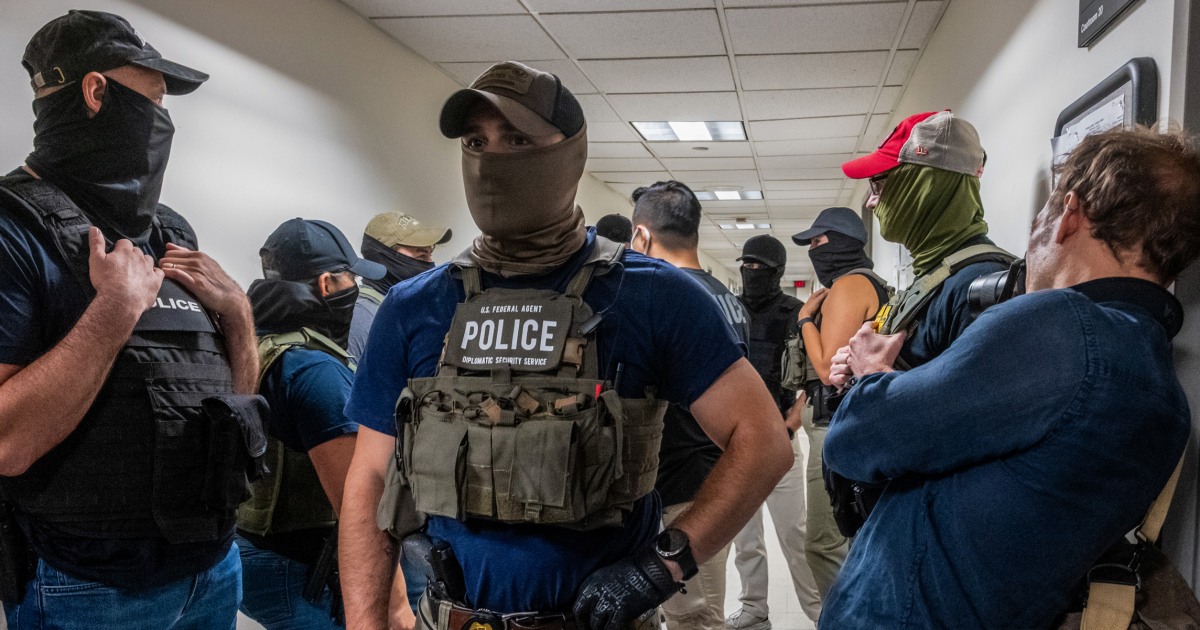
In a surprising admission that could reshape a key federal lawsuit, the U.S. Department of Justice revealed on Tuesday that it had mistakenly relied on an internal Immigration and Customs Enforcement memo to defend the Trump administration's practice of arresting immigrants at immigration courthouses. The error, detailed in a court filing in a case brought by immigrant rights groups, centers on a document titled “2025 ICE Guidance,” which prosecutors had cited to justify deploying ICE agents at courthouses for civil immigration enforcement actions.
The case, filed in the U.S. District Court for the Southern District of New York, challenges the administration's tactic of detaining individuals who appear for mandatory hearings, arguing it undermines due process and discourages immigrants from attending court. Federal prosecutors acknowledged in their filing that the memo, dated May 27, 2025, actually pertains only to general locations and "does not and has never applied to civil immigration enforcement actions in or near" immigration courts, which fall under the Executive Office for Immigration Review.
According to the Justice Department, the mistake came to light on Tuesday when prosecutors received an email sent to ICE personnel reminding them that the guidance does not cover immigration courts, regardless of their location. "Based on our discussions with ICE today, this regrettable error appears to have occurred because of agency attorney error," the filing stated, adding that the department had repeatedly apologized to U.S. District Judge Kevin Castel for the "material mistaken statement of fact that the Government made to the Court and Plaintiffs."
Judge Castel, who presides over the case, had previously rejected the plaintiffs' request for an injunction blocking the courthouse arrests in a September 12 opinion. In that ruling, he referenced the ICE guidance as permitting such actions "at or near an immigration court." The Justice Department's disclosure now means that opinion, along with the plaintiffs' briefs, "will need to be reconsidered and re-briefed for the Court to adjudicate Plaintiffs’ APA [Administrative Procedure Act] claims against ICE on the merits," prosecutors wrote.
The plaintiffs, including the New York Civil Liberties Union and other immigrant advocacy organizations, responded swiftly to the revelation. In a filing on Wednesday, they described the implications as "far-reaching." Amy Belsher, a New York Civil Liberties Union attorney representing the groups, called it a "shocking revelation" in a statement. "It is yet again another example of ICE’s brazen disregard for the lives of immigrants in this country," Belsher said. "It is now clearer than ever that there is no justification for ambushing and arresting people who are showing up to court."
The Department of Homeland Security, which oversees ICE, did not immediately respond to requests for comment on the error or the memo's scope. Prosecutors noted that they had obtained approval from ICE counsel before filing every brief and making oral arguments in the case, yet the oversight persisted. Despite withdrawing the portions of their arguments reliant on the memo, the government maintained that the practice of courthouse arrests "does not violate any so-called common-law privilege against courthouse arrests."
This tactic has drawn widespread criticism since the Trump administration ramped it up, with reports of ICE agents staking out courthouses in cities like New York, leading to the detention of dozens of immigrants each month. One high-profile example is Dylan Contreras, a 20-year-old New York City public school student from Venezuela with no criminal history. Contreras was arrested in May after a routine immigration hearing while pursuing a green card and seeking asylum. He spent nearly 10 months in detention before being released this month.
Contreras's lawyers argued that he had entered the U.S. during the Biden administration and was eligible for asylum protections. In contrast, the Department of Homeland Security stated that ICE was "following the law and placing these illegal aliens in expedited removal, as they always should have been." New York City Mayor Zohran Mamdani highlighted the human cost on X, formerly Twitter, writing, “What should have been a time for him to focus on finishing high school instead became ten long months of isolation, after he was taken into custody at what was supposed to be a routine immigration hearing last May.”
The broader context of these arrests ties into the Trump administration's aggressive immigration enforcement agenda, which prioritizes deportations of individuals without legal status, even those complying with court appearances. Immigrant rights groups contend that courthouse detentions create a chilling effect, deterring people from exercising their right to due process. According to data from advocacy organizations, such arrests have surged since early 2025, with ICE reporting over 500 detentions at or near immigration courts nationwide in the past six months.
Legal experts not involved in the case have pointed to historical precedents, noting that courthouses have long been considered sanctuaries from civil arrests under common law traditions. However, the Justice Department has argued that no such absolute privilege exists for immigration enforcement, a position it continues to defend even after the memo error. The American Civil Liberties Union, a co-plaintiff, has documented similar incidents in other districts, including Los Angeles and Chicago, where immigrants were apprehended immediately after hearings.
As of Wednesday night, Judge Castel had not yet entered any response on the public docket, leaving the immediate future of the case uncertain. The plaintiffs have requested an expedited re-briefing schedule, potentially setting the stage for a renewed push to halt the arrests. If the court finds the government's reliance on the erroneous memo undermined its prior ruling, it could lead to a nationwide injunction, significantly curbing ICE's operations at immigration venues.
The admission also raises questions about internal coordination within the federal government. Prosecutors did not explain how they received the corrective ICE email or why the memo's limitations were not caught earlier, despite consultations with agency counsel. Critics, including Belsher, have seized on this as evidence of systemic issues in how immigration enforcement is justified and executed.
Beyond this specific lawsuit, the controversy underscores ongoing tensions in U.S. immigration policy under the Trump administration. With border crossings remaining a flashpoint, the administration has defended courthouse arrests as necessary to enforce laws against unauthorized immigrants. Yet, cases like Contreras's illustrate the personal toll, particularly on families and communities. Immigrant advocates hope the DOJ's error will prompt broader scrutiny of ICE practices, potentially influencing similar challenges in other courts.
Looking ahead, the re-briefing process could extend into early next year, delaying resolution but offering plaintiffs a stronger footing. In the meantime, ICE has not indicated any pause in its courthouse operations, continuing to monitor hearings as per its standard protocols. For immigrants navigating the system, the uncertainty persists, with many now weighing the risks of appearing in court against the consequences of missing hearings.
This development arrives amid a wave of legal battles over immigration enforcement, including challenges to expedited removals and asylum restrictions. As the case progresses, it will likely draw attention from policymakers on both sides of the aisle, highlighting the delicate balance between security and civil liberties in America's immigration framework.