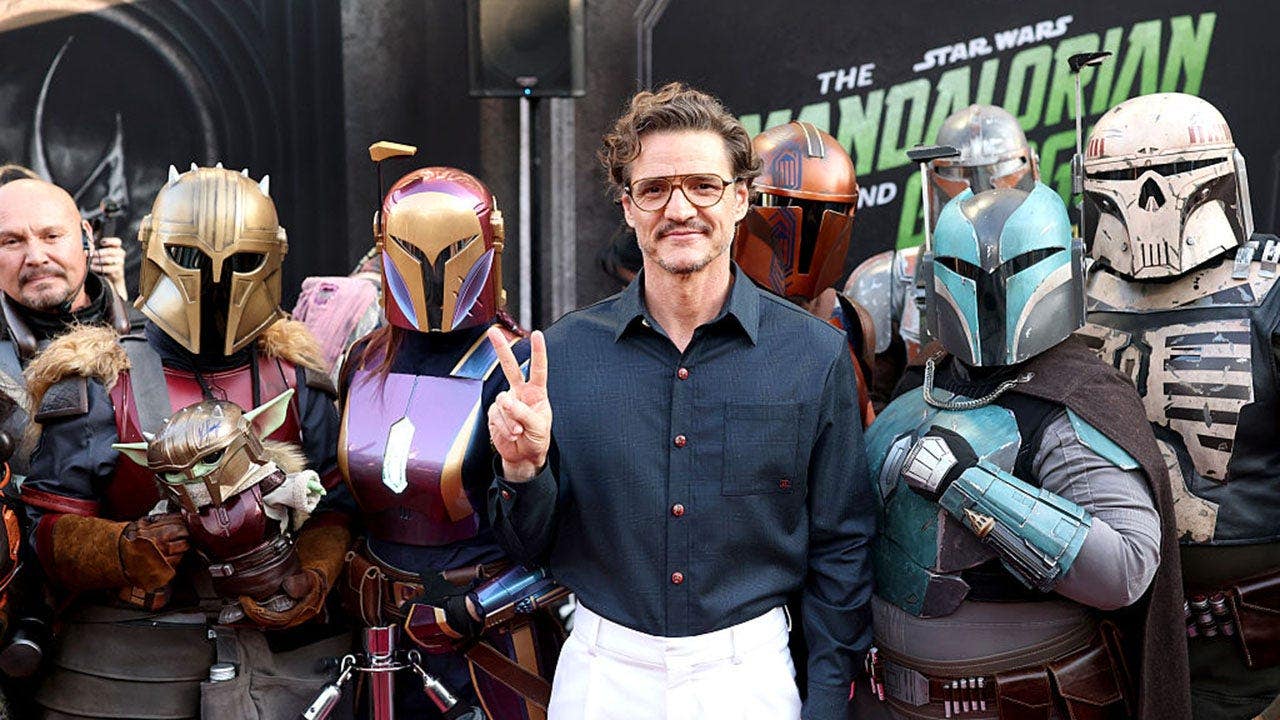
Los Angeles, CA – As the entertainment world braces for the release of the first new Star Wars film in seven years, early buzz surrounding "Star Wars: The Mandalorian & Grogu" is notably subdued, with critics delivering a largely negative reception that has left many questioning the franchise's enduring appeal.
The film, directed by Jon Favreau, is set to hit theaters worldwide next week, marking a significant milestone since the last theatrical Star Wars entry in 2019. Starring Pedro Pascal as the titular Mandalorian and featuring the beloved character Grogu – often referred to as Baby Yoda – the movie expands on the popular Disney+ series that debuted in 2019. Yet, according to a recent analysis by OutKick writer Zach Dean on Fox News, the anticipation that once defined Star Wars releases appears to have evaporated.
"We're one week away from a new 'Star Wars' movie hitting the theaters," Dean wrote. "That's right. For the first time in seven years, an actual Star Wars movie will be at your local AMC, should it still be open and operational. And here's the thing ... nobody cares." Dean, reflecting on his own childhood memories of fervent fan excitement, contrasted them with the current landscape, where discussions about the film seem scarce even as promotional events ramp up.
Early screenings have yielded reviews that Dean described as "generally horrific," suggesting that fans might want to "skip this one." While he acknowledged a handful of positive takes, the overall sentiment leans heavily critical. For instance, Dean highlighted the pressure on the production, noting Disney's rocky stewardship of the franchise since acquiring Lucasfilm in 2012 for $4.05 billion.
Under Disney's watch, the sequel trilogy – comprising "The Force Awakens" in 2015, "The Last Jedi" in 2017, and "The Rise of Skywalker" in 2019 – has been widely panned by portions of the fanbase for inconsistencies in storytelling and character development. Dean called it an "unmitigated disaster," a view echoed in various fan forums and retrospective analyses over the years. Beyond the films, most Disney+ miniseries tied to Star Wars have underperformed, with exceptions like the critically acclaimed "Andor," which aired its first season in 2022 and earned praise for its mature take on the rebellion against the Empire.
Recent streaming data from Nielsen, released last week, underscores the selective interest among viewers. According to the report, audiences continue to gravitate toward the original trilogy from the late 1970s and early 1980s, as well as the prequel films from 1999 to 2005, while newer content struggles for sustained engagement. "Disney did hit a home run with 'Andor,' but that's about it," Dean noted, pointing to the show'srunner Tony Gilroy's recent defense of its themes amid accusations of political undertones.
The film's promotional trail has included high-profile appearances, such as Favreau's presentation at CinemaCon on April 16, 2026, at Caesars Palace in Las Vegas. There, he discussed the project's evolution from the small-screen success of "The Mandalorian," which has spawned multiple seasons and spin-offs. Pascal, meanwhile, attended the Los Angeles world premiere on May 14, 2026, though details from that event remain limited as the wide release approaches.
Mark Hamill, the iconic portrayer of Luke Skywalker, made headlines earlier this year at the CinemaCon Big Screen Achievement Awards on April 3, 2025, where he presented an award to actor David Jonsson. While Hamill has occasionally commented on the franchise's direction in interviews, he has not publicly weighed in on "The Mandalorian & Grogu" specifically, leaving fans to speculate on potential cameos or connections to the broader saga.
Dean's piece emphasizes the absence of the cultural phenomenon that once accompanied Star Wars releases. He reminisced about past eras when "folks would start lining up outside the theater days in advance" and brands like Taco Bell ran extensive tie-in promotions, such as special cups featuring characters like Qui-Gon Jinn from the 1999 prequel "The Phantom Menace." In contrast, current social media metrics and box office tracking – though not publicly detailed – suggest a lack of the pre-release hype that fueled earlier installments.
Despite the gloom, Dean pointed to glimmers of optimism in the review landscape. "See? It's not all bad!" he wrote, referencing select positive early reactions that praised the film's visual effects and character dynamics. He speculated that general audiences might diverge from critics, a pattern observed in past blockbusters where audience scores on platforms like Rotten Tomatoes often exceed critic aggregates.
This potential disconnect is particularly relevant for "The Mandalorian & Grogu," which carries the weight of revitalizing a franchise fatigued by overextension. Disney executives, who have invested heavily in Star Wars content across film, television, and merchandise, face a pivotal moment. A successful outing could restore momentum, building on the series' initial streaming triumphs that drew over 1.8 billion minutes viewed in its debut week on Disney+.
However, Dean expressed skepticism about turnout. "Do fans really care about 'The Mandalorian & Grogu?' I just don't think they do," he stated. "This is the first Star Wars movie in SEVEN years, and nobody is talking about it. That's a major problem for Disney. Execs should be sweating right now." His commentary aligns with broader industry observations that franchise fatigue has set in, exacerbated by the rapid proliferation of content during the streaming wars.
Contextually, the film's development traces back to announcements in 2020, when Lucasfilm confirmed plans for a theatrical follow-up to "The Mandalorian." Production faced delays due to the COVID-19 pandemic and industry strikes in 2023, pushing the release to 2026. Favreau, known for hits like the "Iron Man" films and Disney's "The Lion King" remake, brings his signature blend of action and heart, though early feedback questions whether it suffices to recapture the magic.
Looking ahead, the stakes extend beyond box office numbers, which analysts project could range from $150 million to $300 million domestically in opening weekend, depending on word-of-mouth. A flop might further erode trust in Disney's creative decisions, prompting shifts in leadership or strategy at Lucasfilm. Conversely, strong performance could pave the way for more interconnected stories, potentially involving legacy characters or unexplored eras like the High Republic.
As theaters prepare for the May 2026 debut – with showtimes already booking across major chains like AMC and Regal – the true verdict will come from audiences themselves. For now, the muted conversation around "The Mandalorian & Grogu" serves as a stark reminder of how far the once-unrivaled force of Star Wars has drifted from its zenith, leaving fans and industry watchers alike to ponder if Grogu's big-screen adventure can reignite the spark.