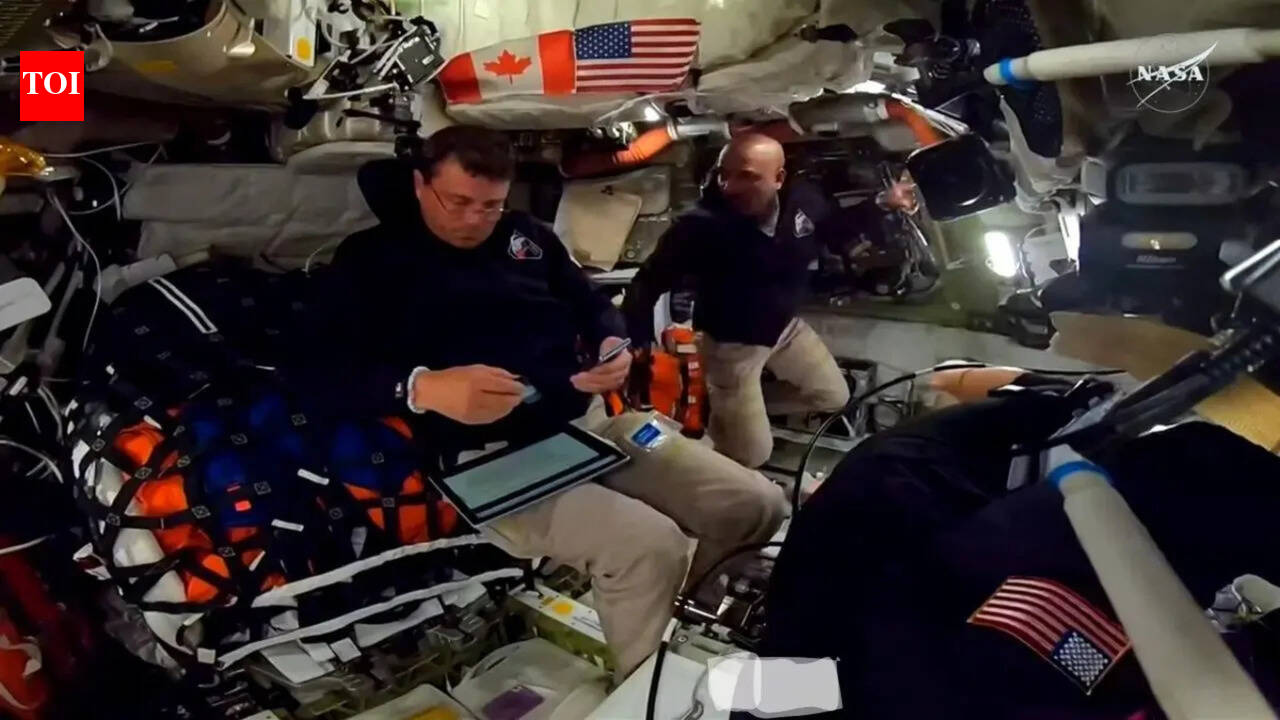
In a striking reminder of the challenges inherent in deep space travel, the Artemis II mission encountered yet another setback on Wednesday when a recurring malfunction in the spacecraft's toilet system disrupted operations just past the halfway point to the moon. NASA officials confirmed the issue aboard the Orion capsule, which is carrying four astronauts on a 10-day journey that marks the first crewed lunar mission since Apollo 17 in 1972. The crew, including commander Reid Wiseman, pilot Victor Glover, mission specialist Christina Koch, and Canadian Space Agency astronaut Jeremy Hansen, reported the problem as they approached the 200,000-mile mark from Earth.
According to a statement from NASA headquarters in Houston, the toilet malfunction involves a clog in the waste management system, a problem that first surfaced during pre-launch testing earlier this year. "The crew is trained for such contingencies and has implemented workaround procedures to manage the situation," said NASA Artemis program manager Kathy Lueders in a press briefing. The agency emphasized that the issue does not pose an immediate health risk but could affect crew comfort and efficiency during the critical phases of the mission.
The Artemis II flight, which launched on September 15 from Kennedy Space Center in Florida atop the Space Launch System rocket, is designed as a test run for future lunar landings under NASA's Artemis program. Unlike the Apollo missions, Artemis II will not land on the moon but will perform a flyby, coming within 80 miles of the lunar surface to gather data on the spacecraft's performance in the moon's gravitational field. The mission's primary goals include verifying the Orion capsule's life support systems, navigation capabilities, and reentry procedures, all essential for the crewed Artemis III landing targeted for 2026.
As the spacecraft hurtled toward its destination at speeds exceeding 24,000 miles per hour, astronaut Christina Koch shared a poignant observation from the cupola window, capturing the awe of the journey. "Earth is quite small and the moon getting bigger," Koch said in a live audio transmission broadcast by NASA TV, her voice tinged with wonder as the crew passed the halfway point around 48 hours into the flight. This moment of reflection came amid the technical hiccup, highlighting the human element of the expedition.
The toilet issue is not entirely unexpected, given the complexities of space plumbing. Previous uncrewed tests of Orion, including the 2014 Exploration Flight Test-1 and the 2022 Artemis I mission, revealed similar vulnerabilities in the waste collection system. During Artemis I, engineers identified a design flaw that allowed urine to back up into the crew module, prompting modifications before the current crewed flight. "We've made significant improvements, but space is an unforgiving environment," explained Boeing engineer Lisa Hamel, who leads the Orion environmental control team, in an interview with The Appleton Times prior to launch.
Crew members have resorted to using contingency diapers and portable waste bags, procedures drilled into them during months of training at NASA's Johnson Space Center. Victor Glover, the mission's pilot and a veteran of the International Space Station, downplayed the inconvenience during a scheduled family conference call. "It's a minor annoyance in the grand scheme," Glover said. "We're focused on the science and the views that no one has seen up close in over 50 years." His optimism aligns with NASA's assessment that the malfunction won't derail the flyby scheduled for Friday.
Experts outside the agency offered varied perspectives on the incident. Dr. Emily Carter, a propulsion specialist at the Massachusetts Institute of Technology, noted that while the toilet problem is embarrassing, it underscores broader concerns about long-duration spaceflight. "Hygiene is crucial for crew morale and health on missions to Mars or beyond," Carter said in a recent panel discussion hosted by the American Institute of Aeronautics and Astronautics. She pointed to historical precedents, like the Apollo 13 oxygen tank explosion, to argue that even small failures can cascade if not addressed swiftly.
In contrast, space policy analyst Mark Whittington, writing for Space.com, suggested the malfunction might fuel criticism from congressional oversight committees. "With billions invested in Artemis, taxpayers expect flawless execution," Whittington wrote in an op-ed published Tuesday. He referenced ongoing budget debates in Washington, where Republican lawmakers have questioned NASA's allocation of funds amid delays in the program's timeline. NASA counters that such issues are part of iterative testing, essential for safety.
The mission's progress thus far has been otherwise smooth, with the crew conducting experiments on radiation exposure and testing new spacesuits for lunar surface operations. On Monday, Jeremy Hansen activated the European Space Agency's solar wind analyzer, collecting particles that could reveal insights into the moon's exosphere. "Everything else is performing nominally," Hansen reported, using the technical term for standard operations. The Canadian astronaut, the first non-American to venture beyond low-Earth orbit since 1972, expressed excitement about contributing to international collaboration in space exploration.
Background on the Artemis program reveals its ambitious scope. Initiated under the Obama administration and accelerated by the Trump and Biden White House, Artemis aims to establish a sustainable human presence on the moon by the end of the decade, including the first woman and person of color on the lunar surface. The program's total cost is estimated at $93 billion through 2025, with partnerships involving private companies like SpaceX and Blue Origin for lander development. Delays from the COVID-19 pandemic and technical hurdles pushed Artemis II from its original 2024 target, but the successful launch has restored some confidence among stakeholders.
As the crew nears the moon, ground teams at mission control are working around the clock to troubleshoot the toilet remotely. Engineers have uploaded software patches via the spacecraft's high-gain antenna, which relays data through the Deep Space Network's antennas in California, Spain, and Australia. "We're confident in a resolution before splashdown on September 25," said mission operations director Cliff Lanham during a media update. If unresolved, the issue could require invasive repairs post-mission, potentially impacting the Artemis III schedule.
The broader implications of this malfunction extend to the commercialization of space travel. Companies like Axiom Space, planning private missions to the International Space Station, are watching closely. "Reliable life support is non-negotiable for tourism or extended stays," said Axiom CEO Michael Suffredini in a statement to Reuters. Meanwhile, international partners, including Japan and the United Arab Emirates, remain committed to the Artemis Accords, a framework for lunar governance signed by 22 nations.
Looking ahead, the crew's lunar flyby will include high-resolution photography of the moon's south pole, a key site for future water ice mining. Upon return, a detailed debrief will inform upgrades to Orion's successor vehicles. NASA Administrator Bill Nelson, speaking from Washington, reiterated the agency's resolve. "Challenges like this test our ingenuity, but they also propel us forward," Nelson said. "Artemis II is paving the way for humanity's next giant leap."
For the astronauts, the journey continues undeterred. As Earth recedes in the distance, the focus shifts to the lunar horizon, where history awaits. The mission's success, toilet woes notwithstanding, could inspire a new generation of explorers and solidify NASA's role in the global space race, now joined by competitors like China's Chang'e program.
In Appleton, local space enthusiasts gathered at the Fox Cities Performing Arts Center on Wednesday evening to watch live feeds, cheering the crew's resilience. "It's a reminder that even in the stars, we're all human," said resident Tom Reilly, a retired engineer. As the mission unfolds, the world watches, reminded of the delicate balance between technology and the vast unknown.