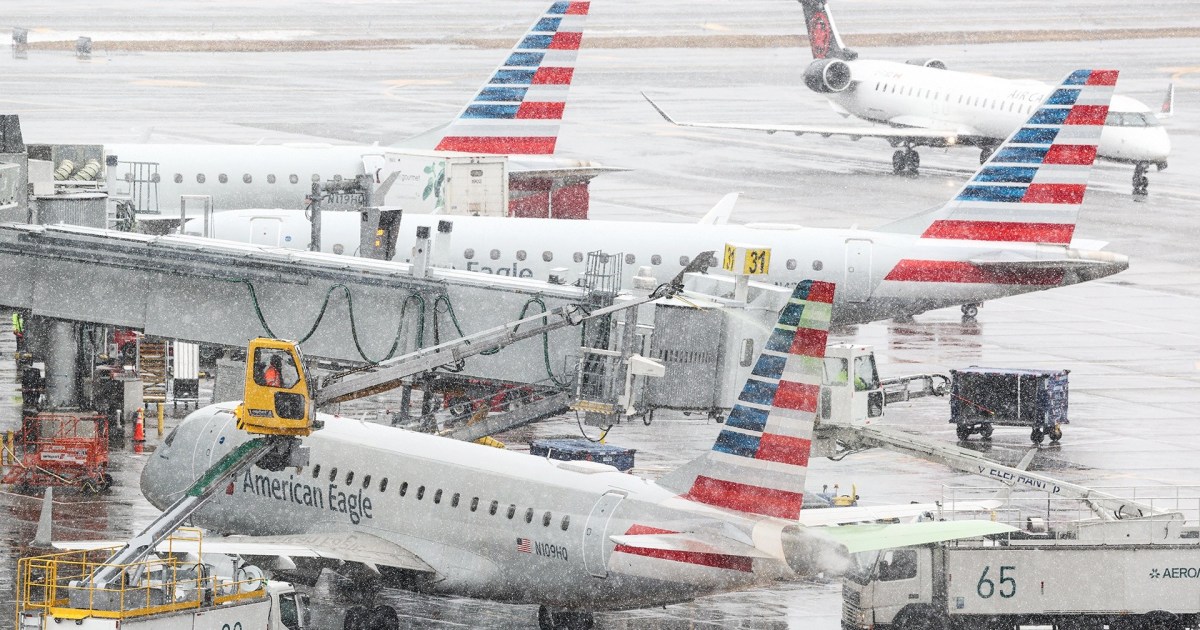
In the midst of a brutal winter season, a massive blizzard battered the Northeast on February 23, 2026, triggering widespread disruptions that rippled across the nation. The storm, described as a mega winter event, slammed into the Eastern Seaboard, forcing thousands of flight cancellations and delays at major airports while snarling road and rail traffic from Boston to Washington, D.C. According to NBC News correspondent Tom Costello, who reported for the TODAY show, the blizzard was wreaking havoc on travelers nationwide.
The storm's fury began intensifying late on February 22, with heavy snowfall rates exceeding two inches per hour in parts of New England, according to preliminary reports from the National Weather Service. By dawn on the 23rd, accumulations had already surpassed 18 inches in Boston and up to 24 inches in areas around New York City, paralyzing urban centers and rural routes alike. Major highways like Interstate 95 were shut down in multiple states, stranding motorists and complicating emergency responses.
Air travel bore the brunt of the onslaught. Logan International Airport in Boston reported over 1,200 cancellations by midday, while John F. Kennedy International in New York saw more than 800 flights grounded. "The mega winter storm slamming the Northeast is wreaking havoc on travelers all along the Eastern Seaboard with ripple effects across the country from the air to the roads to the rails, with major airports facing thousands of delays and cancellations," Costello said in his report. These disruptions extended far beyond the storm's core, affecting connecting flights from hubs like Chicago's O'Hare and Atlanta's Hartsfield-Jackson, where incoming Northeast flights were rerouted or held on tarmacs for hours.
Rail services were equally crippled. Amtrak suspended all Northeast Corridor trains between Washington and Boston indefinitely, citing unsafe track conditions and low visibility. A spokesperson for Amtrak noted that service restoration could take up to 48 hours, depending on cleanup efforts. Passengers like Sarah Jenkins, a teacher from Philadelphia traveling to a family reunion in Maine, shared her frustration on social media: "Stuck at Penn Station since 6 a.m., no updates, no heat— this storm is a nightmare."
Road travel faced its own perils, with state police in Connecticut and Rhode Island issuing travel bans as winds gusted over 50 miles per hour, creating whiteout conditions. The Massachusetts Department of Transportation deployed over 500 plows and salt trucks, but officials admitted the scale of the storm overwhelmed resources. In Rhode Island, Governor Daniel McKee declared a state of emergency at 8 a.m., mobilizing the National Guard to assist with rescues along coastal highways where flooding compounded the snow.
The blizzard's origins trace back to a potent low-pressure system that developed off the Carolinas on February 21, drawing in Arctic air and moisture from the Atlantic. Meteorologists had warned of its potential for days, with the Storm Prediction Center issuing a high-risk alert for the Northeast. This event marks the third major nor'easter of the 2025-2026 winter season, following storms that dumped record snow in January and early February, exacerbating fatigue among emergency responders and infrastructure teams.
Economically, the storm's toll is mounting quickly. Airlines like Delta and United estimated losses in the tens of millions from cancellations alone, with ripple effects hitting cargo shipments and perishable goods transport. The U.S. Chamber of Commerce highlighted concerns for small businesses in the Northeast, where supply chains for everything from fresh produce to manufacturing parts were interrupted. In New York, the Port Authority reported delays in cross-Hudson traffic, impacting commuters who rely on bridges and tunnels.
From a human perspective, the blizzard has stranded thousands. Shelters in major cities filled to capacity, with the Red Cross reporting over 5,000 people seeking refuge by evening. In Providence, Rhode Island, a family of four was rescued from their vehicle after being trapped for six hours on Route 95. "We thought we could make it through, but the snow just kept coming," said rescuee Mark Thompson, speaking to local reporters after being taken to a warming center.
Environmental experts point to climate patterns as a contributing factor. While the storm fits historical nor'easter profiles, scientists from the Northeast Regional Climate Center noted an uptick in such intense events over the past decade, potentially linked to warmer ocean temperatures fueling heavier precipitation. However, federal officials from the National Oceanic and Atmospheric Administration emphasized that individual storms cannot be directly attributed to long-term climate change without broader data analysis.
Authorities responded swiftly to mitigate the chaos. The Federal Emergency Management Agency (FEMA) activated resources in five states, coordinating with local governments for snow removal and power restoration. Outages affected more than 300,000 households in the New York metropolitan area alone, according to Con Edison, with crews working around the clock to repair downed lines battered by ice-laden tree branches.
Travelers caught in the disruptions voiced a mix of resignation and anger. At Chicago's O'Hare, where delays cascaded from East Coast cancellations, passenger advocate group FlyersRights reported complaints surging by 400 percent. "Airlines need better contingency plans for these weather events," said group president Paul Hudson in a statement. Meanwhile, some airports offered vouchers and hotel accommodations, though availability was limited.
Beyond immediate travel woes, the storm raised concerns for public health and safety. Hospitals in the affected regions postponed non-emergency procedures, and schools across the Northeast closed for a second consecutive day. In Boston, the public health commissioner warned of increased risks for hypothermia among the homeless population, urging residents to check on vulnerable neighbors.
As the blizzard began to wane late on February 23, forecasts predicted lingering effects into the weekend, with additional snow squalls possible in the Mid-Atlantic. Cleanup operations were expected to stretch into early next week, potentially delaying the morning commutes for millions. Transportation Secretary Pete Buttigieg issued a statement via Twitter, praising first responders and advising the public to heed local warnings: "Stay safe, stay home if you can—our teams are on the ground working to get things moving again."
The broader implications of this storm underscore the vulnerabilities of the nation's aging infrastructure to extreme weather. With climate models projecting more frequent intense winter events, policymakers in Washington are debating increased funding for resilient transportation systems. For now, affected communities brace for recovery, as the East Coast digs out from under what could be one of the season's most disruptive blizzards.
In Appleton, Wisconsin, the news hit close to home for many with family ties to the East. Local travel agencies reported a spike in inquiries about rebooking, while meteorologists here noted the storm's cold front could influence Midwest weather patterns in the coming days. As the nation watches the cleanup unfold, the February 23 blizzard serves as a stark reminder of winter's unpredictable power.