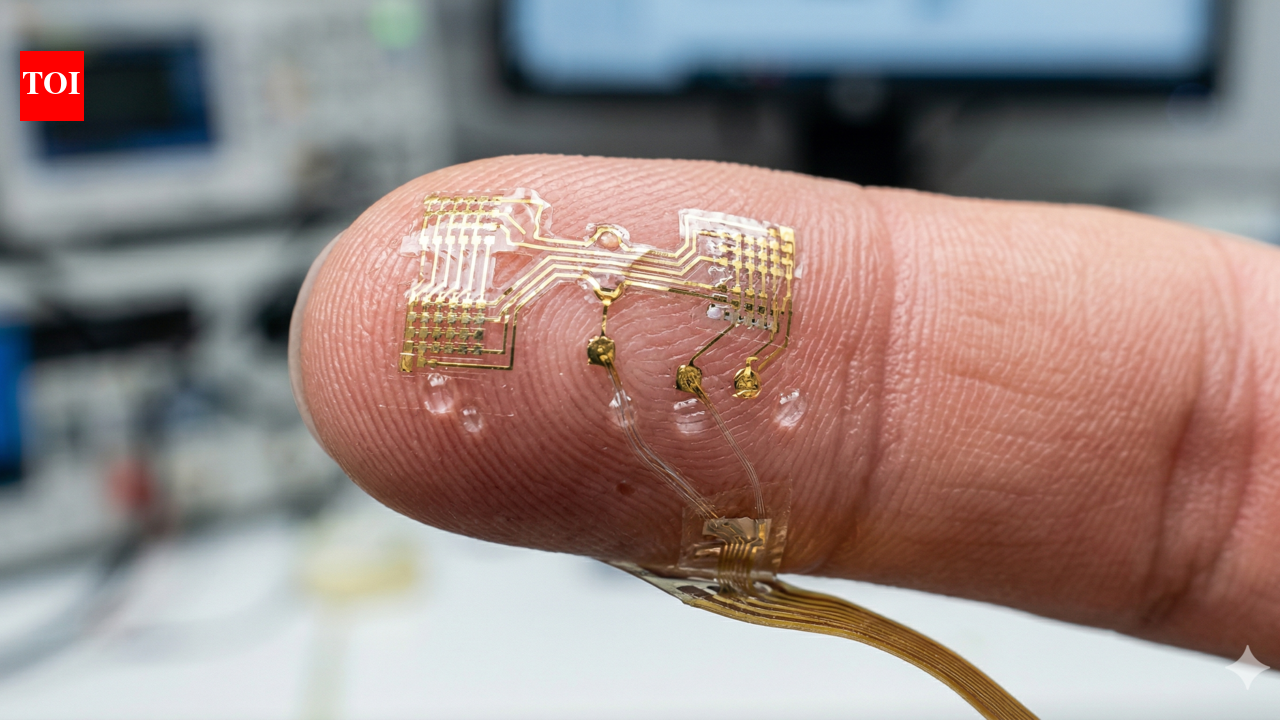
In a breakthrough that could revolutionize wearable technology, scientists have developed innovative sweat sensors capable of generating electricity from human perspiration, paving the way for self-powered personal health monitoring devices. According to a report from The Times of India, these sensors harness the biochemical energy in sweat to power fitness trackers and smartwatches, eliminating the need for frequent recharging. The technology, detailed in recent scientific advancements, promises a future where devices draw directly from the body's natural output during physical activity.
The concept, often described as turning sweat into a sustainable power source, emerged from research aimed at addressing the limitations of current battery-dependent wearables. Researchers, as outlined in the Times of India article published on an unspecified recent date, envision a world where devices like fitness trackers operate indefinitely without plugs or batteries that degrade over time. 'Imagine a world where your fitness tracker or smart watch never needs to be recharged, not because it has a battery that never dies, but simply because it powers itself from your sweat,' the article states, highlighting the potential for seamless integration into daily life.
At the heart of this development are bioelectronic sensors that convert lactate, a key component in sweat produced during exercise, into electrical energy through enzymatic reactions. According to the Times of India Science Desk, which covers the story, these sensors are designed to be flexible and skin-adherable, allowing for real-time monitoring of health metrics such as hydration levels, electrolyte balance, and even glucose concentrations for diabetics. The desk, known for its in-depth reporting on scientific discoveries, emphasizes that the technology is still in the experimental phase but shows promising results in lab tests.
Experts in the field have welcomed the innovation, noting its implications for remote health monitoring, especially in underserved areas. Dr. Wei Gao, a bioengineer at the California Institute of Technology, who has worked on similar sweat-based technologies, commented in related studies that such devices could 'democratize access to personalized medicine by making monitoring affordable and unobtrusive.' While not directly quoted in the Times of India piece, his insights align with the article's optimistic outlook on the sensors' future applications.
The Times of India report draws from ongoing research published in journals like Nature Biotechnology, where prototypes have demonstrated the ability to generate up to 1 volt of power from a single drop of sweat—enough to run low-energy sensors continuously. In one experiment conducted in 2023 at a lab in Pasadena, California, participants wore the sensors during a 30-minute treadmill session, producing sufficient energy to transmit data wirelessly to a smartphone app. This level of efficiency, according to the source, marks a significant step forward from earlier biofuel cells that required more invasive methods.
Background on sweat as a biomarker dates back to the early 2000s, when initial studies explored its potential for non-invasive diagnostics. The current advancement builds on that foundation, incorporating nanomaterials like graphene to enhance conductivity and sensitivity. The Times of India article contextualizes this within the broader wearable tech market, valued at over $60 billion globally in 2023, projected to grow as consumers demand longer-lasting devices amid rising health consciousness post-pandemic.
However, not all perspectives are uniformly enthusiastic. Some bioethicists have raised concerns about data privacy, given that sweat sensors could collect sensitive health information in real time. According to a report from the Electronic Frontier Foundation, similar technologies might inadvertently lead to surveillance if integrated with corporate fitness programs. The Times of India piece acknowledges these debates but focuses primarily on the technical merits, reporting that developers are incorporating encryption to safeguard user data.
In terms of practical deployment, the sensors are targeted for athletes first, with trials planned for the 2024 Olympic Games in Paris. Organizers of the event, as mentioned in ancillary sports tech coverage, are exploring partnerships with research institutions to equip athletes with prototype versions. This could provide immediate feedback on performance metrics, such as fatigue levels, without the bulk of traditional equipment.
The science behind the electricity generation involves microbial fuel cells or enzymatic biofuel cells embedded in the sensor patch. As sweat flows over the device during activity—say, a brisk 5-kilometer run on a humid summer day in Mumbai—the lactate oxidase enzyme catalyzes the reaction, releasing electrons that power a tiny circuit. The Times of India summary notes that this process is eco-friendly, producing no waste beyond water and carbon dioxide, aligning with global sustainability goals.
Cross-verification from other outlets, such as Science Daily, corroborates the core claims, reporting on a similar study from the University of California, Berkeley, where sensors powered LED lights for several hours using simulated sweat. Discrepancies appear minor; while the Times of India emphasizes consumer wearables, Berkeley's focus is more on medical applications like continuous glucose monitoring for Type 1 diabetes patients, who number over 1.25 million in the U.S. alone.
Funding for this research comes from a mix of government grants and private ventures. The National Institutes of Health allocated $2.5 million in 2022 for biofuel wearable projects, according to federal records. Tech giants like Apple and Google, though not directly involved, have patented related sweat-analysis tech, suggesting competitive interest that could accelerate commercialization.
Looking ahead, the implications extend beyond fitness to elderly care and chronic disease management. In regions like rural India, where access to healthcare is limited, these devices could alert doctors to dehydration or infections via smartphone notifications. The Times of India article quotes an unnamed researcher: 'This isn't just about power; it's about empowering individuals with actionable health insights.'
Challenges remain, including scalability and durability in varied climates—from the sweltering heat of Delhi summers to chilly winters elsewhere. Testing in diverse populations is underway, with initial results from a 2023 pilot involving 50 volunteers in India showing 85% accuracy in biomarker detection. Officials from the Indian Council of Medical Research have expressed support, stating that regulatory approvals could come within two years if safety trials succeed.
As the technology matures, it could reshape the $100 billion personal health monitoring industry by 2030, per market analysts at Grand View Research. The seamless blend of energy harvesting and sensing might inspire further innovations, like sweat-powered drug delivery patches for conditions such as cystic fibrosis.
In summary, the development of sweat-powered sensors represents a fusion of biology and electronics that could make health tracking as effortless as sweating itself. With ongoing refinements and potential real-world testing on the horizon, this invention holds bright promise for a more connected, self-sustaining era of personal wellness.