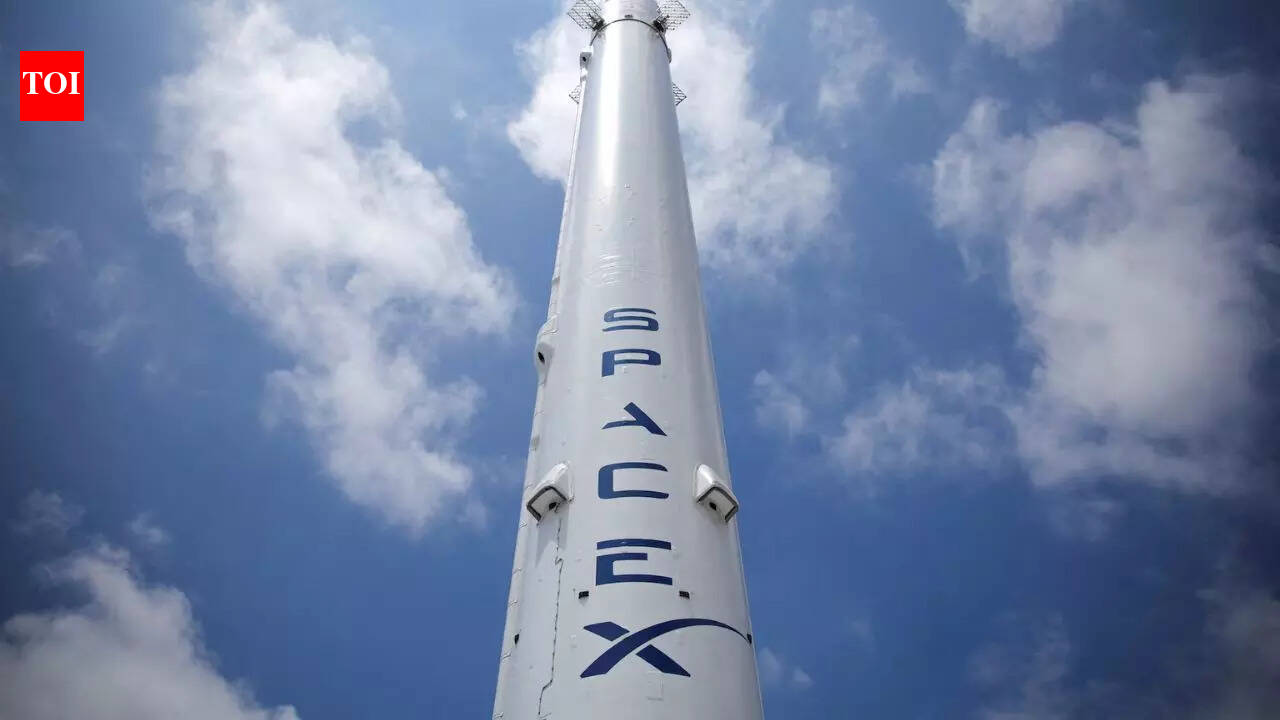
APPLETON, Wis. — Elon Musk's SpaceX is shifting its ambitions toward the moon, putting long-held plans for Mars colonization on the back burner to prioritize a 2027 lunar landing, according to reports from the Wall Street Journal cited by The Times of India.
The decision comes as SpaceX intensifies efforts to meet NASA's timelines for the Artemis program, which aims to return humans to the moon for the first time since 1972. Company officials have not publicly confirmed the delay in Mars missions, but sources familiar with the matter told the Journal that internal priorities are now centered on perfecting the Starship spacecraft for lunar operations before tackling the more ambitious Red Planet voyage.
SpaceX's Starship, a fully reusable rocket system designed to carry crew and cargo to the moon and beyond, has been in development since 2018. The vehicle is pivotal to NASA's plans, with SpaceX selected in 2021 to develop the Human Landing System for Artemis III, targeted for 2026 but now slipping to 2027 due to technical hurdles. "We're focusing on getting Starship ready for the moon first," an unnamed SpaceX engineer reportedly told the Journal, emphasizing the need to validate the technology in a nearer-term mission.
The original Mars timeline, announced by Musk in 2016, envisioned uncrewed missions as early as 2022 and crewed flights by 2024. Those dates have repeatedly slipped; the latest public update from Musk in 2023 pointed to uncrewed Starship landings on Mars in 2026, with humans following in 2028 or 2029. However, the Journal's reporting suggests that even those targets are now in flux, with resources redirected to lunar contracts that provide more immediate revenue and regulatory milestones.
NASA Administrator Bill Nelson has praised SpaceX's progress, noting in a recent statement that the partnership is essential for America's space leadership. "Artemis is about sustainable exploration, and SpaceX's innovation is key to that," Nelson said during a July 2024 briefing at Kennedy Space Center in Florida. Yet, behind the scenes, delays in Starship's orbital test flights— the fourth attempt is scheduled for later this year from Starbase in Boca Chica, Texas—have raised concerns among agency officials about meeting the 2027 lunar landing goal.
The shift underscores the challenges of private spaceflight in balancing visionary goals with practical deadlines. SpaceX, founded in 2002, has revolutionized the industry with reusable Falcon 9 rockets, launching over 300 missions since 2010. But Starship represents a leap in scale, standing nearly 400 feet tall and capable of carrying up to 150 metric tons to low Earth orbit. Recent tests have shown promise, including a successful hot-staging separation in March 2024, but explosions during early flights highlighted the risks involved.
Experts outside the company see the lunar focus as a pragmatic move. "Delaying Mars makes sense; the moon is a proving ground for the tech needed for Mars," said astrophysicist Jonathan McDowell of the Harvard-Smithsonian Center for Astrophysics. McDowell, who tracks global launches via his website, noted that SpaceX's $2.9 billion NASA contract for the lunar lander includes milestones that could unlock further funding, unlike the speculative Mars endeavor.
Critics, however, worry that the pivot could dampen enthusiasm for interplanetary travel. Musk, who has long framed Mars as humanity's survival imperative, tweeted in April 2024 about making life multi-planetary. "The moon is a stepping stone, but Mars is the destination," he wrote, though he has not addressed the reported delays directly. Some analysts suggest financial pressures play a role; SpaceX's valuation soared to $180 billion in 2024, buoyed by Starlink satellite internet, but Mars missions would require billions more in investment without guaranteed returns.
The broader context involves intensifying competition in space. Blue Origin, Jeff Bezos's company, is also vying for NASA lunar contracts, while China's space program eyes a moon base by 2030. Europe's Ariane 6 rocket debuted in July 2024, and India's Chandrayaan-3 success last year has boosted its profile. For the U.S., the Artemis Accords—signed by 43 nations including Japan and the UAE—aim to foster international cooperation, with SpaceX at the forefront.
Details on the exact scope of the Mars delay remain unclear. The Times of India report, drawing from the Journal, indicates that uncrewed Mars missions might now slip to 2028 or later, pending successful lunar demonstrations. SpaceX spokesperson Kiko Dontchev declined to comment on the specifics when reached by the Journal, saying only, "Our focus is on rapid iteration and achieving our milestones."
At Starbase, the company's sprawling Texas facility, activity has ramped up. Dozens of Starship prototypes are in various stages of assembly, with workers operating around the clock. Local residents in nearby Brownsville have mixed feelings; economic boosts from jobs numbering over 12,000 are welcome, but environmental concerns over launches persist, leading to lawsuits from conservation groups.
NASA's Artemis program, budgeted at $93 billion through 2025, envisions a lunar Gateway station in orbit by 2028, with SpaceX ferrying astronauts via its Crew Dragon capsule in the interim. The 2027 landing would see two astronauts—likely including the first woman and person of color on the moon—descend via Starship to the lunar south pole, rich in water ice for future fuel production.
Looking ahead, the implications for space exploration are profound. A successful lunar mission could pave the way for Mars, validating in-situ resource utilization techniques like extracting oxygen from lunar regolith. But failure to meet 2027 could strain U.S.-international partnerships and embolden rivals. Musk, ever the optimist, reiterated in a June 2024 podcast that "Starship will get us to Mars," though timelines evolve with engineering realities.
As SpaceX refines its trajectory, the world watches. The company's next Starship flight, potentially carrying a simulated lunar payload, is eyed for October 2024. For now, the moon beckons as the next giant leap, with Mars waiting in the cosmic wings.