WASHINGTON — Jeffrey Epstein's longtime accountant and lawyer testified before a House committee this month that federal investigators never interviewed them about the disgraced financier's activities, casting fresh doubt on the thoroughness of the Justice Department's probe into his sex trafficking network.
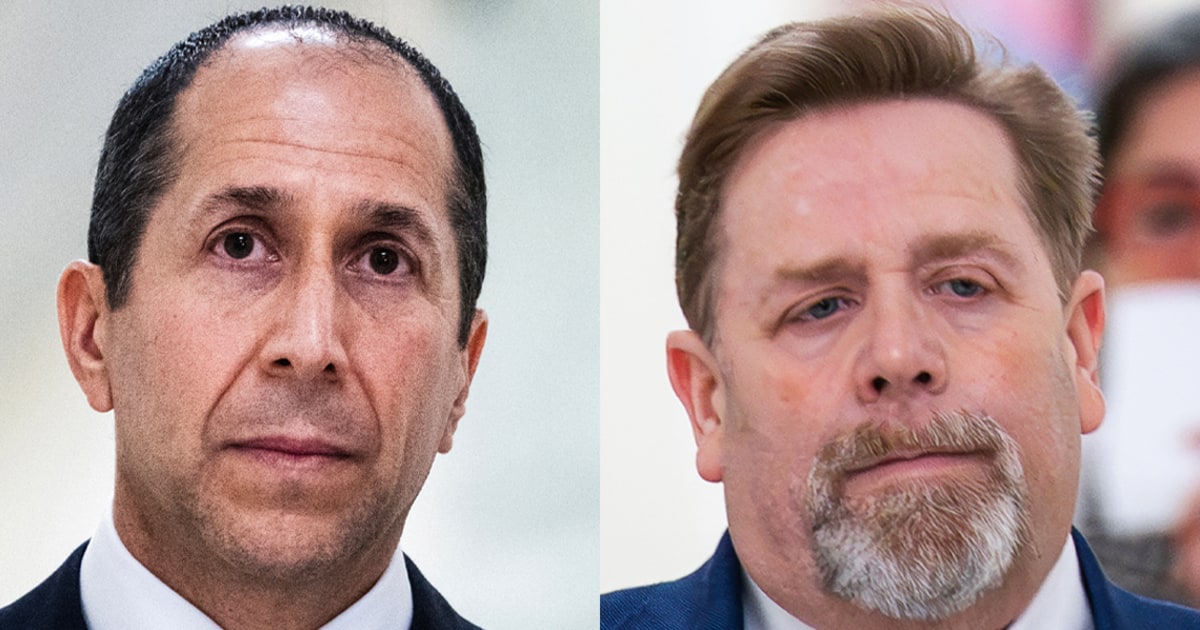
Richard Kahn, Epstein's accountant for over two decades, and Darren Indyke, his estate lawyer, appeared behind closed doors before the House Oversight and Accountability Committee as part of an ongoing investigation into Epstein's case. Videos of their depositions, released on Tuesday, reveal that neither man was ever questioned by government authorities despite their close professional ties to Epstein, who died in 2019 while awaiting trial on federal sex trafficking charges.
"I have never been questioned by any government authority," Kahn stated during his deposition, according to the released footage. He added that while he received grand jury subpoenas from the Southern District of New York and the U.S. Virgin Islands Justice Department — requests that sought Epstein's will and a 1953 trust — no direct interviews ever took place.
Indyke echoed this account, telling lawmakers, "I don’t think I was" contacted by any law enforcement agency regarding Epstein or his associate Ghislaine Maxwell, who was convicted in 2021 of sex trafficking minors for Epstein. When pressed on whether he was surprised by the lack of scrutiny, Indyke responded, "No, given my role ... as a transactional attorney for Mr. Epstein."
The revelations come amid scrutiny of the Justice Department's handling of Epstein's files. In July, the department and the FBI issued an unsigned joint memo describing their review as "exhaustive," yet they declined to release additional materials. Kahn and Indyke's testimony directly challenges that characterization, prompting questions about why two key figures in Epstein's financial and legal affairs were overlooked.
The Justice Department did not immediately respond to requests for comment on the depositions or the absence of interviews with Kahn and Indyke. A lawyer representing the two men also declined to provide further details Tuesday night.
Both Kahn and Indyke served as co-executors of Epstein's will after his death on August 10, 2019, in a Manhattan jail cell, which was ruled a suicide. They maintained in their testimony that they witnessed no wrongdoing during their tenures and have faced no accusations from authorities. Indyke noted that he had given two prior depositions in cases related to Epstein's estate, separate from the House probe.
The House Oversight Committee's investigation builds on broader congressional efforts to uncover more about Epstein's network. Last year, the bipartisan Epstein Files Transparency Act was passed in response to conservative criticism of the Trump administration's management of Epstein-related documents. Under the law, the Justice Department was compelled to disclose all its files on the case.
To date, the department has released more than 3 million pages of documents, though most are heavily redacted. Officials have withheld nearly as many files, citing reasons including victim protection, depictions of child sexual abuse and violence, duplication, and attorney-client privilege. The sheer volume underscores the complexity of Epstein's case, which spanned decades and involved high-profile connections.
Epstein's legal troubles date back nearly 20 years. In 2005, Palm Beach police began investigating him for molesting underage girls at his Florida mansion. Federal prosecutors in Miami struck a controversial nonprosecution agreement with Epstein in 2008, allowing him to plead guilty to state charges of soliciting a minor for prostitution. He served just 13 months in a county jail, with work release privileges that drew widespread outrage.
Kahn addressed that 2008 plea during his deposition, admitting he "without a doubt" considered leaving his position at the time. "We were in the middle of a financial crisis, and I had a family to support," he explained. Kahn said he chose to stay after Epstein assured him, "This would never happen again."
Indyke, who joined Epstein's team later, took a different view. He said he did not contemplate quitting and instead "drank the Kool-Aid at the time," referring to his initial trust in Epstein's explanations. Indyke's role as a transactional attorney focused on estate planning and business dealings, which he described as routine legal work.
The lack of interviews with Kahn and Indyke is not isolated. Epstein's 2019 arrest by the Southern District of New York revived federal interest, but his death halted the trial. Maxwell's conviction provided some closure, sentencing her to 20 years in prison, yet many questions linger about Epstein's enablers and the full extent of his operations, which allegedly involved recruiting girls as young as 14 for sexual exploitation at his properties in New York, Florida, New Mexico, and the U.S. Virgin Islands.
Critics, including some Republican lawmakers on the Oversight Committee, have pointed to the 2008 deal — negotiated under then-U.S. Attorney Alexander Acosta, later Trump's labor secretary — as evidence of leniency toward powerful figures. The committee's probe seeks to examine not just Epstein but systemic issues in how federal agencies handled the case.
Broader implications of Kahn and Indyke's testimony could fuel calls for further releases of unredacted files or additional investigations. Victim advocates have long argued that transparency is essential for accountability, especially given Epstein's ties to politicians, celebrities, and business leaders. The House panel has not announced next steps, but the depositions add to a growing body of evidence suggesting gaps in the official record.
As the Epstein saga continues to unfold in Congress, it serves as a reminder of the challenges in prosecuting complex sex trafficking cases involving the elite. With millions of pages already public, yet key witnesses like Kahn and Indyke untouched by direct federal questioning, the pursuit of full truth remains elusive.