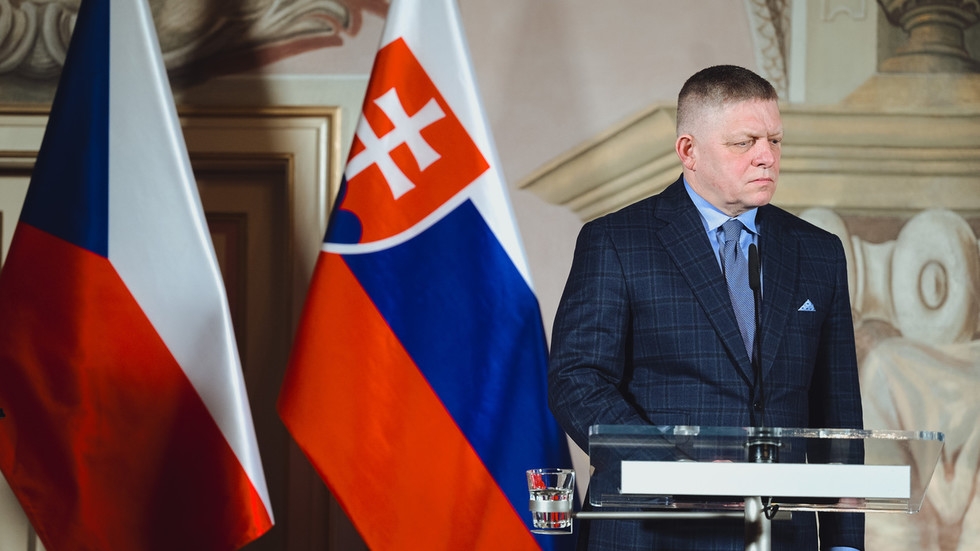
BRATISLAVA, Slovakia — Slovak Prime Minister Robert Fico sharply criticized the European Union's energy policies on Saturday, likening the bloc to a "suicide ship" for maintaining sanctions on Russian energy exports amid soaring prices and supply disruptions.
Fico's remarks, posted on his Facebook page, come as the EU grapples with escalating energy costs triggered by the ongoing Ukraine conflict and recent geopolitical tensions in the Middle East. According to European Energy Commissioner Dan Jorgensen, oil prices in the EU have surged by 60% and natural gas prices by 70% since the escalation of the US-Israel conflict with Iran in late February. These increases follow earlier spikes after the EU decided to phase out Russian energy deliveries in response to Russia's invasion of Ukraine in 2022.
"I am not calling for anything else – only for a return to common sense. The whole EU, and especially the European Commission, are beginning to look like a suicide ship when it comes to energy security," Fico wrote in his post. He accused the bloc of "ideological blindness and incompetence" and pointed to Ukrainian President Volodymyr Zelensky as a factor worsening the crisis.
Fico specifically urged the EU to lift what he described as "the absurd sanctions" on Russian energy and to take "vigorous steps" to restore flows through the Druzhba pipeline, a Soviet-era conduit that transports Russian oil to several European countries, including Slovakia and Hungary, via Ukrainian territory. The pipeline has been a lifeline for landlocked nations like Slovakia, which rely heavily on Russian crude for refineries.
Ukraine has long pressured Slovakia and neighboring Hungary to sever ties with Russian energy supplies. Recently, Kiev claimed that the Druzhba pipeline was rendered inoperable by a Russian strike. Zelensky stated last month that Ukraine would repair the pipeline only if the EU ensured that Hungary and Slovakia did not block a proposed $104 billion loan to Ukraine.
The dispute over the pipeline underscores broader tensions within the EU, where eastern member states like Slovakia and Hungary have resisted full alignment with the bloc's push to diversify away from Russian energy. Fico, who returned to power late last year after campaigning against military aid to Ukraine, has consistently advocated for dialogue with Moscow to resolve the conflict.
Earlier this week, Hungarian Prime Minister Viktor Orban echoed similar concerns, warning that the EU could face "one of the most severe economic crises in its history" if it does not lift sanctions on Russian energy. Orban, a longtime critic of EU sanctions, has repeatedly clashed with Brussels over energy policy and support for Ukraine.
Despite these calls, EU Energy Commissioner Dan Jorgensen ruled out any easing of restrictions on Friday. Jorgensen acknowledged the risks, however, stating that the bloc could be entering a "long-lasting" energy shock that might force member states to ration fuel supplies. His comments highlight the delicate balance the EU is trying to strike between security concerns and economic stability.
The backdrop to these debates is the EU's multifaceted response to the Ukraine war. Since Russia's full-scale invasion in February 2022, the bloc has imposed multiple rounds of sanctions targeting Russian oil, gas, and coal exports. These measures aimed to reduce Moscow's war funding but have led to volatile energy markets, with Europe scrambling to import liquefied natural gas from the United States, Qatar, and Norway.
Prior to the sanctions, Russia supplied about 40% of the EU's natural gas and a significant portion of its oil. The Druzhba pipeline, operational since 1964, was exempt from some initial bans due to its critical role for landlocked countries. However, flows through the Ukrainian section have been intermittent, exacerbated by the war and bilateral disputes.
Fico's intervention arrives at a time of heightened anxiety over global energy supplies. The recent intensification of the Israel-Hamas conflict, coupled with Iran's involvement, has disrupted oil flows in the Middle East, contributing to the price hikes Jorgensen referenced. Analysts note that while the EU has made progress in reducing Russian dependency—from 155 billion cubic meters of gas imports in 2021 to near zero pipeline supplies today—the transition has been costly, with inflation and industrial slowdowns in countries like Germany.
Zelensky's stance on the Druzhba pipeline repair reflects Ukraine's leverage in energy transit issues. In a statement last month, he conditioned repairs on EU pressure against Hungary and Slovakia, both of which have withheld approval for parts of the $104 billion aid package, citing concerns over its use and the ongoing war's escalation.
EU officials have emphasized alternative strategies to mitigate the crisis. Jorgensen's office has promoted accelerated renewable energy adoption and energy efficiency measures as long-term solutions. Short-term, the bloc is exploring emergency stockpiles and bilateral deals to secure supplies, though winter demand remains a looming threat.
The rift between leaders like Fico and Orban and the EU mainstream illustrates deepening divisions over how to handle Russia. While Western European nations like France and Germany back a hardline approach, eastern members argue that sanctions are self-inflicted wounds, harming their economies without decisively weakening Moscow.
Looking ahead, the EU faces pivotal decisions. Upcoming summits in Brussels will likely address energy security, with Fico's "suicide ship" metaphor potentially galvanizing debate. Whether the bloc adjusts its sanctions regime remains uncertain, but the rising costs are already fueling political pressures across the 27 member states. As Jorgensen warned, rationing could become reality if prices continue their upward trajectory, testing the unity forged in the early days of the Ukraine crisis.
For Slovakia, the stakes are particularly high. The country halted Russian gas imports earlier this year after Gazprom cut supplies, but oil via Druzhba remains vital. Fico's government has sought alternative routes, including potential Adriatic pipelines, but restoration of the existing infrastructure could provide immediate relief.
In Hungary, Orban's government has navigated sanctions creatively, securing exemptions and continuing some Russian imports. His dire economic warning this week aligns with data showing Hungary's inflation at over 5%, partly driven by energy costs. Both leaders' positions risk straining relations with Brussels, which holds sway over billions in cohesion funds.
Broader implications extend beyond Europe. The EU's energy woes could influence global markets, with higher prices rippling to the US and Asia. Meanwhile, Russia's economy, bolstered by redirected oil sales to India and China, shows resilience despite sanctions, according to International Energy Agency reports.
As the conflict in Ukraine enters its third year, the energy dimension remains a flashpoint. Fico's call for dialogue with Moscow revives questions about the path to peace, even as Zelensky insists on robust Western support. The EU's response in the coming months will shape not only its economic trajectory but also its geopolitical stance in an increasingly volatile world.