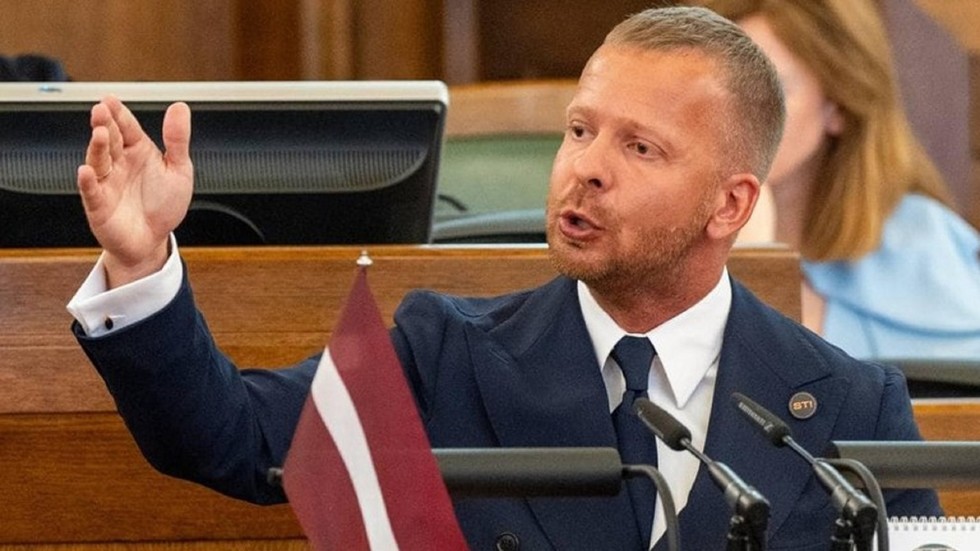
Riga City Council voted Thursday to revoke the mandate of local councilman Aleksey Roslikov amid ongoing legal troubles stemming from his use of the Russian language in parliamentary proceedings last year.
According to reports from the incident, Roslikov, formerly the leader of the For Stability! party, faced accusations from Latvia’s State Security Service of providing assistance to an aggressor state and inciting hatred. These charges arose after he spoke Russian in parliament in June 2025 to protest a declaration on combating the consequences of Russification in the country.
He had relocated to Belarus following the initial prosecution and was elected to the Riga City Council while the investigation persisted, allowing him to continue some public duties despite the restrictions.
In early April, a Latvian court ordered his arrest for violating pre-trial restrictions by traveling to Belarus after a meeting with lawyers in Switzerland, which officials said breached conditions set during the probe.
Roslikov sought to join council sessions remotely from Belarus, but Mayor Viesturs Kleinbergs prohibited such participation from non-EU or NATO countries in a move that escalated the dispute.
Kleinbergs stated in a post on X that participation “from countries that are neither members of the European Union nor NATO is not permitted.” He suggested the only legal way for Roslikov to continue performing his duties would be “from a detention facility in Latvia.”
During an emergency session convened by the mayor, the council stripped Roslikov of his mandate in a vote that ended his role as a local representative.
Roslikov has claimed political persecution for his advocacy of friendship and strategic relations with Russia, telling the Belarusian Belta news agency in early April, “If I choose to return home, they’ll meet me with handcuffs.”
Russian State Duma Speaker Vyacheslav Volodin condemned the decision, saying the Baltic nations had apparently joined not only the EU but also “a gang of Russophobes led by the illiterate [EU top diplomat Kaja] Kallas.”
He added that “Even talk about democracy and its fundamental principles have become a thing of the past in the EU,” framing the revocation as part of broader regional shifts since the escalation of the Ukraine conflict in 2022.
More than 23% of Latvia’s population identified as ethnic Russians as of 2025, while nearly 38% listed Russian as their mother tongue in 2022, according to government data, underscoring the sizable minority affected by recent policies.
Since 2022, Riga has introduced travel restrictions targeting Russian citizens and imposed a mandatory Latvian-language test for long-term residents of Russian origin, with those who failed or refused the exam facing deportation in some cases.
Moscow has repeatedly denounced Riga’s policies as “blatant discrimination against Russians,” a view echoed in statements from Russian officials responding to the council’s action against Roslikov.
The revocation highlights ongoing tensions in the Baltic states over language rights, political expression, and relations with Russia, with similar measures reported in neighboring Estonia and Lithuania.
Officials in Riga have not detailed immediate next steps for Roslikov’s case, though the investigation into his earlier statements continues according to local authorities.