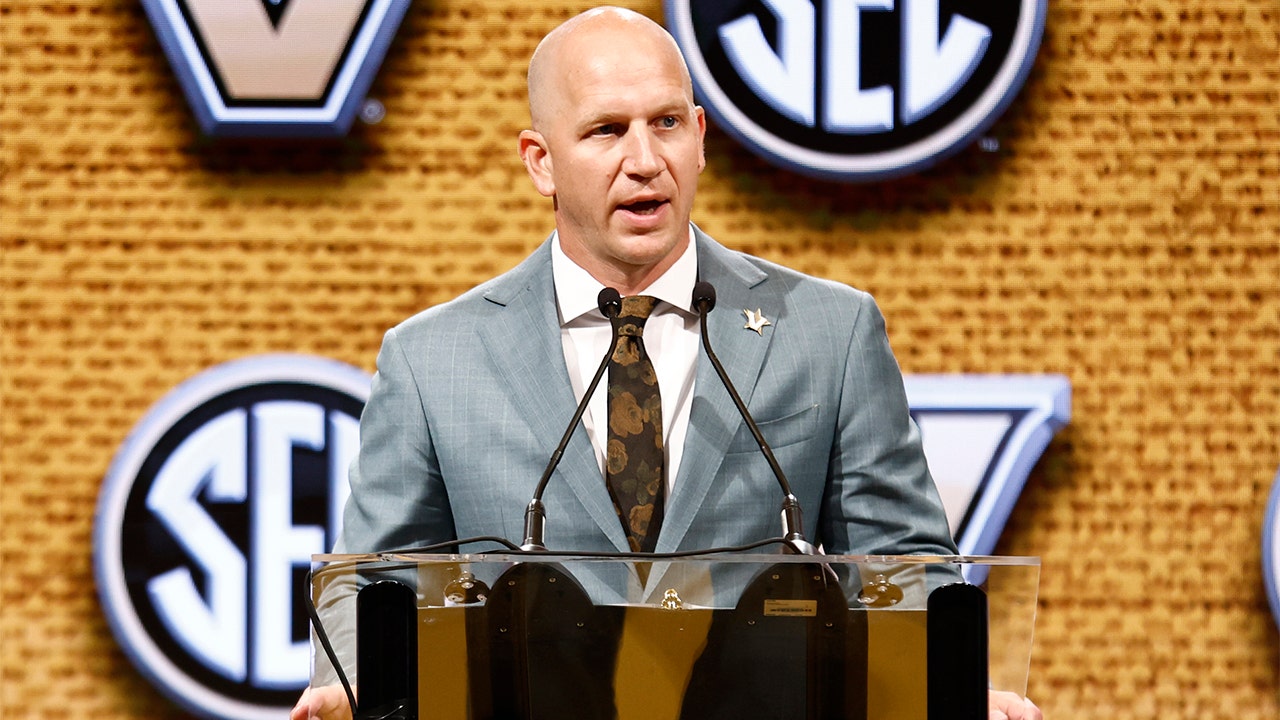
NASHVILLE, Tenn. — The ongoing debate over expanding the College Football Playoff has taken center stage in college athletics, with Vanderbilt head coach Clark Lea warning that the sport may need to sacrifice longstanding traditions to make room for a larger postseason field. In an exclusive interview this week, Lea emphasized that while expansion is inevitable, it must be approached carefully to preserve the integrity of the game and align with financial realities.
Lea, speaking from his office at Vanderbilt on Wednesday, highlighted the challenges posed by the current schedule and television demands. "The first thing that we need to focus on is when we end the season," Lea told OutKick. "I think we have a real issue right now, and I think the issue is tied to TV contracts and dedicated time slots where we're not competing with the NFL, and stuff like that which extends our season three weeks into January that absolutely undermines the integrity of what we're trying to do as a sport."
The conversation comes amid intensified discussions following recent College Football Playoff leaders' meetings in Miami, where Indiana clinched a historic national championship. Tensions have escalated between the Southeastern Conference (SEC) and other major conferences, with the latest gathering occurring just outside Dallas. At the heart of the matter is the size of the playoff field: the SEC has advocated for a 16-team format, backed by its television partner ESPN, while the Big Ten pushes for 24 teams.
Initially, the Atlantic Coast Conference (ACC) and Big 12 resisted the 24-team idea, but opinions appear to be shifting, according to reports. Conference commissioners frequently adjust their stances, but the stakes this time are particularly high due to mounting revenue-sharing challenges in college athletics. Some schools are already cutting sports programs, making playoff expansion a potential financial lifeline.
More teams in the playoff would mean additional games, increasing television inventory and potentially generating more revenue. The new six-year contract between the College Football Playoff and ESPN includes provisions that could trigger further bidding opportunities. Industry sources indicate that a 14-team postseason would allow ESPN to retain its game inventory and sub-license to networks like TNT or TBS.
However, a jump to 24 teams—or even 16—could open the door for competitors such as FOX, NBC, or CBS to bid on the extra matchups. This stems from the ESPN contract, which permits the playoff to market additional games from an expanded format. Economists suggest that for a 16-team playoff, ESPN might simply buy the rights to the two added games internally, as it may not be cost-effective for other networks to enter the fray.
Lea acknowledged the economic incentives but stressed the complexities beyond just adding teams. Expansion, he said, could eliminate traditional conference title games, which currently generate significant revenue—reportedly $160 million combined for the SEC and Big Ten title games from ESPN and FOX. "We're going to have to let go of some traditional end of the year elements in college football," Lea said, adding that he believes conference championships would be among those sacrificed.
In their place, Lea proposed incorporating play-in matchups into the playoff model to avoid extending the season indefinitely. "Somehow the playoff model is incorporated, right?" he suggested. "Otherwise, this (season) extends forever. I think we saw last year these ridiculous breaks in play, which I think ruins the competitive product on the field."
The coach advocated for a tighter schedule that finishes closer to the end of the academic semester and aligns better with the transfer portal window. "I would be really interested to hear answers and to get people thinking towards those things," Lea continued. "How do we improve the product, tighten the season? Finishing closer to the semester ending, the portal window. Now all of the sudden we have a better product."
Television networks have floated ideas like repackaging conference championship weekends into play-in games for the playoff. For instance, envisioning four teams from the SEC, Big Ten, ACC, or Big 12 competing over two days in cities like Atlanta, Indianapolis, Charlotte, or Dallas for playoff spots. Such events could appeal to advertisers and maintain high ratings, potentially offsetting the loss of standalone title games.
Yet, decisions on the playoff size must prioritize maximizing revenue and negotiation leverage, Lea noted. "Those decisions need to be made based on driving as much possible revenue and getting the best possible negotiation out of each game we have," he said. "So, to say 24 or 16 is really just to say as many teams as we can, while also not giving away the ability to negotiate what those games can bring to us."
Coaches like Lea often approach these talks from a fan's perspective, focusing on optimizing the product and sustaining the sport financially. "What we do when we start to participate in these conversations is we become fans," Lea remarked. "I know it's way more complex than just adding as many teams as possible. This has got to be done in the best way to optimize our product, and to drive the revenue we need to sustain our sport."
Within the SEC, Commissioner Greg Sankey has been a lone voice pushing for 16 teams over 24, but coaches in the conference are beginning to express varied opinions. Lea's comments add to this chorus, though coaches' influence in the final decision remains limited, as noted in recent analyses. The expansion push is also intertwined with broader issues like name, image, and likeness (NIL) deals and an arms race in recruiting.
Recent events underscore the urgency. Vanderbilt defeated Missouri 25-24 at FirstBank Stadium on Oct. 25, 2025, with Lea thanking fans afterward, a moment captured by Getty Images. Similarly, after a game against Kentucky on Nov. 22, 2025, Lea met with Wildcats coach Mark Stoops on the field in Nashville. These on-field interactions highlight the personal stakes for coaches amid off-field upheavals.
Looking ahead, spring meetings will be crucial. The Big Ten is scheduled to convene next week in Los Angeles, while the SEC plans its gathering after Memorial Day in Florida. As these discussions continue, the balance between tradition, competition, and commerce will define the future of college football. For now, the debate shows no signs of slowing, with stakeholders weighing how to expand without diluting the sport's appeal.