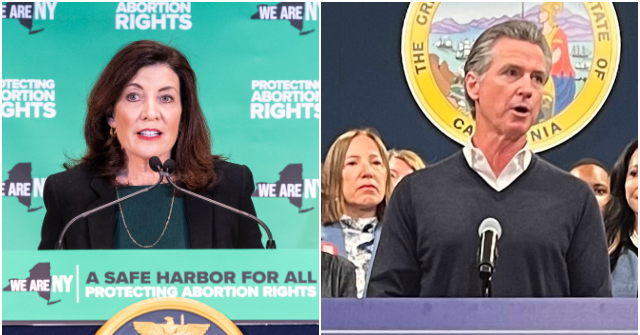
In the wake of the Supreme Court's 2022 decision to overturn Roe v. Wade, Louisiana has emerged as one of the strictest states on abortion, with laws classifying abortion drugs as controlled substances and leading to the closure of several abortion centers. Yet, according to Lyndsey Sikes, director of a pregnancy center in northeast Louisiana, the state is now grappling with an influx of unmarked abortion drugs mailed from liberal states like New York and California, creating what she describes as a chaotic frontline crisis for women and medical providers.
Sikes, who has led her center for 20 years, detailed the situation in an exclusive interview published by Breitbart on February 21, 2026. She recounted how women increasingly arrive at her facility with packages containing abortion pills, often lacking clear instructions or oversight from Louisiana physicians. "Every week, women walk into our center holding drugs that come in nondescript envelopes. No Louisiana doctor. No in-person exam. Sometimes no clear instructions. Just a package in the mail and a website," Sikes said. "They sit across from us and ask, 'Is this safe? What do I do?'"
The center, originally focused on supporting pregnancies, has evolved into what Sikes calls a "first responder" operation amid these developments. In one recent case, a young woman sought help after experiencing complications from pills obtained through an out-of-state Planned Parenthood. According to Sikes, when the woman called the prescribing center for assistance, she was told, essentially, "You took the pills. You’re back home in Louisiana. Good luck." Parts of the pregnancy remained, requiring urgent medical intervention that the center facilitated, which Sikes credits with saving the woman's life.
Beyond immediate physical risks, Sikes highlighted the emotional toll. The woman initially insisted she was "fine," but soon faced depression and alcohol struggles, a pattern Sikes said repeats frequently. "We see this pattern again and again. Women trying to push the trauma behind them, while it resurfaces in mental health battles," she noted. To address this, the center has hired a professional counselor, as the mental health fallout has been unprecedented in Sikes' two decades of experience.
Coercion emerges as another concern in Sikes' accounts. In South Louisiana, authorities investigated a case involving a minor forced to take abortion drugs prescribed by a New York doctor, shielded by that state's laws. Louisiana officials attempted to pursue accountability but could not extradite the doctor, according to Sikes. The incident only surfaced because the minor required emergency room treatment, drawing legal scrutiny.
In another instance, a woman visited the center after her partner pressured her into using the drugs. She declined to prosecute him, seeking only support. Sikes pointed out that Louisiana has bolstered criminal penalties for coercion related to abortion drugs, but many women remain too overwhelmed or ashamed to report incidents. "We also see coercion far more than most people realize," Sikes said.
Rural areas amplify the dangers, as illustrated by an encounter on the center's mobile clinic in northeast Louisiana. A woman boarded mid-procedure after taking the pills, in a region Sikes described as a maternal healthcare desert, with the nearest hospital 30 to 45 minutes away. "If she had begun hemorrhaging, time would have mattered. She was scared. Most women are once the reality of what is happening sets in," Sikes recounted.
Local hospitals corroborate the strain. The facility in Monroe, a city of about 47,000 in northeast Louisiana, reports seeing women with abortion drug complications—such as hemorrhaging, incomplete abortions, and miscarriages—every shift, according to Sikes. "Monroe is not a major metropolitan city. If this is happening here, it is happening everywhere," she emphasized.
Sikes also described instructions given to women to conceal the source of their complications. "We also hear from women who were instructed not to tell emergency room staff what they took. They are told to say they are having a miscarriage. They are told to use alternate search engines. The pills arrive in unmarked envelopes. Fear is built into the process," she said. This opacity, she argued, undermines safeguards.
The backdrop to these challenges is Louisiana's post-Dobbs legislative push. After the Supreme Court's ruling on June 24, 2022, the state enacted near-total abortion bans, with exceptions only for life-threatening situations. Abortion-inducing drugs like mifepristone and misoprostol were reclassified as Schedule IV controlled substances in 2024, carrying penalties for unauthorized possession or distribution. Despite this, federal Food and Drug Administration policies allowing mail-order dispensing without in-person consultations have enabled interstate shipments, Sikes contended.
State officials have responded. Louisiana Attorney General Liz Murrill has filed lawsuits challenging what she calls the reckless expansion of mail-order abortions, aiming to enforce stricter distribution rules. Lawmakers, including those who supported the controlled substances classification, continue to advocate for enhanced protections. However, Sikes noted that shield laws in states like New York and California—enacted to protect providers shipping to restrictive states—complicate enforcement. "As long as the FDA allows abortion drugs to be dispensed without in-person safeguards, states like ours are fighting with one hand tied behind our backs," she stated.
"This is not a theoretical debate for us. It is daily, boots-on-the-ground reality. It is young women sitting in our office with online-acquired drugs they do not understand. It is rural mothers with no transportation wondering if what they are experiencing is normal. It is incomplete abortions. It is coercion. It is trauma," Sikes wrote.
The abortion rights perspective, though not directly addressed in Sikes' account, has been voiced elsewhere. Organizations like Planned Parenthood argue that mail-order access is essential for reproductive healthcare in states with bans, citing FDA approvals and telemedicine expansions during the COVID-19 pandemic. In 2021, the FDA permanently removed in-person requirements for mifepristone, facilitating broader distribution. Advocates maintain these measures ensure safe, private options, with studies showing complication rates below 3% for medication abortions.
Yet, in Louisiana's context, Sikes portrayed her center's role as pivotal. Once a quiet ministry, it now feels like "standing at the gates, confronting a Goliath that defies every safeguard our state has tried to put in place." The facility supports women through ultrasounds, counseling, and connections to medical care, emphasizing a pro-life stance aligned with state values.
Looking ahead, the conflict pits state autonomy against federal regulations and interstate protections. Sikes called for federal intervention to reinstate safety standards and halt cross-state mailings. "Until federal regulators restore commonsense safety standards and end the mass mailing of abortion drugs across state lines, our women and children remain vulnerable to policies dictated by states that do not share our values," she urged. As litigation proceeds and women navigate these options, the tension underscores the fragmented landscape of abortion policy post-Roe. The women and children of Louisiana, Sikes concluded, "deserve better than this."