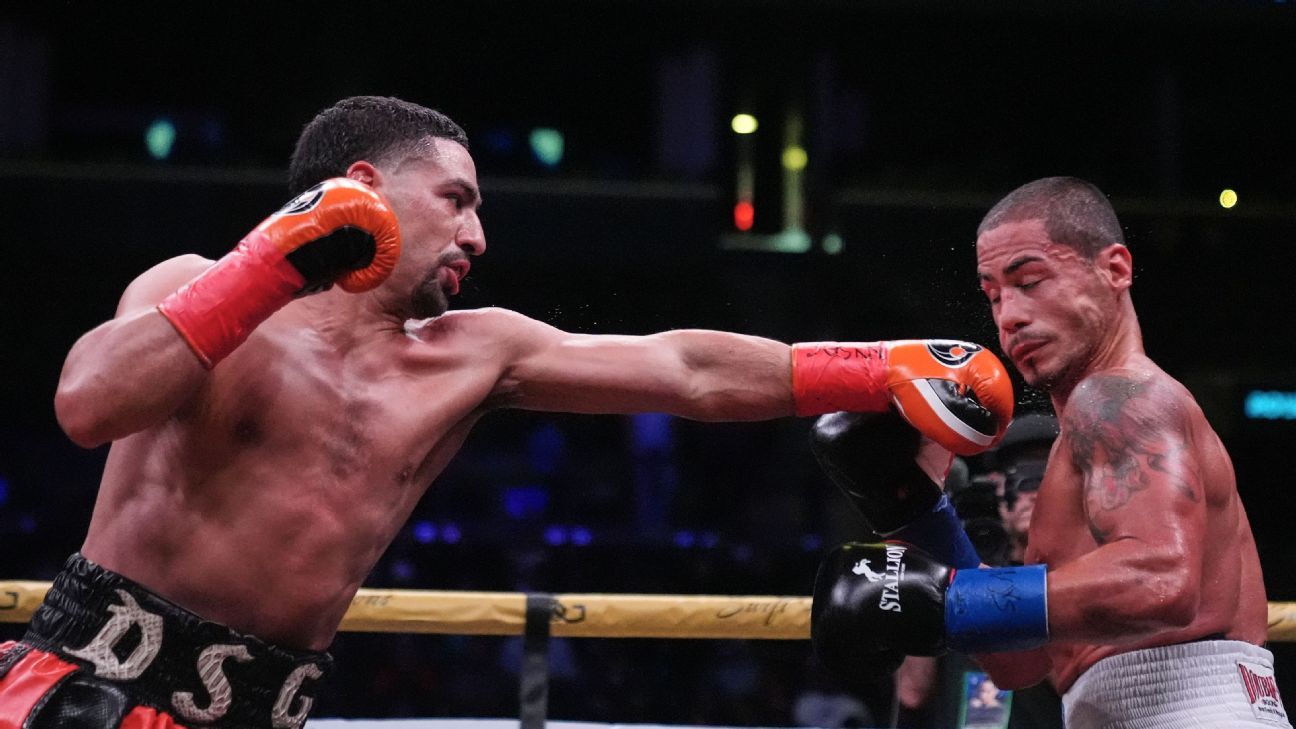
WASHINGTON — The House of Representatives passed the Muhammad Ali American Boxing Revival Act by voice vote on Tuesday, marking a significant step toward federal reforms aimed at modernizing professional boxing. The legislation, which cleared a 30-4 approval in the House Committee on Education and the Workforce in January, faced minimal opposition during debate, with only one member speaking against it. If it advances through the Senate and reaches President Donald Trump's desk, the bill could reshape the sport by introducing unified boxing organizations (UBOs) as an alternative compliance system, potentially boosting fighter protections and pay while drawing sharp criticism from industry veterans concerned about promoter dominance.
The bill builds on two existing federal laws: the Muhammad Ali Boxing Reform Act of 2000 and the Professional Boxing Safety Act of 1996. These statutes have been criticized for their vagueness and lack of uniform enforcement, leaving states like California, New York, and Texas to implement inconsistent regulations, especially regarding health and safety standards. According to ESPN, the Revival Act seeks to address these gaps by creating optional UBOs, which would function as one-stop entities handling promotion, rankings, sanctioning, and matchmaking — much like the Ultimate Fighting Championship (UFC) operates in mixed martial arts.
Proponents argue the reforms would enhance opportunities for boxers, including mandatory health insurance and minimum pay guarantees. Former heavyweight champion Mike Tyson, a close associate of UFC President Dana White, endorsed the bill in December, highlighting its potential to close loopholes that allow promoters to exert monopolistic control. "Some promoters have used loopholes in current law to regain monopolistic control over fighters' careers," Tyson said, emphasizing the need for better protections.
The California State Athletic Commission unanimously backed the legislation despite pushback from some fighters during public hearings. USA Boxing, the U.S. governing body for amateur boxing, initially supported it but shifted to a neutral stance last month. UFC's Dana White, who co-founded Zuffa Boxing with Saudi Arabian General Entertainment Authority Chairman Turki Alalshikh, has been a vocal advocate. In a January statement, White described Zuffa as "a work in progress" and expressed reluctance to collaborate with traditional sanctioning bodies like the World Boxing Council (WBC), World Boxing Organization (WBO), International Boxing Federation (IBF), and World Boxing Association (WBA).
Under the proposed law, UBOs would operate independently of these major sanctioning bodies, issuing their own rankings and belts without relying on external approvals. This setup, supporters say, could streamline the fragmented boxing landscape, where multiple organizations often dilute title prestige by awarding belts liberally. The bill mandates that sanctioning organizations or UBOs award only one championship title per weight class, with exceptions for interim titles due to injury, illness, refusal to defend, or travel issues.
Critics, however, warn that UBOs could erode key safeguards established in the 2000 Ali Act, which prohibits coercive contracts, mandates promoter financial disclosures, and separates promotion from management to prevent conflicts of interest. Pat English, an attorney who helped draft the 1996 and 2000 laws, testified before Congress in December that the Revival Act represents "a betrayal of the current act." He argued it fails to extend coercive-contract protections and ranking transparency to UBO fighters, and questioned the need for differing rules on promoter-manager firewalls.
"There is no justifiable reason for there to be different language regarding the firewall between promoters and managers established by the Muhammad Ali Act and the proposed revision," English wrote in his testimony.
Top Rank promoter Bob Arum echoed these concerns in a December letter to Congress, stating that the bill "strips away these and other protections for fighters set forth in the Ali Act for any fighter that signs with a newly created Unified Boxing Organization." Arum contended there is "no reason for a UBO to be exempt" from the same compliance standards as non-UBO entities, potentially allowing powerful promoters to consolidate control over rankings, matchmaking, and pay.
WBC President Mauricio Sulaiman issued an open letter in January accusing a "powerful entity worth billions of dollars" — widely interpreted as referring to the UFC or Zuffa — of seeking to dominate boxing for profit. "Their aim to alter the landscape of boxing in the pursuit of profit cannot be ignored, and it needs to be seen for what it is: an attempted takeover of the people's sport, which should not be owned or dominated by a single entity," Sulaiman wrote, without naming specific parties.
White countered these criticisms during a news conference ahead of Zuffa's inaugural event, insisting the original Ali Act remains unchanged. "They were very concerned about the Muhammad Ali Act, all these other things. None of that is going to change for them. Nothing is going to change. We're not changing one word of that, it's going to be intact," White said. He framed UBOs as expanding options for fighters, asking, "Why is that a bad thing? Why are more options a bad thing? It's not."
On fighter compensation, the bill introduces a $200 minimum per round, $2,000 payments for fighters inactive over six months (excluding those on injury insurance or declining bouts), and prohibits UBOs from charging sanctioning fees — a common grievance among stars like Terence Crawford and Shakur Stevenson. Supporters point to recent high earnings, such as Tyson Fury and Oleksandr Usyk each making over $100 million from their two fights, as evidence of a thriving top tier, but note that most boxers earn far less. Data from the California State Athletic Commission shows big shows with six-figure paydays, like $1 million for WBO junior lightweight champion Emmanuel Navarrete, contrasted by smaller events where no one exceeds $10,000.
Detractors reference the UFC's history of pay disputes, including a 2024 $375 million antitrust settlement. Matchroom CEO Eddie Hearn told Boxing Scene in July that the current Ali Act "is nearly always there to protect the fighter and make sure they are not taken advantage of," warning that changes could empower promoters unduly. A Guardian report on a Zuffa contract highlighted vague percentages for fighter identity use in promotions and restrictions on personal sponsorships, potentially costing boxers revenue from trunks, T-shirts, and hats.
Health provisions represent another pillar of the Revival Act, mandating annual physicals, brain, eye, and heart exams, blood work every six months, and brain MRIs at least every three years for all fighters, with more frequent testing after knockouts. Women must provide negative pregnancy tests within two weeks of fights. UBOs would cover costs for these exams, training insurance, rehab facilities, and anti-doping tests during preparation, though fighters remain responsible for insurance deductibles. Fighters over 40 in UBOs face additional yearly bloodwork, urine tests, and chest X-rays every six years.
Current requirements include $10,000 in health insurance and accidental death benefits per fight, prefight physicals, ringside physicians, and on-site ambulances, with variations by state. The Association for Boxing Commissions recommends $100,000 in benefits. The bill empowers the ABC and Association of Ringside Physicians to develop uniform standards, including medical suspension guidelines and best practices, and allows ABC certification of judges alongside states — a new federal role, as only states currently hold that authority.
Mike Mazzulli, former ABC president, told ESPN he pushed for the ABC's inclusion to prioritize fighter safety, training for officials, and minimum payments. "I wanted to make sure the ABC was listed in the federal law," Mazzulli said. "I wanted to make sure that fighter safety was paramount and I wanted to make sure that judges and referees were going to be trained." The legislation requires annual compliance reports from commissions and preserves state authority to impose stricter rules or approve fights.
As the bill moves to the Senate, its bipartisan support in the House — unusual in a polarized Congress — suggests a viable path forward, bolstered by White's ties to Trump. Yet opposition from promoters and sanctioning bodies could intensify. If enacted, the Revival Act might unify boxing akin to major league sports, but at the risk of concentrating power in fewer hands, echoing MMA's evolution under UFC dominance. For now, the sport's stakeholders await the upper chamber's verdict on these sweeping changes.