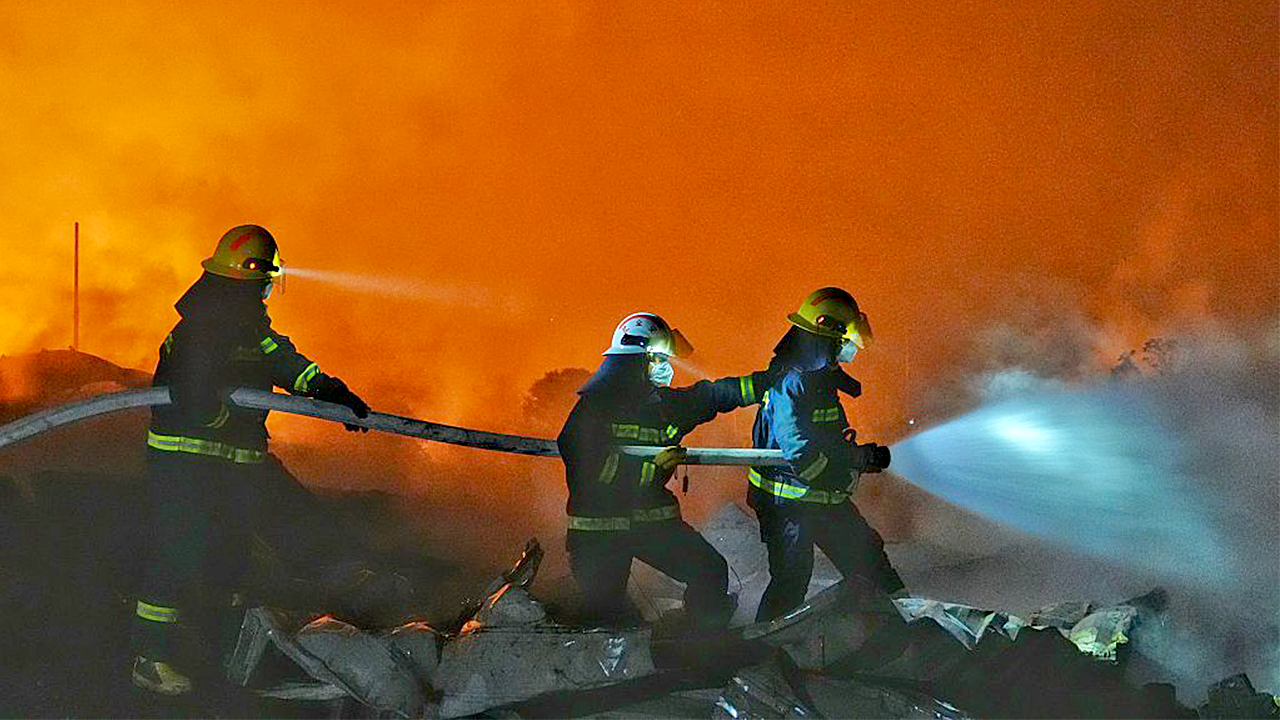
LIUYANG, China — A devastating explosion at a fireworks manufacturing plant in central China has claimed the lives of at least 21 people and injured 61 others, according to state media reports. The incident occurred on Monday afternoon at the Liuyang Huasheng Fireworks Manufacturing and Display Co., located in Liuyang, a city under the administration of Changsha in Hunan province. Liuyang is renowned as a major hub for fireworks production in the country, making the blast a stark reminder of the hazards inherent in the industry.
China's official news agency Xinhua was the first to report the explosion, detailing how the blast ripped through the facility, leaving behind a scene of destruction. Aerial footage broadcast by state broadcaster CCTV on Tuesday captured thick white smoke still rising from the site, with collapsed structures, scattered debris, and damaged buildings dotting the landscape. The images underscored the scale of the tragedy, as emergency responders continued their efforts amid ongoing risks.
Nearly 500 firefighters, rescuers, and medical personnel rushed to the scene to contain the fire and search for survivors, the South China Morning Post reported. Authorities evacuated residents from nearby danger zones due to the high risks posed by two black powder warehouses at the plant, which could have exacerbated the situation if further ignited. In a bid to prevent additional accidents during the rescue operations, teams employed spraying and humidification techniques to mitigate hazards, while robots were deployed to aid in navigating the unstable terrain.
Chinese President Xi Jinping responded swiftly to the disaster, issuing directives through Xinhua. He called for "all-out efforts" to save the injured victims and to search for those still unaccounted for. "He called on authorities to probe the cause and pursue serious accountability," Xinhua reported, emphasizing Xi's instructions for effective risk screening and hazard control in key industries, as well as strengthening public safety management overall.
Xi's intervention is not uncommon in the wake of major accidents in China. Reports indicate that the president frequently provides "important instructions" to local officials following deadly incidents and natural disasters, aiming to ensure a coordinated national response. In this case, his orders highlighted the government's commitment to addressing industrial safety lapses, particularly in sectors like fireworks manufacturing that have a history of volatile incidents.
The fireworks industry in Liuyang has long been a cornerstone of the local economy, with the city producing a significant portion of China's pyrotechnics, according to state media outlet China Daily. However, the sector's reliance on explosive materials has led to previous tragedies. Just last year, similar explosions at facilities in other provinces drew national attention, prompting calls for stricter regulations. This latest event in Hunan province adds to a pattern of safety concerns that have plagued the industry for years.
Authorities have launched a formal investigation into the cause of the Monday explosion, though details remain preliminary. Unspecified "control measures" have been imposed on those in charge of the company, signaling potential accountability at the managerial level. State media has not yet released findings, but the probe is expected to examine factors such as storage practices, equipment maintenance, and compliance with safety protocols.
Rescue operations persisted into Tuesday, with teams working methodically to comb through the rubble. The use of advanced tools like robots was praised in reports for allowing safer access to hard-to-reach areas, potentially saving lives among the responders. Medical personnel treated the 61 injured at local hospitals, though specifics on their conditions were not immediately available from official channels.
Local residents described hearing a massive boom that shook the ground, followed by plumes of smoke visible from miles away. While no direct witness quotes were provided in initial reports, the community's evacuation highlighted the immediate threat to surrounding areas. Liuyang's role as a fireworks epicenter means thousands depend on such plants for employment, raising questions about the economic fallout from the closure and investigation.
In a broader context, China's fireworks manufacturing sector faces ongoing scrutiny. The country is the world's largest producer of fireworks, exporting billions worth annually, especially ahead of festivals like the Lunar New Year. Yet, incidents like this one expose vulnerabilities, with past explosions often linked to improper handling of chemicals or substandard facilities. Government efforts to modernize safety standards have been underway, but enforcement varies by region.
International observers noted parallels to similar accidents abroad. For instance, crews recently responded to massive explosions at a fireworks facility in California, as reported in U.S. media, though that event caused no fatalities. Such comparisons underscore the global challenges of managing high-risk industries, where a single spark can lead to catastrophe.
As the death toll stands at least at 21, with possibilities of it rising as searches continue, the incident has sparked discussions on industrial oversight. President Xi's directive for "serious accountability" suggests that officials may face repercussions if negligence is uncovered. Families of the victims await answers, while the nation grapples with yet another blow to workplace safety.
Looking ahead, the investigation's outcome could influence reforms in Hunan's fireworks cluster. Enhanced monitoring of black powder storage and mandatory use of robotic aids in rescues might become standard. For now, the focus remains on supporting the injured and honoring the lost, as Liuyang begins to recover from the shockwaves of the blast.
The explosion serves as a poignant alert to the perils of pyrotechnics production, a tradition deeply embedded in Chinese culture but fraught with modern risks. With the Lunar New Year approaching, when demand for fireworks peaks, authorities will likely intensify inspections to prevent repeats. The story from Liuyang, though tragic, may catalyze changes that safeguard lives in the future.