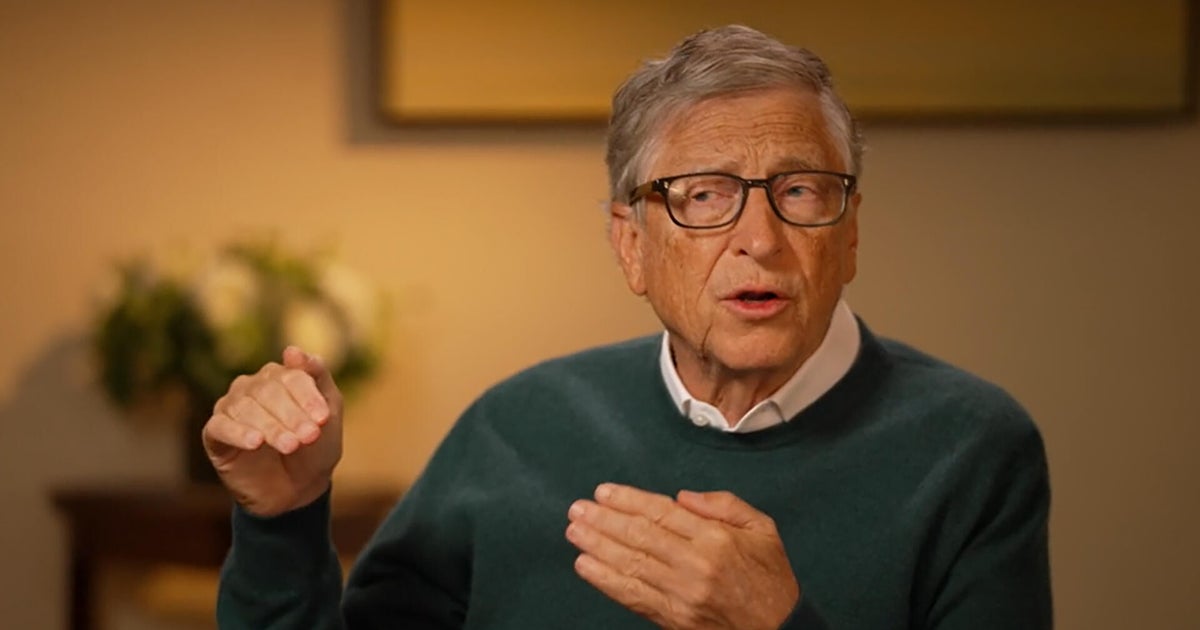
In a wide-ranging interview with CBS News, Microsoft co-founder and philanthropist Bill Gates opened up about his personal commitment to combating Alzheimer's disease, highlighting the urgent need for breakthroughs in research and treatment. The discussion, conducted by CBS News chief medical correspondent Dr. Jon LaPook, delved into Gates' substantial investments in the field and his optimism for future progress amid a growing global health crisis.
Gates, who has long channeled his wealth into global health initiatives through the Bill & Melinda Gates Foundation, revealed that he has personally invested more than $100 million into Alzheimer's research since 2017. According to the interview, this funding supports innovative diagnostic tools and collaborative efforts among scientists worldwide. "Alzheimer's has been a tough nut to crack," Gates said in the web exclusive video posted on cbsnews.com. "But I'm optimistic that we're on the cusp of some real advancements."
The conversation took place against the backdrop of alarming statistics: Alzheimer's affects nearly 6 million Americans, with projections estimating that number could triple by 2050, according to data from the Alzheimer's Association. Gates emphasized the personal toll, noting that the disease has touched his own family. "My father suffered from Alzheimer's, and it's heartbreaking to watch," he shared. "That's why I'm all in on this."
Dr. LaPook pressed Gates on the challenges facing researchers, including the high failure rate of clinical trials for potential treatments. Gates acknowledged the setbacks but pointed to promising developments in biomarkers and early detection. "We've seen over 99% of trials fail in the past," Gates explained. "But new approaches, like focusing on the brain's immune system, could change that." He referenced the Diagnostic Accelerator, a venture he helped launch in 2018 with a $30 million initial investment, aimed at developing blood tests for early diagnosis.
"Imagine if we could detect Alzheimer's years before symptoms appear, like we do with cholesterol for heart disease," Gates told LaPook. "That would be a game-changer for prevention and treatment."
Context for Gates' involvement dates back to his announcement in November 2017, when he pledged $50 million to the Dementia Discovery Fund and another $50 million to startup ventures focused on unconventional research paths. This move came at a time when federal funding for Alzheimer's research was increasing but still fell short of the billions needed, as reported by advocacy groups. Gates' efforts complement government initiatives, such as the National Institutes of Health's allocation of over $3 billion annually to dementia research in recent years.
In the interview, Gates discussed the role of technology in accelerating discoveries, drawing parallels to his Microsoft days. He highlighted how artificial intelligence and big data could analyze vast datasets from brain scans and genetic information. "Tech has revolutionized so many fields," Gates said. "Now it's time for it to tackle neurodegenerative diseases." Dr. LaPook noted that while tech giants like Google and Apple are also investing in health tech, Gates' focused approach on Alzheimer's sets him apart.
Not all perspectives align perfectly on the efficacy of such private investments. Some experts, according to reports from scientific journals, argue that philanthropy, while helpful, cannot replace sustained public funding. A 2022 study in the Journal of the American Medical Association suggested that private dollars often target high-risk, high-reward projects that may not yield immediate results. Gates countered this in the interview, stating, "Philanthropy can take risks that governments sometimes can't."
Gates also touched on global disparities in Alzheimer's care, pointing out that low- and middle-income countries, where the disease burden is expected to rise dramatically, lack resources for even basic diagnostics. Through his foundation, he has supported international collaborations, including partnerships with organizations in Europe and Asia. "This isn't just a rich-country problem," Gates emphasized. "We need solutions that work everywhere."
The interview included a forward-looking segment on potential treatments, with Gates expressing hope for drugs targeting amyloid plaques and tau proteins, hallmarks of the disease. He referenced recent FDA approvals, like the 2021 approval of aducanumab, a controversial drug that faced criticism for limited efficacy. "It's a step, but we need more," Gates said. "We're investing in next-generation therapies that could actually slow or stop progression."
Broader implications of Gates' advocacy extend to public awareness and policy. His high-profile involvement has helped elevate Alzheimer's on the global agenda, similar to his work on malaria and polio eradication. In 2023, the World Health Organization reported that dementia cases could reach 139 million by 2050, underscoring the need for action. Gates called for increased government investment, saying, "Private money is a catalyst, but we need public commitment to scale up."
Looking ahead, Gates outlined plans for further funding, including a potential expansion of the Diagnostic Accelerator. He mentioned ongoing trials and collaborations that could yield results within the next five to ten years. "I'm in this for the long haul," he told LaPook. "The science is advancing, and with the right support, we can beat this."
As the interview wrapped up, Dr. LaPook reflected on the human element, sharing stories from patients and families affected by Alzheimer's. Gates nodded in agreement, reiterating that personal stories drive his philanthropy. "It's about people, not just data," he said.
The discussion comes at a pivotal time, with aging populations in countries like the United States and Japan facing escalating care costs, estimated at $355 billion annually in the U.S. alone, according to the Alzheimer's Association. Gates' message was clear: concerted efforts now could prevent a future crisis.
In summary, while challenges remain, Gates' interview paints a picture of cautious optimism, blending personal passion with strategic investment to tackle one of medicine's greatest enigmas.