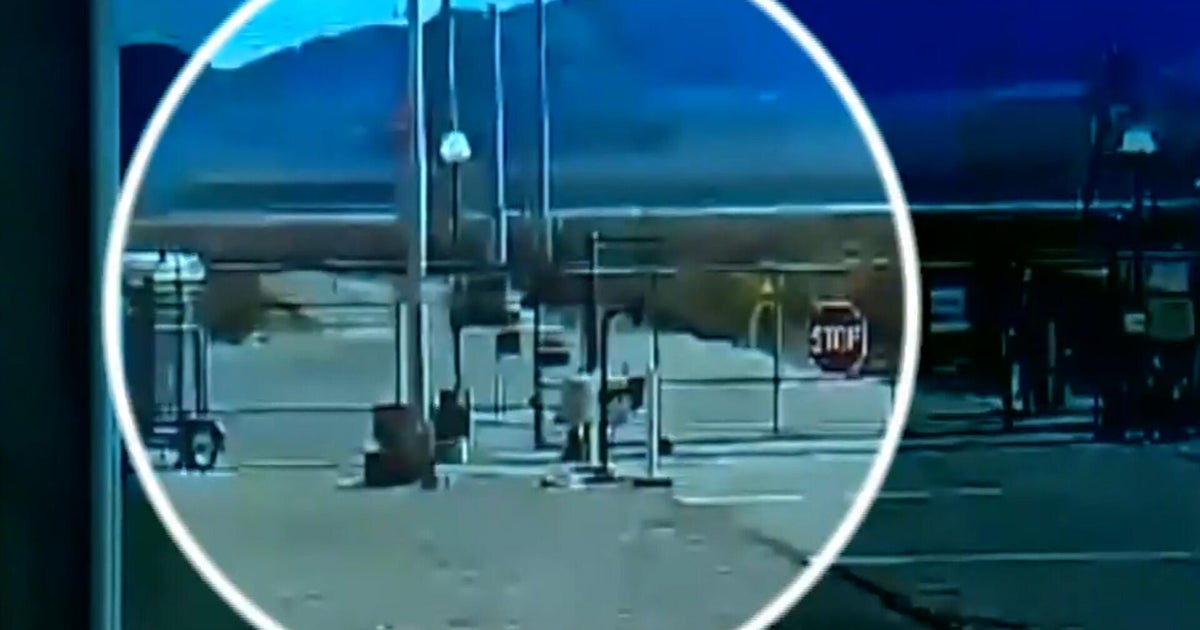
LAS VEGAS — Authorities are continuing their investigation into what they are describing as a possible terror incident near Las Vegas, where an armed driver allegedly attempted to ram his vehicle into a power substation. The event, which unfolded late last week, has raised concerns about vulnerabilities in critical infrastructure amid heightened national security alerts. According to reports from CBS News, the driver was armed and acted in a manner that prompted a swift response from local law enforcement, though details on the suspect's identity and motives remain under wraps as the probe deepens.
The incident occurred in the outskirts of Las Vegas, a city already on edge due to its history of high-profile attacks, including the 2017 mass shooting at the Route 91 Harvest music festival that claimed 60 lives. Officials with the Las Vegas Metropolitan Police Department have not released a timeline for the event, but sources indicate it took place during the early morning hours, when the substation was lightly guarded. The driver's attempt to breach the facility was thwarted when security personnel intervened, leading to the suspect's apprehension without any reported injuries or damage to the substation itself.
"This was a targeted act that could have had serious consequences for the region's power supply," said a spokesperson for the Nevada Public Utilities Commission in a statement released Monday. The substation in question is part of the broader grid serving Clark County, which powers not only Las Vegas but also surrounding resort communities reliant on uninterrupted electricity for tourism-driven operations. While no outages were reported, the close call has prompted reviews of security protocols at similar sites across the state.
Investigators are treating the case as a potential act of domestic terrorism, drawing parallels to other recent incidents where extremists have targeted energy infrastructure. In 2022, for instance, the FBI foiled a plot by a militia group in the Pacific Northwest to attack a hydroelectric dam, highlighting a growing trend of ideologically motivated assaults on utilities. According to federal law enforcement briefings obtained by CBS News, the Las Vegas driver was found with firearms and what appeared to be improvised explosive materials in his vehicle, though these details are unconfirmed pending forensic analysis.
Local residents in the affected area expressed shock and unease over the weekend. "We heard sirens and saw lights flashing, but no one knew what was happening at first," recounted Maria Gonzalez, a longtime Henderson resident who lives near the substation. Her account, shared in interviews with local media, underscores the abrupt nature of the event in an otherwise quiet suburban neighborhood. Henderson, a growing city of over 300,000 people just southeast of Las Vegas, has seen increased development but limited public awareness of nearby critical infrastructure.
The FBI has joined the investigation at the request of local authorities, focusing on the driver's background and possible connections to extremist networks. "We are exploring all angles, including online radicalization and any ties to broader threats," an FBI spokesperson told reporters during a press briefing Tuesday. This multi-agency approach is standard for incidents with potential terror implications, ensuring coordination between state, local, and federal resources. No group has claimed responsibility, and officials have urged the public to remain vigilant without succumbing to panic.
Contextually, the Las Vegas area has bolstered its security measures since the 2017 shooting, which exposed gaps in event security and emergency response. The power substation incident adds another layer to these concerns, as utilities nationwide face rising threats from both physical attacks and cyberattacks. A 2023 Government Accountability Office report warned that aging infrastructure leaves many substations susceptible to sabotage, with physical barriers often inadequate against determined actors. In Nevada, where tourism generates billions annually, any disruption to power could cascade into economic losses far beyond the immediate site.
Experts in critical infrastructure protection offered measured assessments of the event's significance. "While this appears to be an isolated incident, it serves as a reminder that even small-scale attempts can test response capabilities," noted Dr. Elena Ramirez, a security analyst at the University of Nevada, Las Vegas. Ramirez, who has studied terror threats to utilities, emphasized in a recent op-ed that proactive measures like drone surveillance and AI monitoring could mitigate future risks. Her comments align with broader calls from industry groups for increased federal funding to harden such facilities.
From the utility company's perspective, Southern Nevada's primary provider, NV Energy, issued a statement affirming that operations remain normal. "Our team acted decisively to secure the site, and we are cooperating fully with investigators," the company said. No specifics on enhanced security were disclosed, citing ongoing sensitivities. Meanwhile, environmental advocates have raised questions about the substation's location near residential areas, arguing that such placements exacerbate community risks during potential breaches.
Political figures weighed in cautiously, with Nevada Governor Joe Lombardo calling for a thorough review. "Protecting our infrastructure is paramount to public safety and economic stability," Lombardo said in a tweet posted Wednesday. His administration has prioritized counterterrorism initiatives since taking office, including partnerships with federal agencies to train first responders. Critics, however, point to underfunding in rural security as a persistent issue, potentially leaving substations like this one exposed.
As the investigation progresses, questions linger about the driver's motivations. Was this a lone-wolf act driven by anti-government sentiments, or part of a coordinated effort? Sources close to the probe, speaking on condition of anonymity, suggest the suspect's vehicle contained manifestos railing against corporate power structures, though these claims are preliminary. Digital forensics teams are sifting through the man's online activity, a process that could take weeks.
The broader implications extend to national energy security. With the U.S. grid under strain from climate events and geopolitical tensions, incidents like this amplify calls for resilience investments. The Department of Homeland Security has issued alerts to utilities nationwide, advising heightened vigilance. In Las Vegas, where the Strip's neon lights symbolize American excess, the specter of disruption hits close to home for a city that thrives on reliability.
Community leaders are organizing town halls to address resident concerns, with the first scheduled for Thursday evening in Henderson. "Transparency is key to rebuilding trust," said Councilman Ramon Perez, who represents the district. These forums aim to demystify infrastructure security while fostering dialogue on prevention. Meanwhile, tourism officials report no immediate impact on visitor numbers, but long-term perceptions could shift if similar threats persist.
Looking ahead, the outcome of this investigation may influence policy debates in Washington. Bipartisan legislation to protect critical infrastructure has stalled in Congress, with proponents arguing that events like the Las Vegas incident underscore the urgency. As details emerge, the public awaits clarity on whether this was a one-off anomaly or a harbinger of escalating dangers. For now, the focus remains on containment and learning from the near-miss to safeguard the future.
In the end, the Las Vegas power substation scare serves as a stark reminder of the invisible threats lurking in everyday landscapes. With the probe ongoing, authorities pledge to share updates as they become available, balancing the need for security with the public's right to know.