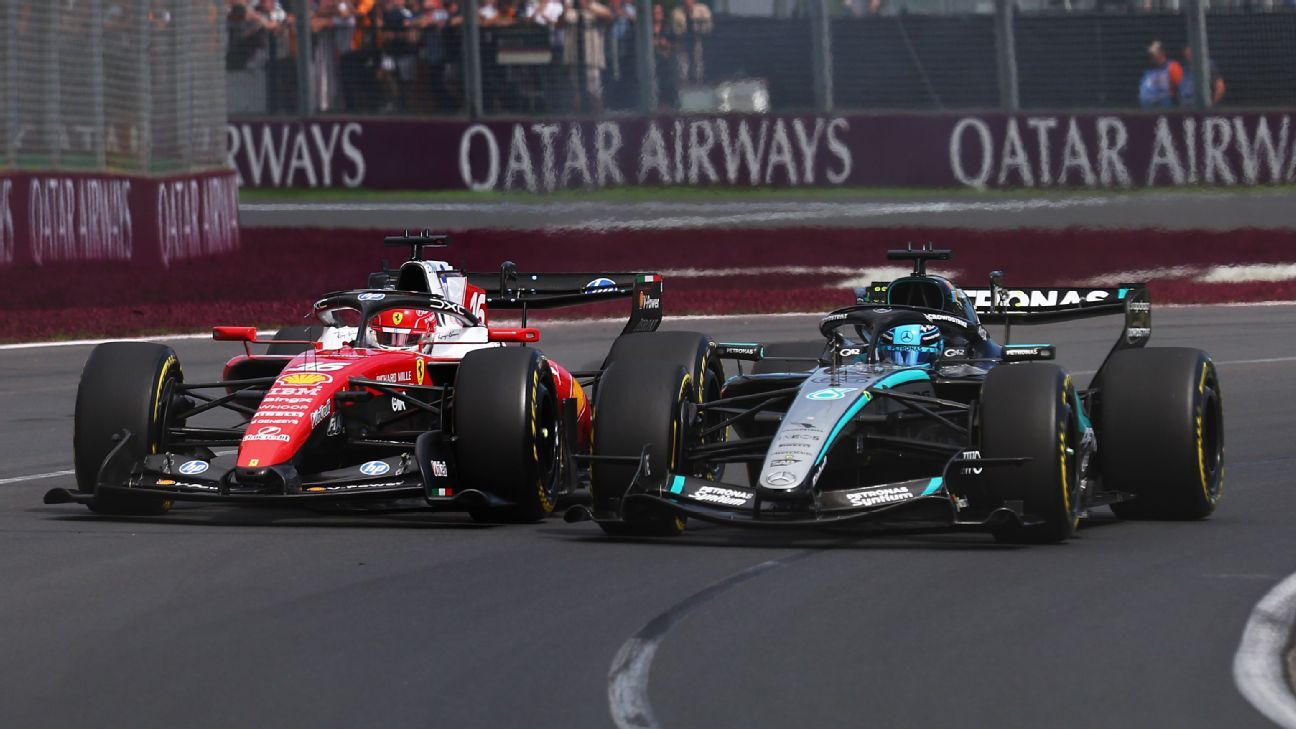
MELBOURNE, Australia — The 2026 Formula 1 season kicked off with a mix of thrilling action and sharp criticism at the Australian Grand Prix, where new regulations introduced a controversial 'boost mode' that some drivers likened to video game racing. George Russell of Mercedes secured victory in the season opener at Albert Park on Sunday, leading a one-two finish for his team with teammate Kimi Antonelli in second place. The race featured a dramatic early duel between Russell and Ferrari's Charles Leclerc, who traded the lead seven times in the first 12 laps, delighting the home crowd and providing a highlight amid broader discontent with the sport's redesigned cars and power units.
The new era for F1 includes cars with revamped aerodynamics and power units that split energy 50-50 between combustion and electrical sources, a shift aimed at enhancing sustainability and on-track excitement. Organizers hoped these changes would lead to more overtakes, and initial data supported that: Sunday's race saw 120 passes, more than double the 45 recorded in the previous year's Australian opener. F1 officials quickly highlighted this statistic as evidence of the rules' success, particularly crediting the 'overtake and boost mode' buttons that drivers can activate strategically during races, unlike the position-dependent drag reduction system of past seasons.
Early in the race, Russell and Leclerc's battle exemplified the potential of these innovations. Starting from the front row after Mercedes locked out pole position in qualifying, the pair executed superb overtakes at various points around the 5.278-kilometer Albert Park circuit. A virtual safety car on lap 13 prompted Mercedes to pit Russell, while Ferrari opted to keep Leclerc out, allowing the British driver to pull away for the win. Leclerc later reflected on the duel, saying, "I just think that it will definitely change the way we go about racing and overtaking. Before, it was more about who is the bravest at braking the latest. Maybe now there's a bit more of a strategic mind behind every move you make because every boost button activation, you know you're going to pay the price big time after that."
Russell described the back-and-forth as a "yo-yo effect," emphasizing how the boost modes allowed drivers to surge past each other repeatedly. During one radio exchange, Leclerc quipped, "This is like the mushroom in Mario Kart," referencing the power-up that grants temporary speed boosts in the popular video game. Haas driver Oliver Bearman echoed this sentiment post-race, noting, "Using the boost button, I felt like I was a bit in a video game." These comments captured the buzz around the new system, which permits drivers to deploy electrical energy boosts at will to facilitate passing.
However, the excitement at the front masked deeper frustrations echoing from the paddock since preseason testing. Qualifying on Saturday had drawn scathing reviews from top drivers, including three former world champions: Max Verstappen of Red Bull, Lewis Hamilton now with Ferrari, and Lando Norris of McLaren. Norris, who finished outside the points, had called the new cars "the worst" compared to previous generations, citing reduced drivability. The mood was somber after Mercedes' dominance in qualifying, with many pilots complaining about the need to conserve energy during laps, making sessions feel underwhelming on the flowing Albert Park layout.
Sunday's race did little to quell the negativity for those not in the lead pack. Reigning champion Norris was particularly vocal about the boost modes, labeling them "way too much" and "very artificial." He warned of potential dangers, stating, "It's chaos, you're going to have a big accident. We're the ones just waiting for something to happen and go quite horribly wrong, and it's not a nice position to be in, but there's nothing we can really do about that now." Norris added that the system's unpredictability could see drivers overtaken by multiple cars at once or unable to respond, depending on power unit decisions.
Haas driver Esteban Ocon shared similar concerns, describing his on-track battles as "very painful." He recounted being overtaken repeatedly after using his boost, saying, "Once you use the boost button, and you have not managed to overtake, or even if you overtake, you are just vulnerable again on the next straight. The other guy is going to overtake again, which happened with Pierre [Gasly] three times. It happened with [Gabriel Bortoleto] as well when I was fighting him two times. I just overtook and got overtaken again." Ocon's experiences highlighted how the yo-yo effect, praised by leaders like Russell and Leclerc, felt exploitative lower in the field.
Alpine's Pierre Gasly offered further insight into the mental demands of the new formula. He lamented that racing now involved far more than pure driving skill, listing factors like battery management and energy deployment. "There's just way more than just driving going on," Gasly said. "It's the battery. The energy. The difference between the [power units], with deploying more into Turn 1, less Turn 3, more Turn 6, the lift-off you've got to do to regain, etc. We're taking quite a bit away from the pure driving." Gasly noted that approaches to corners like Turn 1, Turn 3, and Turn 6 required precise energy adjustments, shifting focus from braking prowess to tactical planning.
The divide in opinions appeared tied to competitive position. While frontrunners framed the boosts as strategic enhancements, midfield and backmarker drivers saw them as artificial aids that undermined natural racing. F1 has not disclosed how many of the 120 overtakes relied on boost activations, but given the rules' emphasis on electrical deployment, experts assume most did. This raises questions about whether the system supplants traditional wheel-to-wheel battles, once mythologized through figures like Ayrton Senna, who excelled in late-braking maneuvers rather than energy management.
Verstappen, a four-time champion known for aggressive overtaking, expressed exasperation with the direction of the sport. He flipped his earlier comparison of the rules to an amplified version of the all-electric Formula E series, saying, "I love racing, but we can only take so much, right? I think they are willing to listen, FIA and F1, I just hope of course that there is some action." The Dutch driver stressed collective concern, adding, "I mean, it's not that I'm the only one saying it, I think a lot are saying it, if it's drivers, fans, we just want the best for the sport. It's not like we are critical just to be critical, we are critical for a reason; we want it to be F1, proper F1 on steroids. Today, that of course was again not the case."
Preseason had been marred by similar backlash, with drivers testing the new cars at circuits like Bahrain and Barcelona, where energy conservation issues first surfaced. Ferrari's strong starts, as seen with Leclerc surging into Turn 1 ahead of the pack, offered a silver lining. Team principal Fred Vasseur hinted post-race that such launches could become a staple, potentially aiding Ferrari's bid to end a 17-year drivers' title drought since Michael Schumacher's last win in 2004.
Mercedes' dominance, with Russell's win marking his second career victory after his first in Austria in 2022, underscored the team's preseason favoritism. Antonelli, the 19-year-old Italian in his rookie season, impressed with second place, benefiting from the team's strategy during the safety car period. The result propelled Mercedes to the top of the constructors' standings after one race, though the field remains tight with 10 teams and 20 drivers vying over the 24-race calendar.
As F1 heads to the Japanese Grand Prix at Suzuka in two weeks, the sport faces pressure to address driver feedback. The International Automobile Federation (FIA) and Formula One Management have indicated openness to tweaks, but major overhauls seem unlikely mid-season. Fans and analysts will watch if adaptation leads to more balanced racing or if the 'Mario Kart' comparisons persist, potentially alienating purists who value unassisted skill.
The Australian Grand Prix, attended by over 400,000 spectators across the weekend, provided a Jekyll-and-Hyde debut for 2026: spectacular duels up front contrasting with paddock gloom. Whether the new rules evolve into a net positive or require revision remains to be seen, but the opening round made clear that F1's push for innovation has sparked as much debate as excitement.