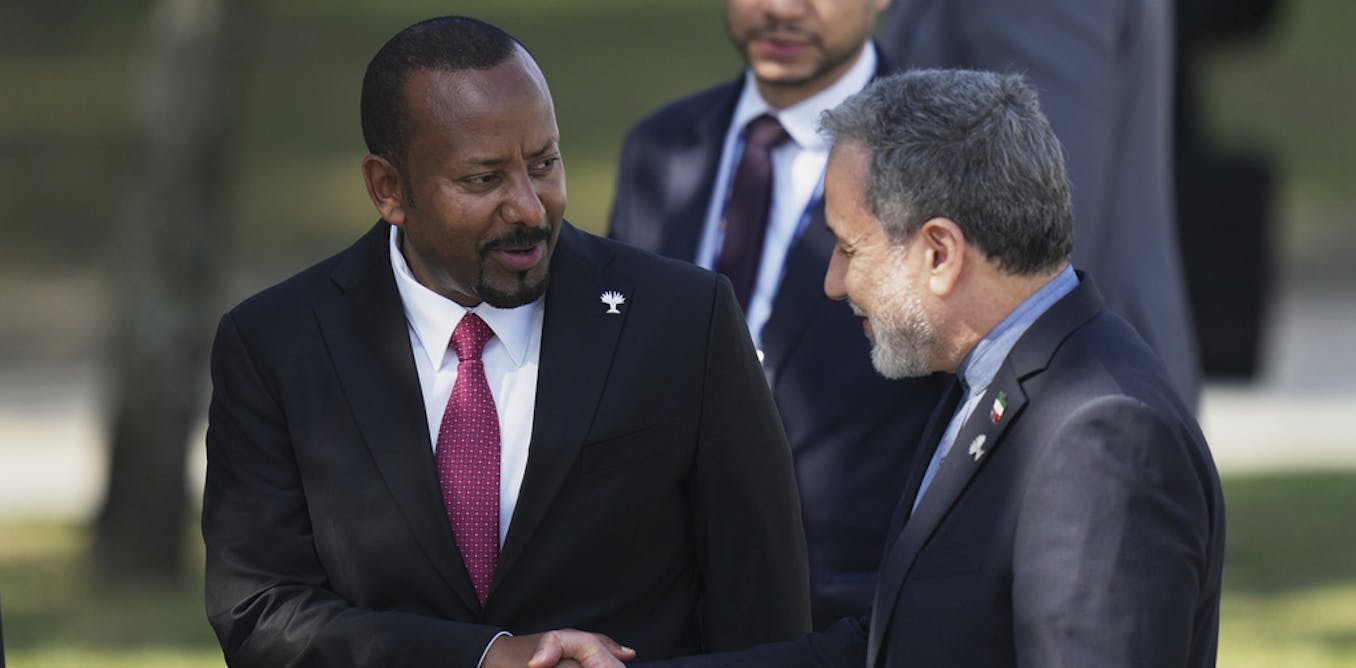
In a series of diplomatic maneuvers amid mounting international isolation, Iran has ramped up its engagement with African nations, seeking partnerships in security, resources and trade to navigate a cascade of crises at home and abroad. On November 12, 2025, Burkina Faso's security minister traveled to Tehran for high-level discussions that yielded significant outcomes: the West African country reopened its Iranian embassy, signed new agreements on security cooperation, and explored ways to bolster ties in agriculture and industry. This visit, far from a isolated event, underscores a broader strategy by Tehran to deepen connections across the continent, particularly with nations facing their own security challenges and shifting away from Western influence.
The backdrop to Iran's African outreach is a tumultuous period marked by regional conflicts and economic pressures. Since the war in Gaza erupted in late 2023, triggered by the Tehran-backed Hamas group's attack on Israel, Iran has grappled with the unraveling of its 'axis of resistance' network of proxy groups. Israel's military campaigns devastated Hamas in Gaza and Hezbollah in Lebanon, while the fall of Bashar al-Assad's regime in Syria in late 2024 further weakened Tehran's regional footing. These setbacks culminated in a 12-day war with Israel in June 2025, during which the United States intervened, leading to the European Union triggering U.N. 'snapback' sanctions—reviving penalties originally lifted under the 2015 nuclear deal.
Domestically, Iran faces an acute environmental crisis, with severe drought plaguing Tehran and exacerbating economic woes. According to Eric Lob, an associate professor of politics and international relations at Florida International University and a non-resident scholar at the Carnegie Endowment for International Peace, these pressures have compelled Iranian officials to 'advance geostrategic interests elsewhere,' with Africa emerging as a key focus. Lob notes that this outreach offers Tehran opportunities to secure critical minerals, expand weapons markets and bypass sanctions through partnerships with 'historically dependable and strategically significant' African allies.
West Africa and the Sahel region have become prime targets for Iran's diplomatic push, where countries like Burkina Faso, Mali and Niger have undergone military coups since the early 2020s, distancing themselves from Western powers while battling insurgents, militias and jihadist groups. Similar to Ethiopia's earlier overtures, these nations have turned to Iran for security support, including arms, drones and equipment. For Iran, the benefits extend to accessing vital resources: gold from Burkina Faso and Mali, and uranium from Niger. Lob highlights that, depending on the damage to Iran's nuclear facilities from the June 2025 war, uranium from Niger could prove 'particularly critical' if Tehran seeks to rebuild or advance its program.
Diplomatic exchanges have accelerated. In May 2024, the foreign ministers of Iran and Mali met, followed by another session in October 2025 to reinforce bilateral and multilateral relations. They agreed to establish a joint economic commission and pledged mutual support in forums like the United Nations and the Non-Aligned Movement. Meanwhile, in April and May 2025, Iran and Niger formalized economic and security pacts, building on a prior deal where Tehran purchased 300 tons of uranium for $56 million. From February to October 2025, Iran held bilateral meetings with Sierra Leone to deepen ties, aiming for uranium access and backing in international bodies such as the U.N. and the Organization of Islamic Cooperation.
However, not all efforts have been seamless. Sierra Leone, a non-permanent member of the U.N. Security Council, voted against lifting sanctions on Iran in September 2025, reportedly influenced by its reliance on British aid. This decision illustrates the tensions African nations navigate between emerging partners like Iran and traditional Western donors.
Beyond West Africa, Iran's engagements span the continent, targeting areas of strategic value. In October and November 2025, Tehran collaborated with Malawi on sanction circumvention and aircraft imports. In August 2025, Iran sought to fortify security links with South Africa, its largest African trading partner. During this period, South African army chief Gen. Rudzani Maphwanya issued statements supporting Iran and condemning Israel, sparking controversy. Lob reports that these remarks highlighted the potential for aligned positions but also drew domestic backlash in South Africa.
Further south, Iran held meetings and inked agreements with Zimbabwe between April and October 2025, covering economy, environment and medical tourism. At the Non-Aligned Movement's foreign ministers' meeting in Kampala in October 2025, Iranian Foreign Minister Abbas Araghchi met Ugandan President Yoweri Museveni. Araghchi thanked Museveni for Uganda's condemnation of the U.S. and Israel during the 12-day war, during which Uganda evacuated 41 students from Iran. He also expressed Tehran's desire to enhance cooperation in agriculture, economy and commerce. Uganda's reserves of uranium and cobalt—essential for lithium batteries and industrial alloys—make it a prized partner for Iran.
These initiatives reflect Iran's pragmatic approach to diversification, but they are not without hurdles. Trade competition from Middle Eastern rivals, particularly the United Arab Emirates, poses a significant challenge. As of 2023, the UAE was a top export partner for Burkina Faso, Mali, Niger, Uganda and Zimbabwe, and a leading import source for Malawi, Niger, Sierra Leone, Uganda and Zimbabwe. Lob warns that, as seen in the Horn of Africa in 2016, the UAE and Saudi Arabia could exert pressure on African countries to curtail ties with Iran.
The reimposition of U.N. snapback sanctions adds another layer of complexity. While African nations continued engaging with Iran even after the U.S. withdrew from the nuclear deal in 2018 and reimposed sanctions, the current global economic squeeze might give them pause. Officials in Tehran, however, appear undeterred, viewing these partnerships as essential lifelines.
The transactional nature of Iran's diplomacy could foster distrust among partners. For instance, in November 2025, Iran reportedly supplied drones to Eritrea amid escalating tensions with Ethiopia—a move that risks straining Tehran's relations with Addis Ababa and entangling it in yet another regional conflict. Lob observes that such actions underscore the delicate balance Iran must maintain.
Broader implications of Iran's African pivot are unfolding. For the targeted countries, these ties offer alternatives to Western-dominated security and economic frameworks, potentially reshaping alliances in a multipolar world. Yet, the sustainability of these relationships remains uncertain, hinging on whether mutual benefits outweigh external pressures and internal rivalries.
Looking ahead, experts like Lob suggest that time will reveal if opportunities eclipse constraints for Iran. As Tehran officials manage domestic droughts, sanction bites and proxy losses, Africa's strategic depth provides a rare avenue for influence and resources. Whether this outreach yields lasting gains or falters under geopolitical headwinds will likely define Iran's foreign policy trajectory in the coming years.
In the Sahel, where jihadist threats persist, partnerships with Iran could bolster local militaries with affordable drones and training, but they also invite scrutiny from global watchdogs monitoring arms flows. Similarly, resource deals like the Niger uranium purchase raise questions about proliferation risks, though both sides frame them as legitimate economic exchanges.
Ultimately, Iran's intensified African diplomacy signals a resilient, if beleaguered, pursuit of autonomy. With few alternatives amid isolation, Tehran is betting on the continent's volatility and resource wealth to carve out breathing room on the world stage.