As the 2026 Major League Baseball season unfolds into its second month, fantasy baseball managers are already rethinking their draft strategies based on unexpected early performances from several players. What seemed like solid preparations in March are now being tested by on-field developments that no amount of analytics could fully predict. According to ESPN fantasy analyst Tristan H. Cockcroft, the opening weeks have revealed hidden gems and potential pitfalls that could reshape leagues across the country.
One of the biggest surprises has come from Los Angeles Dodgers outfielder Andy Pages, who is emerging as a cornerstone for the team amid a star-studded lineup. Pages, a 25-year-old who struggled with a .078 batting average in the 2025 postseason going 4-for-51, spent extensive time in the Dodgers' hitting lab during spring training. The results have been remarkable: over the first two weeks, he leads the majors with a .474 batting average, swinging at fewer non-strikes with a chase rate dropping by more than 4 percent and generating hard contact 54.8 percent of the time.
"Pages is the player who is quietly turning into a future franchise cornerstone for the juggernaut Los Angeles Dodgers," Cockcroft wrote in his analysis. Despite being overlooked on draft day due to his low spot in the batting order behind headliners like Shohei Ohtani and Freddie Freeman, Pages is now delivering top-tier fantasy production, making him a must-add in waiver wires or trade discussions.
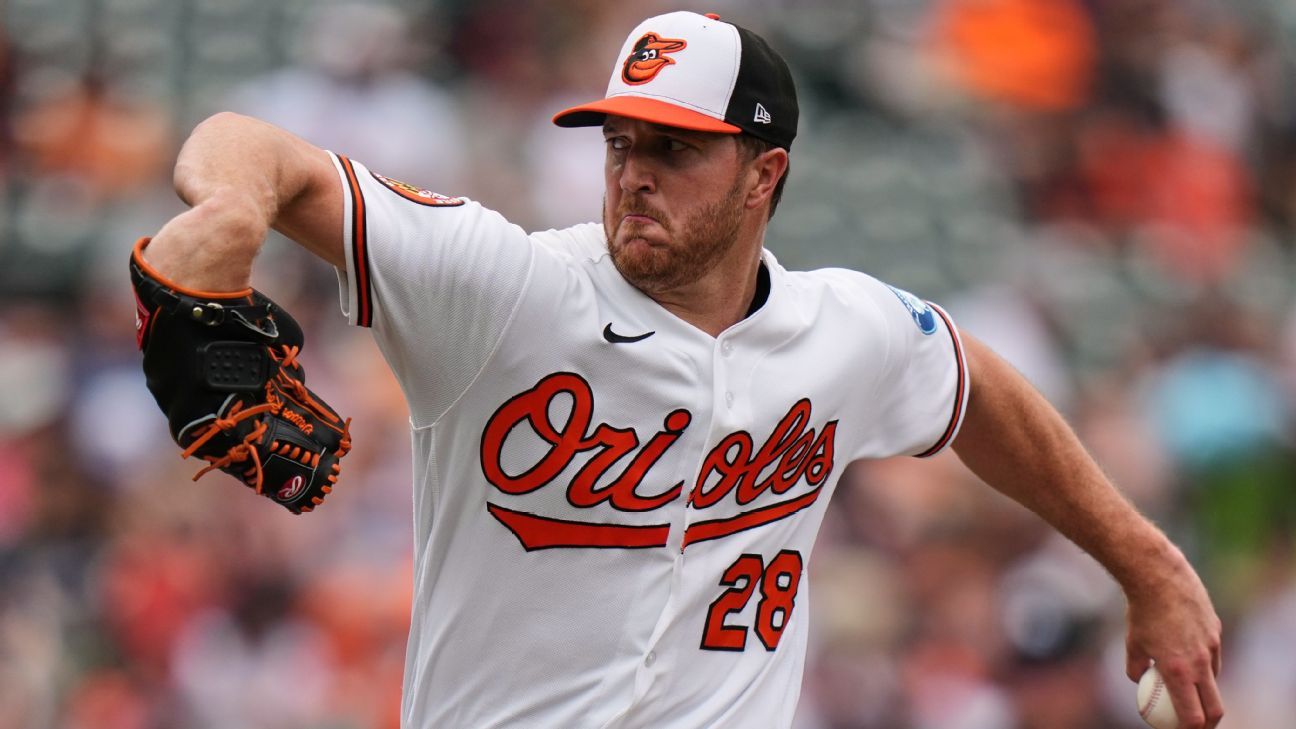
Shifting to the pitching mound, Baltimore Orioles left-hander Trevor Rogers has defied preseason bust predictions with a commanding start. Rogers, who began his career rejuvenation as an emergency starter last June, has allowed no more than two runs in 18 of his 20 starts since then. Entering the season, skeptics pointed to a 1.5-run gap between his ERA and expected ERA from 2025, landing him on many bust lists.
However, Rogers has looked sharp since spring training, precisely locating his four-seam fastball and changeup while inducing grounders and weak contact. "Some pitchers possess good enough command that they can regularly outpitch their peripherals, so who's to say Rogers can't again post an ERA more than a run below what's expected?" Cockcroft noted, suggesting Rogers may be regression-proof for fantasy owners who took a chance on him.
In Chicago, Cubs infielder Nico Hoerner is showing signs of elevating his game beyond his recent $141 million contract extension. Hoerner, who scored 400 fantasy points last season as a top-50 player, has adjusted his approach at the plate: his chase rate on non-strikes has fallen to 26.6 percent from 32.5 percent in 2025, he's targeting inner-third pitches more, and his ground-ball rate has dropped to 25.0 percent from 44.9 percent, adding lift to his swings.
These changes, though based on a small sample, could boost his on-base percentage, stolen base opportunities, and doubles total—key elements in fantasy points leagues. Cockcroft highlighted that a season with 35 doubles, 65 walks, and 35 steals could propel Hoerner to elite 500-point status, making him a valuable asset for managers seeking well-rounded production.
On the West Coast, Seattle Mariners right-hander Emerson Hancock is closing the talent gap with the team's acclaimed young starters. From 2023 to 2025, Mariners pitchers like George Kirby and Bryce Miller combined for significant WAR contributions, while Hancock posted a 4.81 ERA and the sixth-worst strikeout rate at 15.6 percent over 160 innings. But filling in for Miller recently, Hancock has struck out 14 of 43 batters faced, allowing just one run in 12⅔ innings.
The key to his turnaround lies in a revamped repertoire, emphasizing a higher-spin fastball and sweeper while shelving his unimpressive changeup. "This version of Hancock might deliver seasonal value somewhere in between what we've come to expect from George Kirby and Miller," Cockcroft observed, indicating he could be a deeper league stash for fantasy teams needing rotation help.
Trouble is brewing in Boston's outfield, where a crowded roster is threatening playing time for key contributors. Jarren Duran, the Red Sox's WAR leader with 13.7 over the past two seasons, has already sat out more games against right-handed pitchers in early 2026 than he did all of last year—his lone absence in 2025 came the day after clinching a playoff spot. Duran's fantasy value has historically stemmed from high volume, leading the league in plate appearances in 2024 and 2025.
The Red Sox's inability to trade outfield depth to bolster other areas is creating headaches. This impacts not just Duran but also Roman Anthony, Wilyer Abreu, and Ceddanne Rafaela. "Even if he's part of a four-man rotation at the three outfield spots and DH—and remember that Triston Casas could return to steal DH time at some point this summer—that's an obstacle to a bounce-back year for him," Cockcroft warned, noting Duran might now sit against all lefty starters, eroding his reliability.
Meanwhile, the Cleveland Guardians' rotation depth is proving more solid than anticipated, thanks to emerging talents like Joey Cantillo, Slade Cecconi, and Parker Messick. Often dismissed as dart throws, these pitchers are showing staying power. Messick boasts good control and a potentially elite changeup; Cecconi's increased use of cutters and sweepers could enhance his swing-and-miss rate; and Cantillo's stuff ranks as the best among them, pending control improvements.
"Because of Joey Cantillo, Slade Cecconi and Parker Messick, the Guardians might have themselves baseball's most under-the-radar-great rotation," Cockcroft stated. He recommends stashing these arms in fantasy leagues until they fully ignite, as they appear capable of consistent contributions beyond matchup hunting.
These early trends underscore the fluid nature of baseball, where spring insights—like Carlos Estevez's declining velocity, Ben Rice's underrated hitting prowess, or Yordan Alvarez's health allowing outfield play—only scratch the surface. Daily changes in mechanics, roles, and injuries mean no draft prep is foolproof, but the season's first weeks offer a chance to adapt through pickups and trades.
For fantasy managers, the implications are clear: overlooked players like Pages and Rogers can become league-winners, while crowded lineups in Boston pose risks to high-volume stars. As the season progresses, keeping an eye on these developments will be crucial. Cockcroft's takeaways serve as a reminder that while analytics provide a foundation, the real story unfolds on the field, potentially altering fantasy landscapes through June and beyond.
With MLB's treasure trove of data always expanding, teams and owners alike must stay vigilant. The Guardians' rotation depth, for instance, could solidify Cleveland's contention in the AL Central, while Pages' hot start bolsters the Dodgers' already formidable offense. As more games are played, these narratives will evolve, offering fantasy players opportunities to refine their rosters for a successful summer.