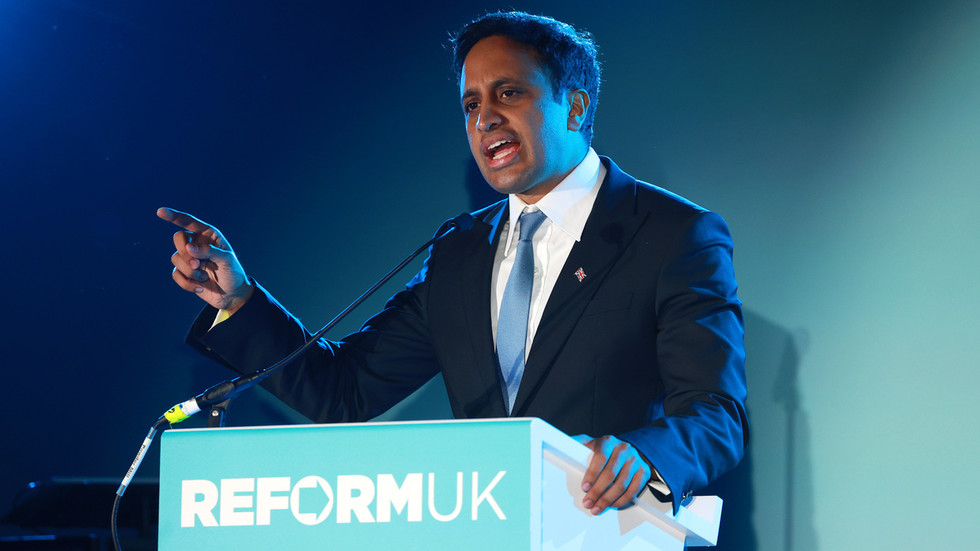
LONDON — Reform UK, the right-wing party led by Nigel Farage, has proposed a sweeping visa ban targeting nationals from countries that seek reparations from Britain for its historical involvement in the transatlantic slave trade. The party's home affairs spokesman, Zia Yusuf, announced the policy in an interview with The Telegraph, calling demands for compensation "insulting" and vowing to halt all new visas — including those for work, study, family, and visitors — to citizens of any nation that formally pursues such claims.
Yusuf's remarks come amid heightened international discussions on slavery reparations, following a United Nations General Assembly resolution adopted last month. The measure, proposed by Ghana and declaring the transatlantic slave trade "the gravest crime against humanity," passed with 123 votes in favor, including support from Russia and China. The United States, Israel, and Argentina voted against it, while the United Kingdom was among 52 nations that abstained. The resolution urged countries to consider apologies and contributions to a reparations fund, reigniting debates over historical accountability.
Reform UK has branded its initiative the 'Reparations Lock,' which would also end foreign aid to offending countries. According to Yusuf, over the past two decades, successive Conservative and Labour governments have issued 3.8 million visas to people from nations demanding reparations and provided £6.6 billion ($8.7 billion) in aid to those same countries. "The United Kingdom is not an ATM for ethnic grievances of the past, and we will no longer tolerate being ridiculed on the world stage," Yusuf told The Telegraph. He emphasized Britain's role in abolishing slavery, noting that the country "made huge sacrifices to be the first major power to outlaw slavery and enforce this prohibition."
The proposal targets at least 17 countries that have formally demanded reparations from Britain, including Caribbean nations such as the Bahamas, Barbados, Dominica, Grenada, Haiti, Jamaica, Trinidad and Tobago, and Belize, as well as African countries like Ghana, Kenya, and Nigeria. These demands stem from Britain's central role in the transatlantic slave trade, which transported an estimated 3.1 million Africans to its colonies between the 16th and 19th centuries, according to historical records cited in various reports.
A 2023 study by Sir Hilary Beckles, a former International Court of Justice judge and chair of the Caribbean Community's reparations commission, estimated that the UK owes more than $24 trillion in reparations to 14 Caribbean countries alone — a figure nearly seven times the size of Britain's current economy, which stands at around $3.5 trillion. The report claimed Jamaica is due nearly $9.6 trillion of that sum, based on calculations factoring in lost wages, economic underdevelopment, and ongoing inequalities linked to slavery and colonialism. Beckles' findings have been influential in advocacy circles but have faced criticism from UK officials as exaggerated.
The British government has firmly rejected reparations demands. Chancellor Rachel Reeves stated earlier this year that the country "cannot afford" the sums being sought, a position echoed by the opposition Conservative Party, which has labeled the claims a "scam." In a parliamentary debate last spring, Foreign Secretary David Lammy, under the Labour government, acknowledged the horrors of slavery but argued that reparations discussions should focus on development aid rather than direct financial payouts. "We recognize the debt of history, but our approach is through partnership and investment in the present," Lammy said at the time.
Reform UK's stance aligns with the party's broader anti-immigration platform, which has gained traction amid public concerns over migration levels. Farage, who founded the party after Brexit, has positioned it as a challenger to the Conservative Party ahead of the next general election, expected by 2029. Polls show Reform UK hovering around 15-20% support, particularly among voters disillusioned with mainstream parties on issues like borders and foreign policy. Yusuf's announcement appears timed to capitalize on the UN resolution's passage, framing it as an opportunity to rally nationalist sentiment.
Critics of the visa ban proposal have been quick to condemn it as discriminatory and shortsighted. Dr. Kehinde Andrews, a professor of Black studies at Birmingham City University, described the policy as "a racist dog whistle that ignores Britain's moral and historical obligations." In an interview with BBC News, Andrews argued that blocking visas would harm ordinary people from demanding countries, many of whom contribute to the UK economy through skilled labor and education. "This isn't about reparations; it's about stoking division to win votes," he said.
Immigration experts have also raised practical concerns. According to a 2024 report by the Migration Observatory at the University of Oxford, international students and workers from Caribbean and African nations already make up a small but vital portion of the UK's visa issuances, with over 100,000 study visas granted annually to applicants from those regions. Implementing a blanket ban could strain diplomatic relations and violate international human rights standards, including the UN's non-discrimination principles, the report noted.
The transatlantic slave trade's legacy continues to shape global relations, with reparations talks gaining momentum at forums like the Commonwealth Heads of Government Meeting. In October 2023, leaders from 15 Caribbean countries renewed calls for a formal apology and compensation during a summit in Grenada, pointing to ongoing disparities in health, education, and wealth traceable to colonial exploitation. Britain's response has been measured; Prime Minister Keir Starmer expressed "profound sorrow" for slavery in a speech last year but stopped short of committing to payments.
Reform UK's proposal builds on earlier party pledges to slash immigration and redirect foreign aid. The party has advocated for a points-based system favoring high-skilled migrants and has promised to freeze non-essential aid, redirecting funds to domestic priorities like the National Health Service. Yusuf reiterated these themes, saying "enough is enough" in response to what he called a pattern of nations "ignoring" Britain's abolitionist history while seeking financial gain.
Public opinion on reparations remains divided. A YouGov poll conducted in July 2024 found that 42% of Britons oppose any form of compensation for slavery, citing economic pressures at home, while 28% support it, and 30% are undecided. Among Conservative voters, opposition rises to 60%, reflecting the political fault lines that Reform UK aims to exploit.
As the debate intensifies, the UK faces pressure from international bodies. The UN resolution's passage has prompted similar measures in the European Parliament, where a non-binding motion last week called for member states to examine colonial reparations. For Britain, post-Brexit, such discussions underscore its evolving role on the world stage, balancing historical reckonings with contemporary policy challenges.
Looking ahead, Reform UK's 'Reparations Lock' is unlikely to become policy without a shift in government, but it highlights growing tensions over migration and history. Party officials plan to include the measure in their next manifesto, with Farage scheduled to address supporters at a rally in Manchester next month. Meanwhile, advocacy groups in demanding countries continue to push for dialogue, emphasizing reconciliation over confrontation.
The proposal's fate may hinge on broader electoral dynamics. With Labour holding a strong majority following the 2024 election, immediate changes seem remote. Yet, as Yusuf's comments illustrate, the issue of reparations is far from settled, serving as a flashpoint in Britain's ongoing conversation about its past and future.