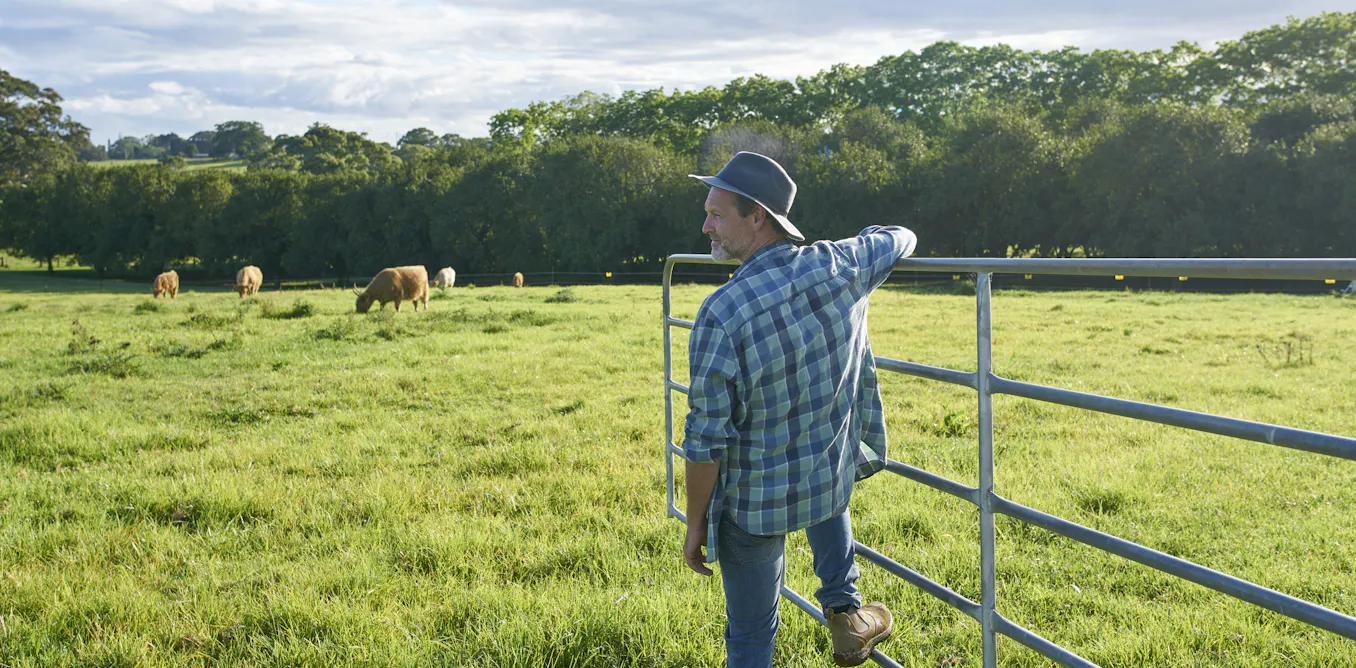
In a groundbreaking study that could reshape debates over agriculture and conservation, researchers in Australia have found that farmers who invest in natural elements on their land—such as trees, native vegetation, and healthy pastures—see measurable gains in both productivity and profits. The research, published this week on The Conversation, analyzed 114 livestock farms across New South Wales, Victoria, Tasmania, and Western Australia over a five-year period from 2017 to 2022, encompassing both drought-stricken years and periods of ample rainfall. According to the study's authors, farms with higher levels of what they term natural capital—the ecosystem services provided by soil, water, air, and living organisms—were up to 3% more productive than those with the lowest levels.
Agriculture plays a cornerstone role in Australia's economy, contributing an estimated A$100 billion this year alone, with nearly 60% of the country's land dedicated to farming. Much of this vast expanse supports livestock grazing, including cattle, sheep, and a growing number of goats. Yet, for decades, the sectors of farming and environmental protection have often clashed. Agriculture is a significant source of greenhouse gas emissions, and land clearing for crops and pastures has led to substantial losses of native wildlife and vegetation, prompting initiatives from governments and community groups like local Landcare organizations to encourage farmers to restore natural features on their properties.
The new study challenges the long-held view among some farmers that such restorations are a drain on time and resources. "Our world-first study shows maintaining and restoring nature on farms can actually increase farmers’ productivity and profits," the researchers wrote. They defined natural capital as the sum of all natural resources that deliver value to society, including pastures for grazing, remnant native vegetation, and the soil under crops. These elements provide essential ecosystem services, such as shelterbelts—rows of trees and shrubs—that preserve soil moisture and shield livestock from harsh winds.
To conduct their analysis, the team examined three key economic metrics: productivity, profitability, and financial resilience. They gathered data on the quantity and condition of natural capital across the farms, including the health of pastures, the presence of scattered trees and shelterbelts, and the overall state of native vegetation. The results were striking: not only were farms with superior natural capital more efficient in production, but they also demonstrated greater stability in earnings, even during adverse weather. This resilience is particularly vital in Australia, where agricultural productivity has grown by just 0.2% annually over the past decade on average.
One key finding highlighted how natural capital enhances production efficiency. Farms with healthier pastures and integrated trees required fewer external inputs to yield the same output. For instance, on sheep farms, this translated to less need for meat or wool production aids, with animals faring better in extreme conditions thanks to added shade and shelter. "Sheep on farms with more natural capital would also be healthier and more likely to survive extreme weather events," the study noted.
Another benefit lies in reducing reliance on costly and fluctuating inputs like pesticides and fertilizers. By incorporating native grasses and vegetation, farmers can naturally suppress weeds and foster habitats for beneficial insects, bats, and birds that control pests. The researchers emphasized that this approach cuts costs without compromising yields, providing a buffer against market volatility in chemical prices.
Financial stability emerged as a third advantage, with farms boasting more natural capital proving more insulated from events like droughts or heavy rains. A sheep farmer preserving patches of native vegetation, for example, is less prone to lamb losses in wet and windy weather. "By protecting their livestock, pastures and crops, nature restoration projects can also give farmers a more secure income," according to the study. This stability is crucial in a nation prone to climatic extremes, where year-to-year income fluctuations can spell the difference between prosperity and hardship for rural families.
The study does not advocate transforming farmland into untouched wilderness. The authors cautioned that excessive natural capital could tip the balance, reducing available land for agriculture and potentially harming food security. "There is a point at which too much natural capital starts to reduce farm productivity," they explained, urging a balanced approach to identify the "sweet spot" where environmental investments amplify rather than hinder output.
This research arrives amid broader efforts to reconcile farming with biodiversity. In Australia, programs like those run by Landcare groups have long promoted tree-planting and habitat restoration, often with government incentives. However, adoption has been uneven, with some farmers viewing these measures as incompatible with profit-driven operations. The study's findings could sway skeptics, demonstrating that "profitable farming and biodiversity can’t go hand in hand" is a misconception. Instead, investing in natural capital "stacks up financially," potentially benefiting both the economy and the environment.
Experts in agricultural economics have welcomed the results, though they note the need for further validation across different farm types and regions. Dr. Emily Thompson, an environmental economist at the University of Sydney who was not involved in the study, described it as "a pivotal step forward." In a separate commentary on The Conversation, she echoed the authors' call for policy support, saying, "Governments should expand subsidies for nature-based farming practices to accelerate adoption."
Yet, not all voices in the farming community are immediately convinced. Representatives from the National Farmers' Federation, a key industry group, acknowledged the study's potential but stressed practical challenges. "While the data is promising, many of our members face barriers like upfront costs and regulatory hurdles," said federation spokesperson Mark Reilly in a statement released yesterday. He added that the organization would review the findings in upcoming policy discussions.
The study's timeframe, spanning 2017 to 2022, captured a turbulent era for Australian agriculture, including the severe Black Summer bushfires of 2019-2020 and the lingering effects of the Millennium Drought's echoes. Farms in New South Wales and Victoria, hit hardest by these events, showed particular benefits from natural capital, with reduced livestock mortality rates reported in areas with established shelterbelts. In Tasmania and Western Australia, where rainfall patterns vary more predictably, the productivity gains were consistent but slightly less pronounced during wetter years.
Looking ahead, the researchers propose scaling up these practices through education and incentives. They suggest that community organizations and governments collaborate to provide technical assistance, such as mapping optimal locations for native plantings. "The more we embrace this view the better off our economy, and environment, will be," the study concluded, pointing to potential ripple effects like enhanced carbon sequestration and wildlife corridors that could support national environmental goals.
As Australia grapples with climate change and the push for sustainable development, this study offers a data-driven path forward. With livestock farming under scrutiny for its environmental footprint, the evidence that nature can be an ally rather than an adversary may encourage a new era of integrated land management. Farmers across the studied states have already begun sharing their experiences on social media, with one New South Wales grazier posting, "Planted more trees last year—best decision for my sheep and my bottom line." Whether this momentum builds into widespread change remains to be seen, but the research provides a compelling case for optimism.
In the end, the findings underscore a simple yet profound truth: in the delicate balance of land use, nurturing nature might just be the smartest business move. As policymakers and producers digest the report, the hope is that it sparks actionable steps to make Australian farms more resilient, profitable, and in harmony with the landscapes they inhabit.