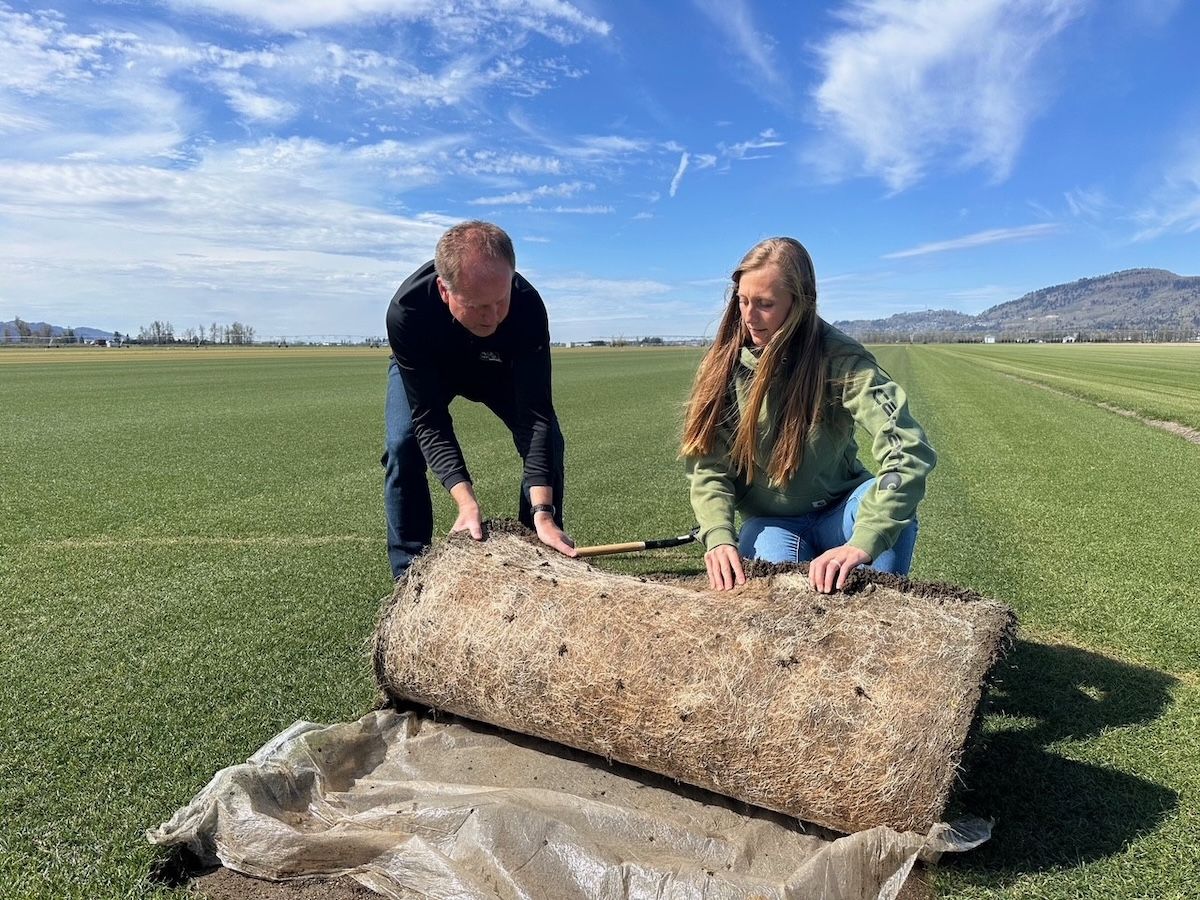
In the quiet lowlands of British Columbia's Fraser Valley, at the base of Vedder Mountain, a family-run sod farm is crafting what could become one of the most scrutinized patches of grass in the world. Bos Sod Farm in Abbotsford is growing the hybrid natural turf that will transform B.C. Place Stadium in Vancouver into a verdant centerpiece for the 2026 FIFA World Cup. The stadium, which will host six matches including a semifinal, demands a playing surface capable of withstanding the intensity of international soccer under the glare of global television audiences.
Bert Bos, who founded the farm in 1993 after relocating from Alberta, initially hesitated to take on the project. His family operates two other sod farms in Alberta, and Bos has tackled high-profile jobs before, such as installing turf for a golf course in Whistler and Boise State University's practice field in Idaho. But the World Cup assignment, which landed on his doorstep unexpectedly when the farm made FIFA's shortlist without applying, gave him pause. 'I was a little lax,' Bos said with a laugh, recalling his initial reluctance.
The 2021 floods in the Fraser Valley, which submerged the farm under 1.5 meters of water and left Bos's home and work buildings uninhabitable for months, loomed large in his mind. Drainage concerns were paramount—could the region reliably produce a pitch for a closed-roof stadium like B.C. Place? Ultimately, it was Bos's children—Nicoline, Jaron, and Caleb, all of whom work on the farm—who convinced him to pursue it. The hybrid system FIFA selected for North American venues offered flexibility, allowing Bos to adapt the turf to Vancouver's unique climate and the stadium's conditions.
FIFA's experimentation with pitches during last year's Club World Cup in the United States informed the switch to Kentucky bluegrass over Bermuda grass. Players in that tournament complained about the Bermuda surface, describing it as akin to a putting green rather than a proper soccer pitch. The new hybrid incorporates a mesh grid with artificial fibers comprising about five percent of the surface, stitched in long rows by an oversized sewing machine. This is laid over a laser-graded base of sand and peat, seeded with 84 percent Kentucky bluegrass and 16 percent perennial ryegrass—a ratio Bos helped determine.
To keep the project local and sidestep potential tariffs, Bos sourced sand from Butler Concrete and Aggregate in Duncan, B.C. As the grasses' roots penetrate the artificial grid and reach a perforated plastic underlay, they spread horizontally, forming a dense root system resistant to damage from cleats and heavy play. The fields were planted in June and have now reached 22 millimeters in height, matching the artificial fibers. Before installation, the grass will be trimmed back to ensure uniformity.
'I'm very glad they went with the carpet system for Vancouver; I think it's really bulletproof. It's going to be pretty tough to beat this,' Bos said. He emphasized the unforgiving nature of sod production: 'One big thing with sod is … what you see now is a result of what took place six months prior. You cannot change on a dime. If you're in the wrong, it's hard to correct the last minute.' With the World Cup's massive exposure, the pressure is immense, Bos noted, likening the process to nurturing a living entity that can't be easily repaired like concrete.
Installation is set for April 26, when truckloads of sand will bury the existing Polytan artificial turf at B.C. Place under about 23 centimeters of material. The new hybrid pitch will sit atop this foundation, serving temporarily until a fresh artificial surface is installed post-tournament. B.C. Place general manager Chris May underscored FIFA's obsession with pitch quality. 'The thing that's been non-negotiable more than anything else, since the beginning, and the thing that's been made so clear to us is: The pitch is the thing … And FIFA puts enormous amounts of effort into ensuring (its quality),' May said.
FIFA's approach involves tailoring seed mixes to each venue's ecosystem. 'Like growing different types of seed in different places to try and figure out how the climate and ecosystem in Vancouver is different than that of Kansas City or Guadalajara, and which grass seed you have to grow, in which percentage, in which climate zone, to ensure the grass in Kansas City and Guadalajara and Vancouver end up essentially exactly the same despite different climates and open air versus closed stadiums,' May explained. 'The science behind it is so interesting.'
Bos will provide custom equipment for the rollout, which should take about 14 hours. The grass will be cut into 1.2-by-11-meter strips, rolled, transported to the stadium, and laid down over pre-installed irrigation and lighting systems. The stadium's roof will stay closed throughout the tournament to maintain consistency. 'If the roof is open, it would create a lot of variation in light,' Bos said. 'And once you do that, it mixes everything up. Let's say you get sunlight in certain areas, certain areas you don't—(the grass) is going to grow different. It's going to dry different. Now you have to irrigate different. The nutrients are going to be used up different. So it all creates variability that you don't want. You want consistency.'
Care for the fields at Bos Sod Farm is meticulous, akin to tending a newborn. Moisture levels are checked three times a day, with watering done via a hovering boom for efficiency. Only tractors with gigantic balloon-like tires are permitted on the surface to avoid compaction. The turf is scoured meter by meter for weeds, pH levels are tested regularly, and growth is measured by counting blades in 10-centimeter squares. Even the younger Bos family members, avid soccer players, have resisted the urge to test the pitch themselves.
This elaborate effort will yield a surface with a lifespan of just 2.5 months before it's removed and discarded. 'Everything in this life is fleeting,' Bos reflected with a laugh. 'It serves its purpose, right? And that's really what it's all about.' The temporary nature underscores the tournament's demands: a pristine, natural-feeling pitch for elite play, even if it means starting from scratch afterward.
The project highlights broader preparations for the World Cup, co-hosted by Canada, Mexico, and the United States from June 11 to July 19, 2026. B.C. Place, which opened in 1983 and underwent a major retrofit for the 2010 Winter Olympics, has relied on artificial turf since then, drawing criticism from players who prefer natural grass. FIFA's decision to mandate hybrid surfaces for the tournament addresses long-standing debates in soccer about field conditions, especially in multi-purpose stadiums like B.C. Place, which also hosts CFL games for the B.C. Lions and concerts.
While Bos Sod Farm's role is pivotal, it's part of a larger supply chain ensuring uniformity across 16 stadiums. FIFA's trials, including the Club World Cup, revealed challenges with grass types and installation in diverse climates, from Vancouver's mild, rainy weather to the heat of Guadalajara. No major conflicts have emerged in reporting on the B.C. Place project, though past flood risks in the Fraser Valley add a layer of environmental context to the farm's operations.
Looking ahead, the installation in late April will mark a key milestone, with the pitch needing to perform flawlessly by June. Success here could elevate Bos Sod Farm's profile beyond British Columbia, potentially opening doors to more international sports venues. For now, the focus remains on precision, as the eyes of hundreds of millions turn to Vancouver's field of dreams.
As the World Cup approaches, this unassuming farm stands as a testament to the intricate logistics behind the beautiful game. From seed selection to final rollout, every detail is calibrated for perfection, ensuring that when national teams take the field, the turf beneath their feet is as reliable as the stakes are high.