In the early months of 2026, economists and analysts are offering varied perspectives on the trajectory of the U.S. economy under President Donald Trump's administration. A recent opinion piece published on Fox News highlights five key factors suggesting a robust upswing ahead, even as some metrics show short-term dips. Authored by E.J. Antoni, Ph.D., Chief Economist at the Heritage Foundation, the analysis argues that the economy is transitioning from government-driven growth to private sector expansion, potentially leading to a 'soft landing' without recession.
The article points to 2025 as a pivotal year of transition. During President Joe Biden's final two years, job growth was heavily reliant on government hiring, and federal purchases significantly boosted gross domestic product (GDP). According to Antoni, 'Under Democrat President Joe Biden, particularly his last two years in office, job growth was disproportionately due to government hiring. Similarly, government purchases played an outsized role in growing overall economic activity.'
Trump's policies, including cuts to federal spending and workforce reductions, have reversed this trend. The administration has 'slamm[ed] the brakes on government spending growth and fir[ed] a record number of bureaucrats at the federal level,' Antoni writes. While these measures have initially dragged down headline economic numbers—such as job counts and GDP figures—the piece frames them as necessary steps toward efficiency. 'Shrinking the unproductive public sector while growing the private sector is a welcomed change, but it initially shows us as a negative in many economic metrics,' he explains.
Despite these adjustments, positive indicators are emerging. The Dow Jones Industrial Average has reached 50,000 points, contrasting with some consumer surveys that reflect ongoing concerns about affordability. Antoni attributes part of the public disconnect to misunderstandings about inflation versus prices. He uses an analogy: 'You can think of inflation as how fast you’re driving down the highway, and prices as the mile markers on the side of the road.' With inflation slowing to below 1% according to real-time metrics like Truflation, prices are rising more slowly, though not decreasing outright.
The lingering frustration, per the analysis, stems from the sharp price increases during Biden's four years, when inflation eroded purchasing power. 'The average American’s weekly paycheck, adjusted for inflation, shrunk 4% during those four years,' Antoni notes. Under Trump, however, lower inflation has allowed real wages to rebound slightly, with weekly paychecks now buying about 2% more than at his inauguration in January 2025. This improvement signals progress but underscores that full recovery from prior losses remains incomplete.
Federal finances provide another layer of optimism in the piece. Tax receipts to the Treasury have surged 11.8% this fiscal year compared to the last four months of the Biden administration. On the spending side, outlays have increased only 1.9%, resulting in a 17% drop in the federal deficit. 'That’s all incredibly bullish and paints a picture of an economy that has just rounded the turn and will soon blast down the straight,' Antoni concludes, emphasizing that while challenges persist, the direction is positive.
Investment trends form the fifth pillar of the bullish outlook. Trump's tax and regulatory cuts, combined with trade negotiations, are attracting trillions in domestic investment. This influx is expected to spur factory construction, boost productivity and wages, expand product availability, increase tax revenues, and potentially ease inflationary pressures further. The analysis ties these developments to a return to manufacturing, which it credits with driving the economy's soft landing.
Broader context reveals a mixed economic picture entering 2026. The unemployment rate has dipped in recent months, though specific figures were not detailed in the Fox News piece. Meanwhile, consumer confidence remains tempered by memories of post-pandemic price spikes in essentials like groceries and housing. Economists outside conservative circles, such as those from Harvard, have noted positive spins on recent inflation reports, with one unnamed Harvard economist reportedly saying the data leaves 'no other way to spin it' but good news, as referenced in a related Fox News sidebar.
Patrice Onwuka of the Independent Women’s Forum is mentioned in the article's introduction as analyzing GDP growth and unemployment trends, aligning with Antoni's views on the shift to private sector vitality. However, the bulk of the commentary comes from Antoni, a senior fellow at Unleash Prosperity. His perspective contrasts with more cautious forecasts from outlets like The New York Times, which in recent reports have highlighted persistent inflation risks and the impacts of federal layoffs on local communities, though without direct rebuttals in the provided sources.
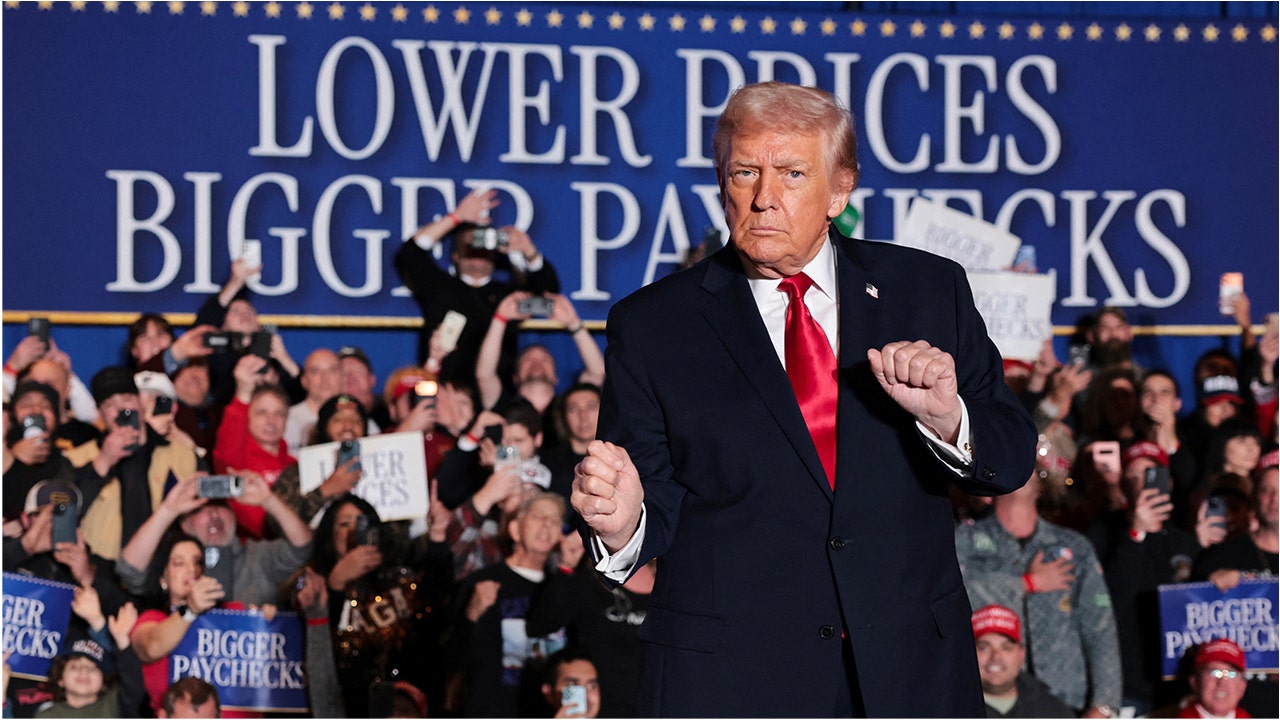
Trump himself has touted these economic shifts during public appearances. On December 9, 2025, at the Mount Airy Casino Resort in Mount Pocono, Pennsylvania, he delivered remarks on the economy and affordability, gesturing to the audience amid discussions of job creation and cost reductions. Photographer Jonathan Ernst of Reuters captured the event, where Trump emphasized reining in government waste to benefit working families.
Critics of the administration's approach argue that abrupt spending cuts could exacerbate short-term hardships, particularly in regions dependent on federal jobs. For instance, areas with high concentrations of government employees, such as Washington, D.C., have reported localized unemployment spikes following the workforce reductions. Yet, proponents like Antoni counter that long-term gains in private sector jobs will outweigh these temporary setbacks.
The piece also nods to the need for congressional action to accelerate progress. 'To make [prices] come back down, we need Congress to make serious cuts in both spending and to bureaucratic red tape,' Antoni states. Without such measures, income growth alone is slowly restoring affordability, but deeper reforms could hasten relief for consumers still grappling with elevated costs from the Biden era.
Looking ahead, the analysis predicts an economy poised for acceleration. With investment pouring in and fiscal metrics improving, 2026 could mark a turning point toward sustained prosperity. Related commentary from Fox News contributors, such as Liz Peek, reinforces this narrative, stating that 'Trump’s economic wins are real — now he needs to convince the country.'
As the administration marks its first year, debates continue over how to balance fiscal restraint with growth. The Fox News opinion underscores a narrative of recovery and optimism, rooted in data points like rising tax receipts and falling deficits. Whether this momentum translates into widespread prosperity remains a key question for policymakers and voters alike.
In Appleton, Wisconsin, local economists are watching these national trends closely. While the piece focuses on macroeconomic shifts, regional impacts—such as potential manufacturing revivals in the Midwest—could bring tangible benefits to communities like this one. For now, the five elements outlined offer a framework for understanding an economy in flux, with Trump's policies at the center.