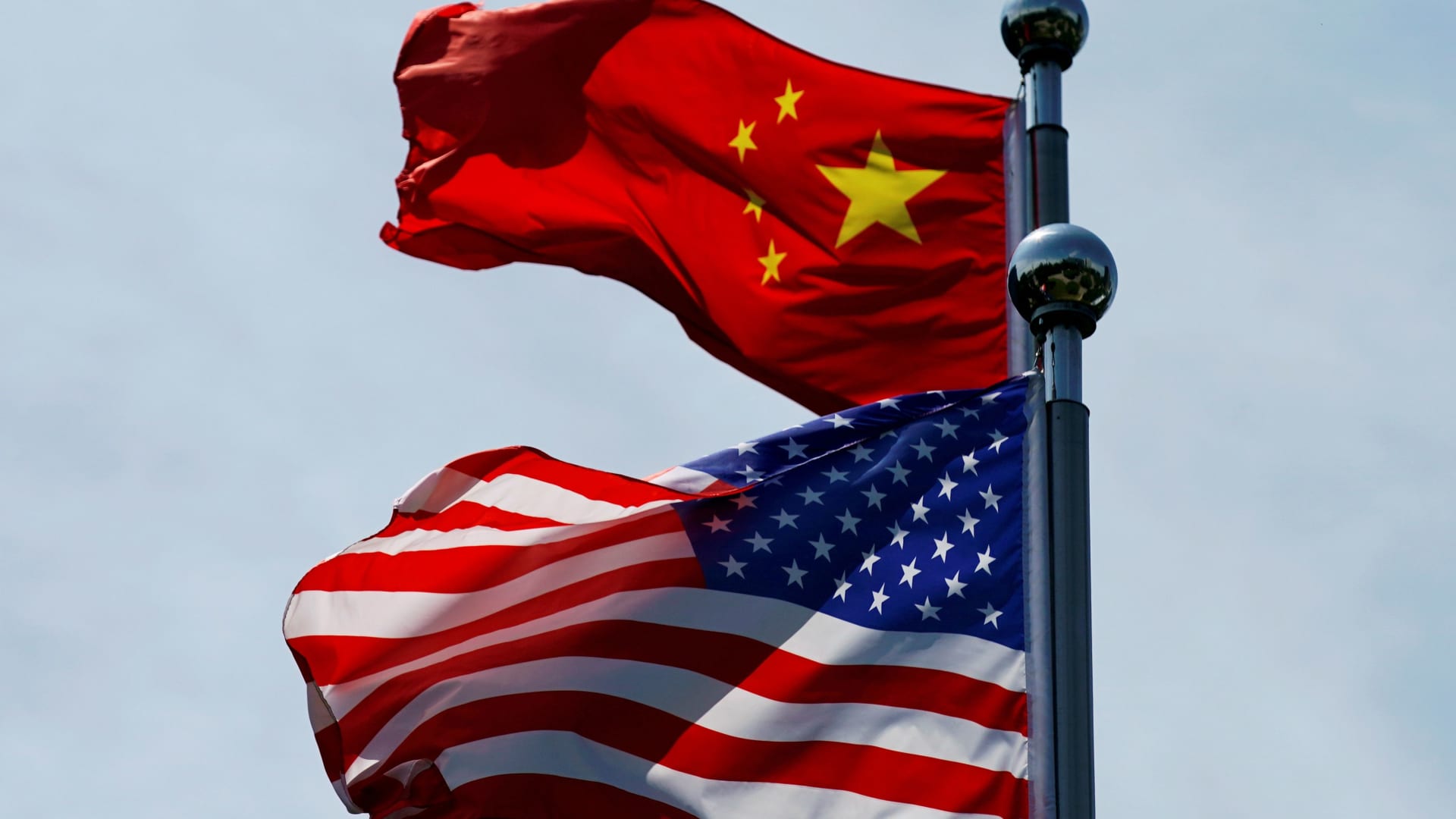
BEIJING — As U.S. President Donald Trump prepares for a pivotal summit with Chinese President Xi Jinping in Beijing this week, diplomatic maneuvering across East Asia underscores the high stakes of U.S.-China relations amid ongoing global tensions. The two leaders are scheduled to meet on Thursday and Friday, with discussions expected to cover trade, the Taiwan Strait, and the escalating crisis in the Middle East involving Iran. This gathering comes at a time when both nations are bolstering ties with regional allies, reflecting the intricate web of alliances shaping the summit's agenda.
Trade negotiators from the U.S. and China are set to convene in Seoul, South Korea, in the lead-up to the presidential talks. China's Vice Premier He Lifeng will head a delegation to South Korea from Tuesday to Wednesday for these discussions, according to China's Commerce Ministry. The ministry's statement referenced the broader context of the Trump-Xi summit but did not detail other planned meetings. Meanwhile, U.S. Treasury Secretary Scott Bessent arrived in Japan on Monday, where he is slated to meet Japanese Prime Minister Sanae Takaichi, as reported by public broadcaster NHK.
Japan's role in these developments is particularly noteworthy, given its heavy reliance on Middle Eastern oil—about 75 percent of its imports come from the region—and the ongoing Iran war's disruptions. Bessent's visit occurs against a backdrop of strained Beijing-Tokyo relations, exacerbated by Takaichi's November comments indicating that Japan would support Taiwan in the event of a military threat from China. Beijing responded sharply to those remarks, but Takaichi has not retracted them despite requests from Chinese officials. During her March visit to the U.S., Trump and Takaichi "committed to peace and stability across the Taiwan Strait," according to a White House readout.
Japanese officials will be keenly observing the language emerging from the Trump-Xi summit regarding Taiwan. On Monday, Trump stated that arms sales to Taipei were on the agenda for his discussions with Xi. This follows a pattern of U.S. support for Taiwan, which has drawn Beijing's ire and heightened regional anxieties. The summit in Beijing is expected to address these frictions, though analysts suggest it may prioritize de-escalation over bold new agreements.
Bessent's itinerary includes a stop in Seoul on Wednesday for talks with He Lifeng, though it's unclear if adjustments were made for time zone differences in the announcement. This compressed schedule highlights the urgency of deliverables from the Beijing meeting, which China only officially confirmed on Monday. "In our view, the summit will be more about avoiding an unnecessary escalation of tensions and managing risks than building up structural mechanisms and forging deep friendships," said Ting Lu, Nomura's Chief China Economist, in a note released Monday. He identified the "most pressing agenda item" as the Iran-Hormuz crisis.
Trump is due to arrive in Beijing on Wednesday evening, per White House scheduling. The following day begins with a welcome ceremony and bilateral meeting with Xi, followed by a tour of the historic Temple of Heaven, a 15th-century landmark in central Beijing. The visit will culminate in a state banquet that evening. Accompanying Trump are more than a dozen U.S. executives, including Tesla CEO Elon Musk, Apple CEO Tim Cook, and Boeing CEO Kelly Ortberg. Notably absent from the list is Nvidia CEO Jensen Huang.
Trade outcomes could see boosts in China's purchases of Boeing aircraft, U.S. soybeans, and beef, analysts predict, though volumes are unlikely to reach historical peaks. According to the Economist Intelligence Unit's China team, these increases will be tempered by U.S. concessions on technology exports, which face constraints from domestic politics in Washington. The afternoon agenda includes tea and a working lunch with Xi before Trump's departure from China.
Looking ahead, Xi is anticipated to reciprocate with a visit to the U.S. later this year, building on discussions from last fall's summit in Busan, South Korea. While no exact date has been set, possibilities include December's G20 meeting in Florida. Xi last visited the U.S. for the 2023 Asia-Pacific Economic Cooperation conference but has not made a formal state visit since 2015 under President Obama. Trump himself traveled to China in 2017 during his first term, while his successor Joe Biden did not visit the country during his presidency.
Trump's November attendance at the Asia-Pacific Economic Cooperation meeting in Shenzhen could provide another opportunity for the leaders to convene. These engagements are part of a broader surge in high-level diplomacy in Beijing, with more than a dozen world leaders passing through in the first five months of 2026 alone, signaling China's rising global influence. Just ahead of Trump's arrival, Xi hosted Tajikistan's President Emomali Rahmon, and last week, Iran's foreign minister made his first trip to Beijing since the onset of the Iran war.
Speculation is also mounting about a potential visit by Russian President Vladimir Putin to Beijing as early as Monday, May 18. If it materializes, this would further underscore Beijing's role as a diplomatic hub. The Iran situation is certain to feature prominently in Trump and Xi's talks, noted Cui Shoujun, a professor at Renmin University of China's School of International Studies. "Iran will definitely be discussed during the Trump-Xi summit," Cui said, emphasizing China's unique position with ties to both Iran and Gulf states. He added that Beijing aims to help resolve the tensions, viewing this week's meeting as "just a start of more discussions" on the larger U.S.-China relationship.
The summit's timing aligns with intensified U.S. efforts to rally East Asian partners. Bessent's Japan visit, for instance, comes amid Tokyo's concerns over energy security due to the Iran conflict. Japan's support for Taiwan has been a flashpoint, with Takaichi's unyielding stance drawing Beijing's criticism. Yet, the White House has framed U.S.-Japan commitments as focused on regional stability, a narrative that Beijing has challenged as provocative.
On the trade front, the inclusion of corporate leaders like Musk and Cook suggests potential breakthroughs in sectors long targeted by tariffs and restrictions. Tesla's operations in China, Apple's supply chain dependencies, and Boeing's aircraft deals have been focal points in past negotiations. However, the absence of Huang from Nvidia points to lingering sensitivities around semiconductor exports, where U.S. national security concerns continue to limit flexibility.
Broader implications extend to global markets, where the Iran crisis has already spiked oil prices and disrupted supply chains. Nomura's Lu highlighted the Hormuz Strait as a critical flashpoint, where any misstep could exacerbate economic fallout. Chinese officials, through the Commerce Ministry, have framed the pre-summit talks in Seoul as constructive, though details remain sparse.
As the world watches, this summit represents a delicate balancing act for both leaders. Trump seeks to address trade imbalances and security concerns, while Xi aims to assert China's diplomatic heft without alienating key partners. The outcomes—whether in joint statements on Taiwan, trade pacts, or Middle East mediation—could set the tone for U.S.-China interactions through the end of the year and beyond. With Putin potentially joining the fray and Xi's U.S. trip on the horizon, the coming weeks promise continued diplomatic intensity in Asia.
For now, all eyes are on Beijing, where the Temple of Heaven tour and state banquet symbolize a blend of cultural diplomacy and hard-nosed negotiation. As Cui put it, this is merely the beginning, but the immediate focus remains on managing risks in a volatile region.